Last updated: 1 November 2026
SpendWisely guide
How to stop overspending
To stop overspending, find out what's already committed before you spend. Check your balance for every day until payday after rent, bills, subscriptions and buy now, pay later instalments, not just today's balance. Then set a daily amount that's genuinely safe to spend, and look ahead before any bigger purchase.
This is educational money-management information from SpendWisely (Adleads Ltd). It is not personalised financial advice or benefits advice, and Adleads Ltd is not authorised by the FCA. If you are in debt crisis, contact StepChange, National Debtline, or MoneyHelper.
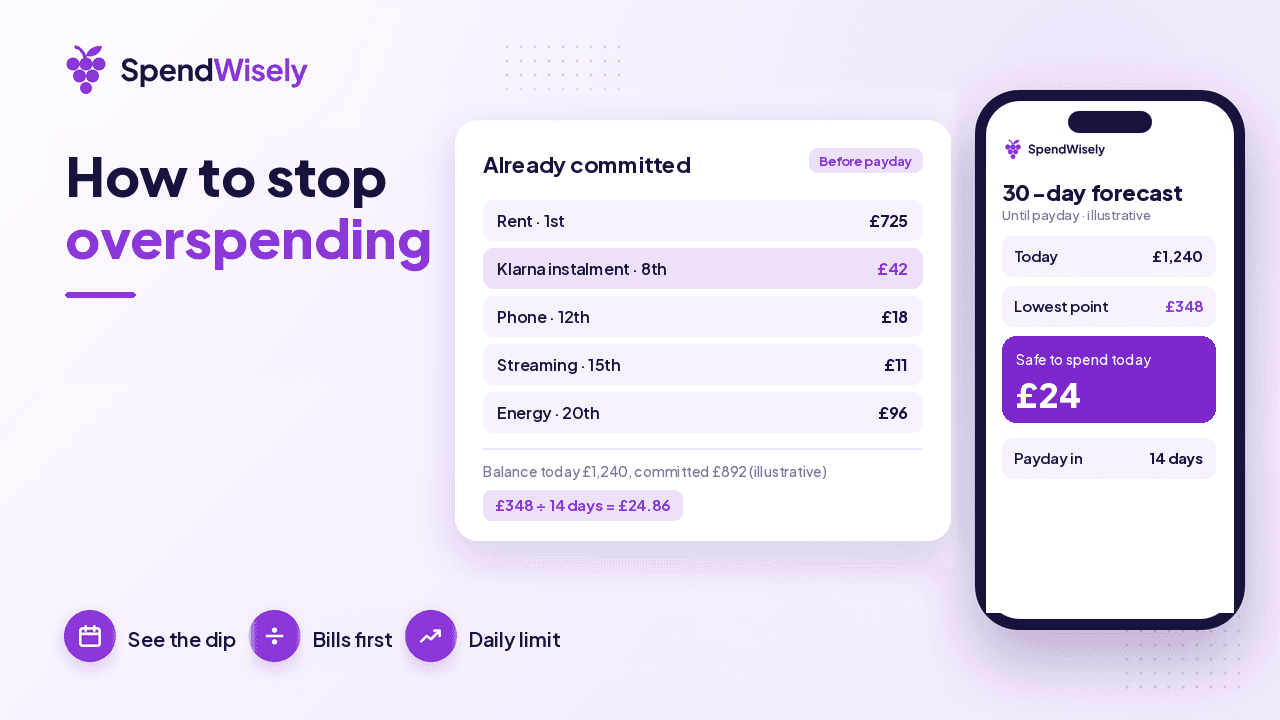
Most overspending isn't a willpower problem. It happens when you can't see what's leaving next week. When you can see the month ahead, you know what's spare before you spend it.
Why you overspend (even when you're careful)
- Your balance today ignores what's leaving tomorrow.
- Bills land unevenly: some months have two big ones on the same day.
- Buy now, pay later spreads costs into months you can't see.
More on this: Why you can't control spending · Bad with money? It's timing, not character
Step 1: See the month ahead, not just today
A daily balance forecast shows where your money dips before payday, so you can see the low point in advance. That's how SpendWisely works: add your pay and bills once, and see the dip before you buy.
Step 2: Find the bills that catch you out
- Buy now, pay later commitments
- Weekend spending
- Council tax months you don't pay
- The long gap from December to January payday
Step 3: Set a daily safe-to-spend
Take what's left after committed bills and divide it by the days until payday. That's your daily amount. Want a reset? Try a no-spend challenge between paydays.
Impulse spending and ADHD
Impulse spending can be harder with ADHD because future costs feel far away. Seeing the dip in advance makes them feel real before you buy. Read impulse spending and ADHD.
Budgeting for how you're paid
Further reading
- How to stop spending money: practical steps
- Stop overspending between paydays
- Why am I always broke after payday?
Frequently asked questions
How do I stop overspending?
Check what's already committed before you spend: look at your balance for each day until payday after rent, bills and instalments, then set a daily safe-to-spend.
Why do I run out of money before payday?
Usually because bills and instalments cluster after you've spent what looked spare. A daily forecast shows where the low point falls.
Do I need to connect my bank?
No. SpendWisely works from the pay and bills you add, so no bank login is needed.
Does buy now, pay later make overspending worse?
It can, because instalments land in future months you can't see. Adding them to a forecast shows their real effect.
Start a 14-day trial
See your bank balance for every day of the month ahead, with a daily spend limit. Get started free — 14-day free trial. No bank connection or Open Banking login. No payment card required. Cancel at any time. After the trial, Premium is £8.75 a month or £63 a year.
Related: How to stop spending money · Impulse spending and ADHD · Paid every 4 weeks · Weekly pay guide
SpendWisely is not FCA-authorised and does not provide personalised financial advice. Forecasts are estimates based on the information you enter. If you are struggling with debt, free help is available from StepChange, National Debtline, and MoneyHelper.
Avoid overspending - free for 14 days
No bank login needed. The AI Guide sets up your forecast from a few quick questions in chat - then check it before you spend.
Start free trial