Bad with money? Why am I so bad with money (and why it's usually timing)
Why am I so bad with money? Usually it's timing, not character: today's balance hides the bills due before payday. Signs, causes and 6 steps to fix it.
Short answer: if you're asking "why am I so bad with money?", the honest answer is usually timing, not character. Most people who say they're bad with money aren't careless or lazy. They're making sensible-feeling decisions from today's balance, and today's balance doesn't show the rent, direct debits and buy now, pay later instalments due before next payday. When money looks spare and then disappears, it feels like a personal failing. Usually it's a timing problem: the information arrives too late. Fix the timing and the behaviour often follows.
This is educational money-management information from SpendWisely (Adleads Ltd). It is not personalised financial advice, and Adleads Ltd is not authorised by the FCA. If you are struggling with debt, contact StepChange, National Debtline, or MoneyHelper. If money worry is affecting how you feel, Mind has guidance on getting support.
Signs you're "bad with money" (that are really timing)
If any of these sound familiar, the issue is probably when you see the information, not who you are:
- You feel fine on payday and panic in week three. Your balance looked big because the bills hadn't left yet.
- You keep checking your bank balance but still get caught out. The number you need, what's free until payday, isn't on the screen. See why you keep checking your bank balance.
- Direct debits "come out of nowhere". They were always coming; you just couldn't see them.
- Buy now, pay later feels like you didn't spend. Until three instalments land in the same week.
- You only budget after something goes wrong. Looking at money feels bad, so you avoid it until you have to.
That last one matters. Avoidance isn't a flaw either. It's a normal response to a screen that keeps giving you bad news late.
What to do when you're bad with money
- Stop using today's balance as your guide. It shows the past, not what's coming.
- Find your next payday and count the days.
- List every bill due before then: rent, council tax, energy, phone, subscriptions, BNPL and debt repayments.
- Take that total off your balance. What's left is the money you can actually spend.
- Divide it by the days to payday. That's your daily spend limit.
- Look again once a week, not once a crisis.
It's the same six steps whether you call yourself bad with money or not. The difference is doing them before you spend, not after.
If you want a reset, try a short no-spend challenge between paydays, or follow the nine steps in how to stop spending money.
Why do I spend money I don't have?
Because the way money is shown makes it look available. An overdraft, a credit card limit and buy now, pay later all let you spend now and find out later. Your banking app shows "available", which can include your overdraft, so money you've borrowed looks like money you have.
If you're regularly in your overdraft or relying on credit to reach payday, it's worth getting free advice early. StepChange and National Debtline can help you work out a plan.
How to stop spending money (without hating yourself)
- Move bill money out on payday so the balance you see is the balance you can spend.
- Use one daily number instead of a budget with dozens of categories.
- Check a purchase against the next 30 days, not today. See the dip before you buy.
- Keep some fun money. Strict plans with nothing for you tend to collapse.
- Pause bigger purchases for 48 hours. If you still want it, check your daily number and decide.
If impulse buying is the main problem, especially if you have or think you might have ADHD, read impulse spending and ADHD.
Can't stop spending money? When it's more than timing
Sometimes spending is tied to mood, stress, loneliness or something harder to control. If you can't stop spending money even when you can see the problem coming, or it's affecting how you feel, you deserve proper support. Mind has guidance on money and mental health, and your GP can help too. If debt is building up, contact StepChange, National Debtline or MoneyHelper.
If your partner is "bad with money"
The same timing problem applies to couples. One person often sees the bills and the other sees the balance. Sharing one view of what's due before payday, and agreeing a daily limit together, usually works better than arguing about who spent what.
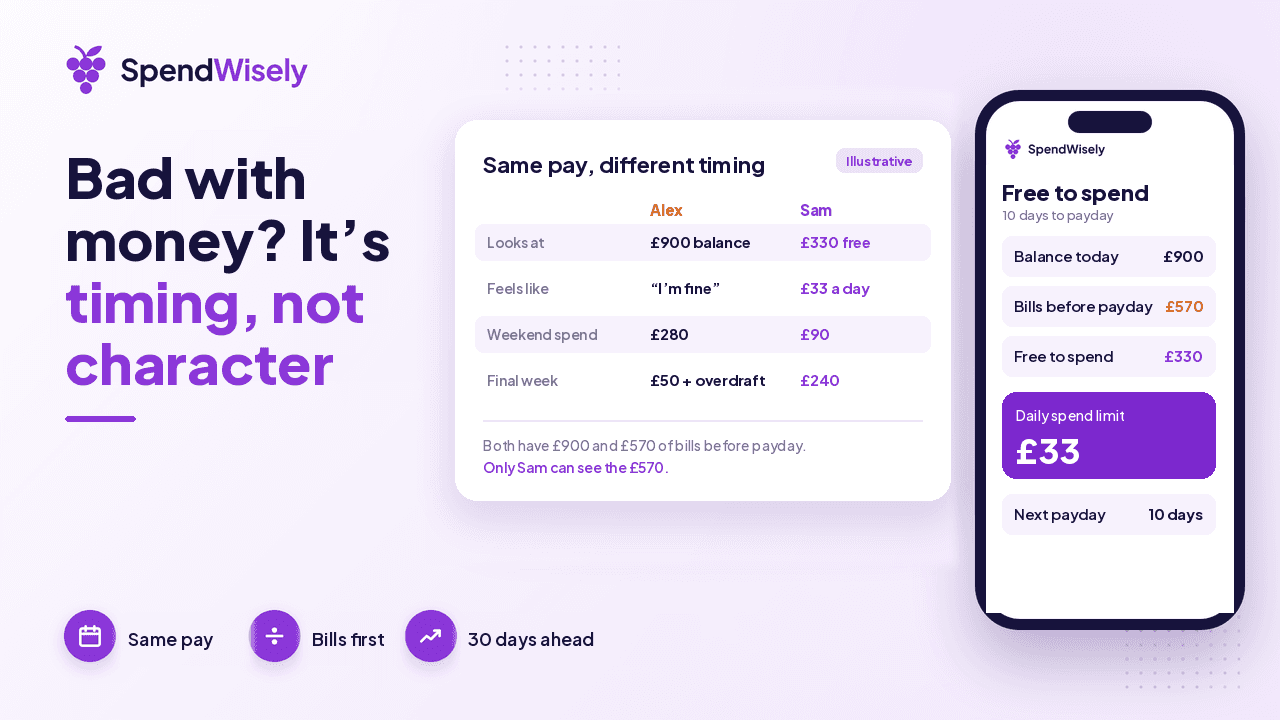
Same pay, different timing (illustrative)
Two people each have £900 in the bank, ten days before payday, with £570 of bills still to leave. Figures for illustration only.
| Alex | Sam | |
|---|---|---|
| What they look at | Today's balance: £900 | Free after bills: £330 |
| Feels like | "I'm fine" | "I've got £33 a day" |
| Weekend spend | £280 | £90 |
| Left for the final week | £50, then the overdraft | £240 |
Alex isn't worse with money than Sam. Alex just couldn't see the £570. For the full version of this story, see why am I always broke after payday.
Make the timing visible
A 30-day cashflow forecast shows your balance day by day, with every bill and payday on it, and a daily spend limit. In SpendWisely, the AI Guide sets up your balance, pay and bills with you in a chat. You refresh your balance when pay lands. There's no Open Banking or bank login, and no judgement.
Frequently asked questions
Why am I so bad with money?
Usually because you decide from today's balance, which doesn't show the rent, bills and BNPL due before payday. Money looks spare, then disappears. Plan from what's left after bills and the "bad with money" feeling often fades.
Am I bad with money or is it something else?
Often it's timing. If you decide from today's balance, bills due before payday are invisible until they leave. Try planning from what's left after bills for a month before deciding you're bad with money.
What should I do if I'm not good with money?
List the bills due before your next payday, take them off your balance, and divide what's left by the days to payday. Use that daily number instead of your balance, and check it weekly.
How do I stop spending money?
Move bill money out on payday, use one daily spend limit, pause bigger purchases for 48 hours and keep a small amount of guilt-free fun money.
Why can't I stop spending money?
Money that looks available is easy to spend, especially with an overdraft, credit or BNPL. If spending is linked to your mood or feels out of control, Mind has guidance and your GP can help.
Is being bad with money a personality trait?
Not usually. Most money habits come from what you can see and when. Changing what's on the screen, and when you look, changes behaviour more than willpower does.
Do I need to connect my bank to use SpendWisely?
No. SpendWisely is a 30-day forecast. No bank login needed: the AI Guide sets up your 30-day forecast from a few quick questions in chat, and you just refresh your balance when pay lands. There is no Open Banking.
Start a 14-day trial
See what's free to spend before you spend it, with one daily number until payday. Get started free — 14-day free trial. No bank connection or Open Banking login. No payment card required. Cancel at any time. After the trial, Premium is £8.75 a month or £63 a year.
Related: Why am I always broke after payday? · Impulse spending and ADHD · Why you can’t control spending · Stop overspending between paydays · Money management or hope · How to stop spending money
Read more
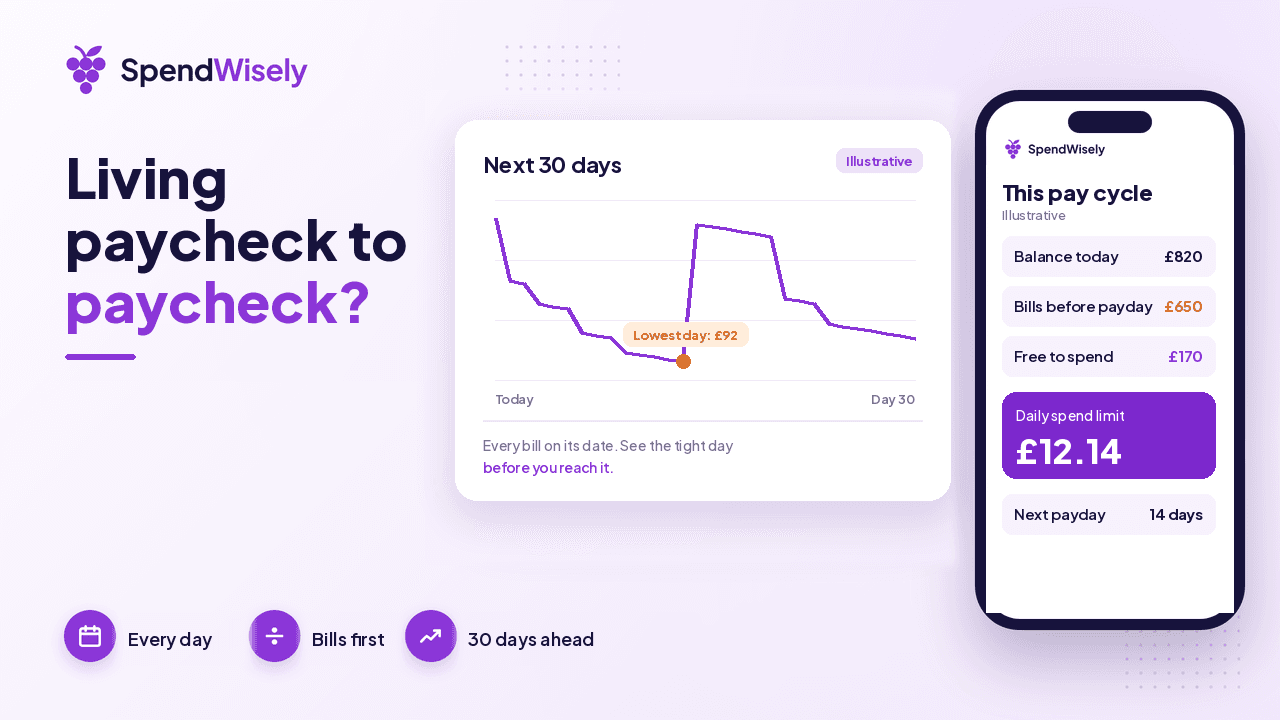
Living paycheck to paycheck: what it means and how to break the cycle
Living paycheck to paycheck means your pay runs out before the next one lands. The signs, why it happens on a decent wage, and how a 30-day forecast breaks the cycle.
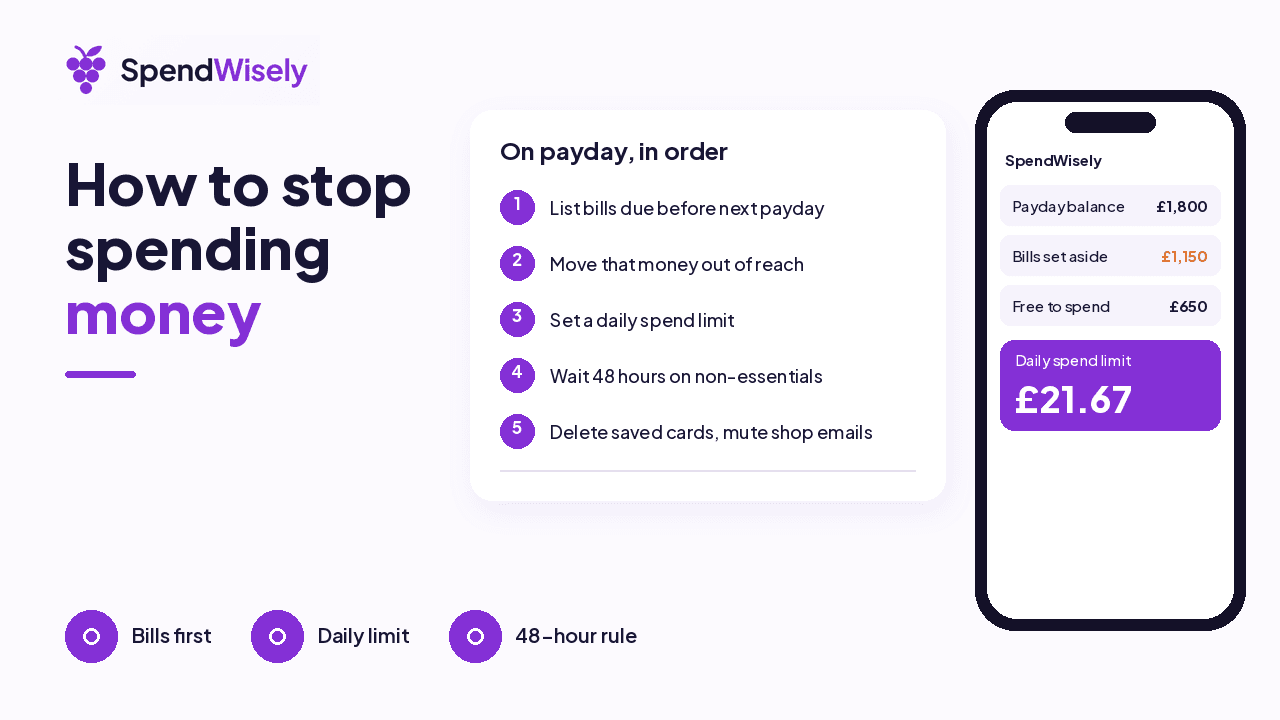
How to stop spending money: 9 steps that work between paydays
To stop spending money, move bills out on payday, set a daily spend limit, add a 48-hour pause and delete saved cards. Nine steps, no willpower needed.
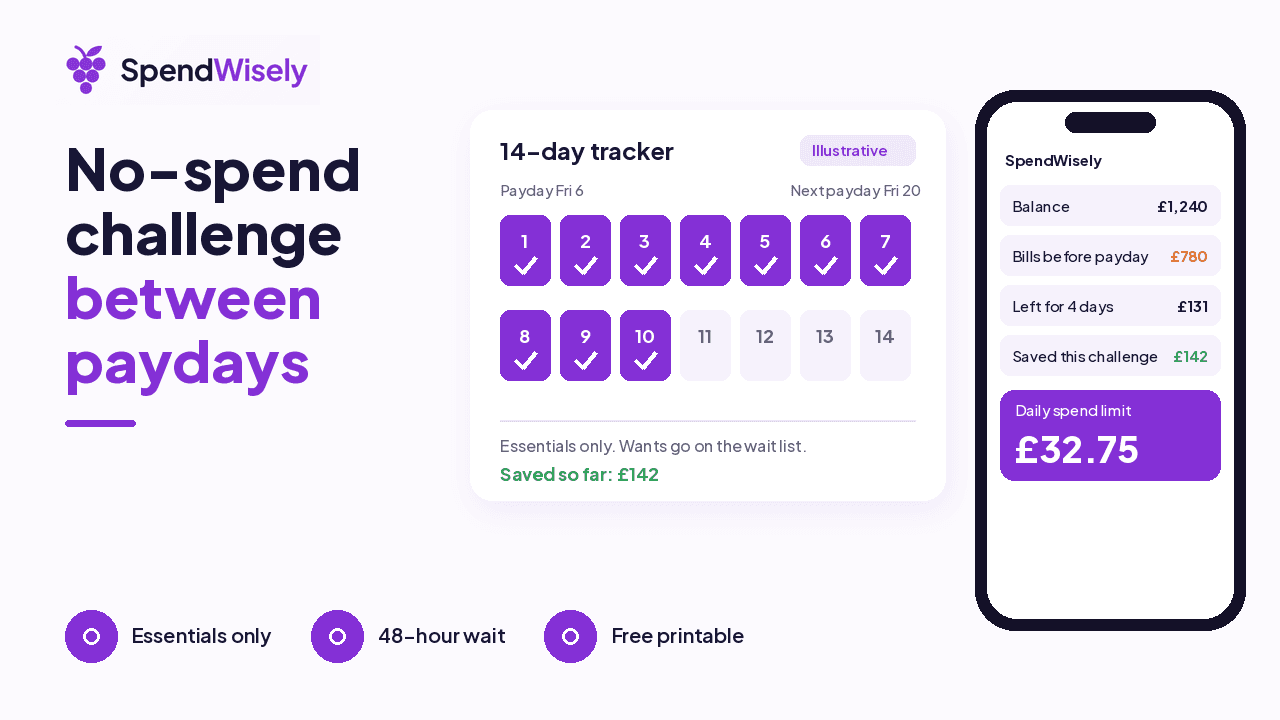
No-spend challenge: how to do one between paydays (free printable)
A no-spend challenge means buying only essentials for a set time. Simple rules, a 7, 14 or 30-day plan timed to your payday, and a free printable tracker.