How to stop spending money: 9 steps that work between paydays
To stop spending money, move bills out on payday, set a daily spend limit, add a 48-hour pause and delete saved cards. Nine steps, no willpower needed.
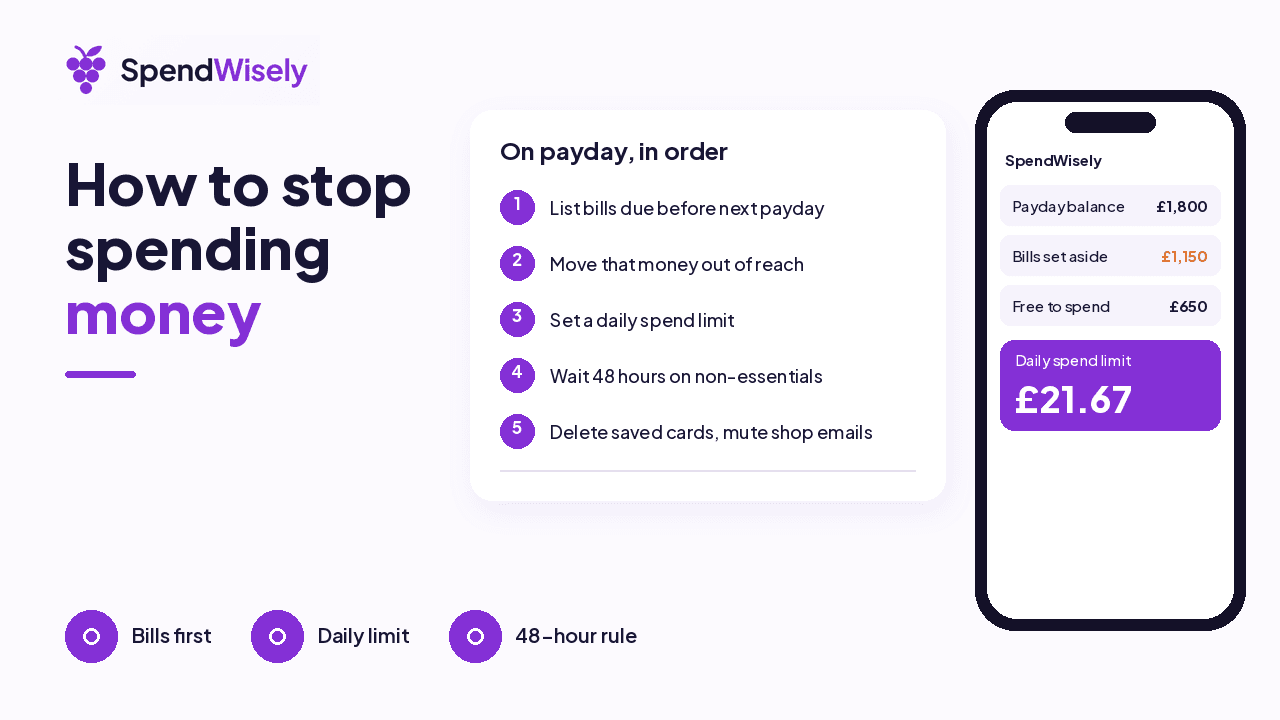
To stop spending money, take willpower out of it. On payday, move the money for every bill due before next payday out of reach. Divide what's left by the days until payday to get a daily spend limit. Then add friction: a 48-hour wait for non-essentials, no saved cards, fewer shop emails.
This is educational money-management information from SpendWisely (Adleads Ltd). It is not personalised financial advice, and Adleads Ltd is not authorised by the FCA. If you are struggling with debt, contact StepChange, National Debtline, or MoneyHelper.
Why you keep spending (it's usually not a lack of willpower)
Most overspending comes from three things:
- The payday number lies. Your balance on payday includes money already promised to rent, bills and BNPL. It looks free, so you spend it. More in why am I always broke after payday?
- Feelings, not needs. Stress, boredom, tiredness and a bad day all trigger spending. If you have ADHD, the pull is stronger and the pause is shorter: see impulse spending and ADHD.
- No early warning. You only find out you overspent when the balance is already low.
None of that means you're "bad with money". It means the timing is against you.
9 steps to stop spending money
- List every bill due before your next payday. Rent, council tax, energy, phone, subscriptions, BNPL, debt repayments.
- Move that money out on payday. Use a separate pot or account, so it isn't in the number you look at.
- Set a daily spend limit. What's left ÷ days until payday. That's the only number you need each day.
- Use the 48-hour rule. Want something that isn't essential? Add it to a list and wait 48 hours. Most urges fade.
- Delete saved cards from shopping, takeaway and gaming apps. Typing the card number in is a useful pause.
- Unsubscribe and mute. Shop emails, sale alerts and app notifications are designed to make you spend.
- Know your triggers. Note when you overspend: payday, Friday night, after a hard shift, late at night. Plan for those moments.
- Cancel one subscription a week until only the ones you'd sign up to again are left.
- Try a short no-spend challenge. Seven or fourteen days of essentials only resets the habit. Our no-spend challenge guide has a free printable.
Stop overspending between paydays
The danger zone is the days just after payday and the last week before the next one. The full method for that gap is in stop overspending between paydays. In short: plan from what's left after bills, not from the payday balance, and check again halfway through.
How to stop spending money on unnecessary things
Ask three questions before you buy:
- Is this on my list, or did I just see it?
- Would I buy it at full price if there were no sale?
- Will I still want it in 48 hours?
Two "no" answers means it goes on the wait list.
When it's not a spending problem
If you've cut back and there's still nothing left after rent, bills and food, the problem is income or debt, not spending. Get free, confidential help from StepChange, National Debtline or MoneyHelper. If spending feels out of your control or is affecting your mental health, Mind and your GP can help too.
If you're stuck in the cycle, see living paycheck to paycheck.
How SpendWisely helps
SpendWisely is a 30-day cashflow forecast. No bank login needed: the AI Guide sets up your forecast from a few quick questions in chat, and you just refresh your balance when pay lands. It shows every bill due before payday and gives you a daily spend limit, so you can see the dip before you buy, not after.
Frequently asked questions
How do I stop spending money?
Move the money for bills out on payday, set a daily spend limit from what's left, and add friction to spending: a 48-hour wait, no saved cards and fewer shop emails.
Why can't I stop spending money?
Usually because your payday balance looks bigger than it is, spending is soothing stress or boredom, and there's no warning until the money's gone. It's a timing and habit problem, not a character flaw.
How do I stop impulse spending?
Put a pause between wanting and buying. Use a 48-hour wait list, delete saved cards and turn off shop notifications. If you have ADHD, make the pause automatic rather than relying on remembering.
What is the 48-hour rule for spending?
When you want something non-essential, write it down and wait 48 hours before buying. If you still want it and it fits your daily limit, buy it.
Start a 14-day trial
See every bill before payday and a daily spend limit on one 30-day forecast. Get started free: 14-day free trial. No bank login needed. No payment card required. Cancel at any time. After the trial, Premium is £8.75 a month or £63 a year.
Related: Why am I always broke after payday? · Impulse spending and ADHD · Bad with money? It's timing · Stop overspending between paydays · No-spend challenge · Living paycheck to paycheck
Read more
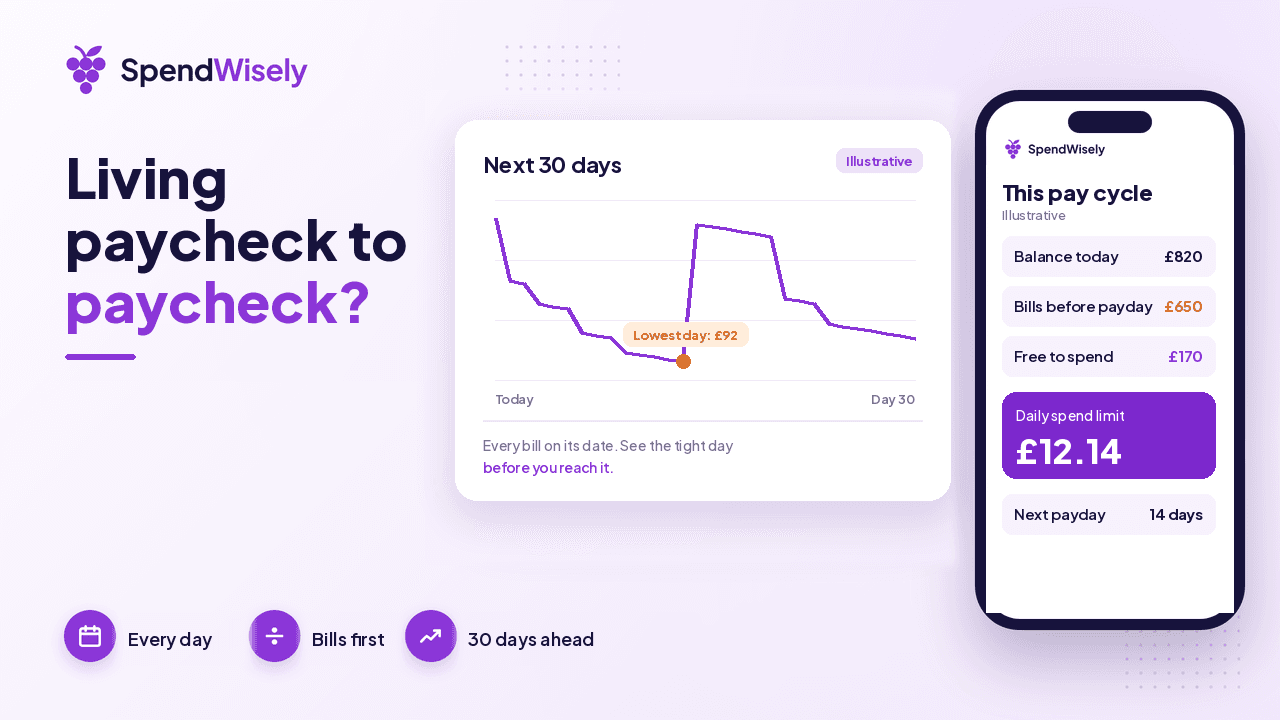
Living paycheck to paycheck: what it means and how to break the cycle
Living paycheck to paycheck means your pay runs out before the next one lands. The signs, why it happens on a decent wage, and how a 30-day forecast breaks the cycle.
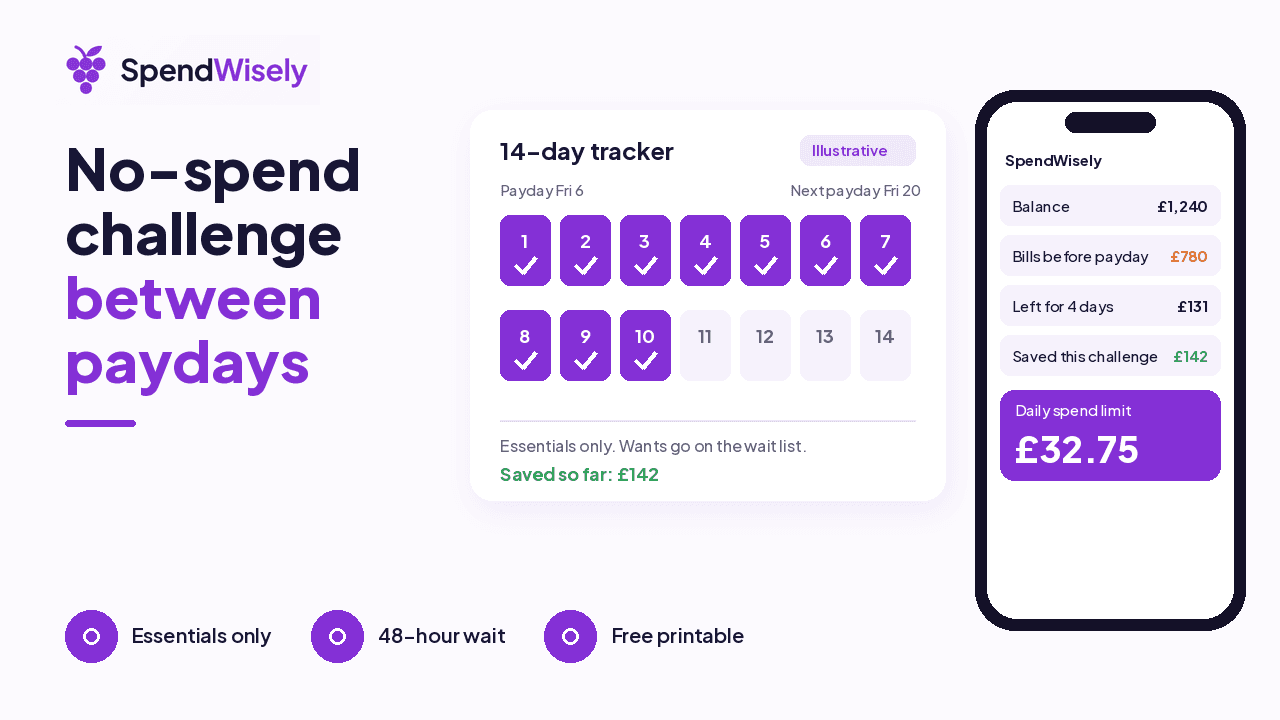
No-spend challenge: how to do one between paydays (free printable)
A no-spend challenge means buying only essentials for a set time. Simple rules, a 7, 14 or 30-day plan timed to your payday, and a free printable tracker.
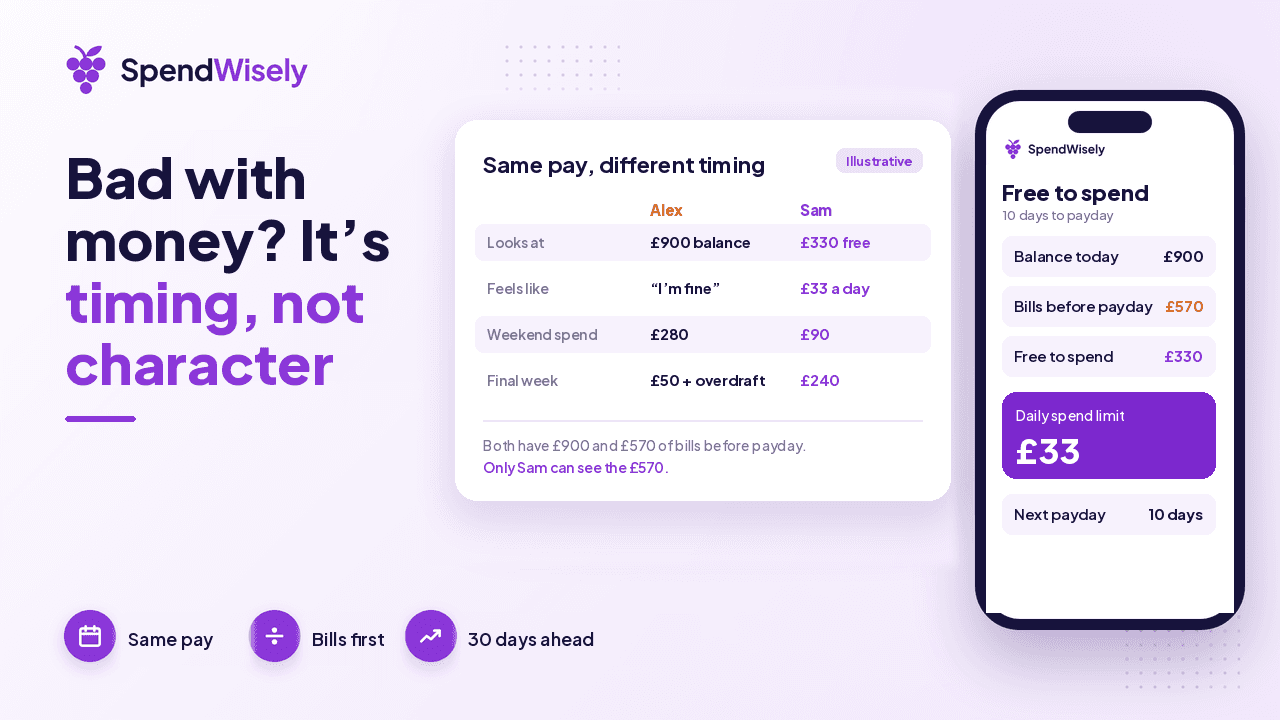
Bad with money? Why am I so bad with money (and why it's usually timing)
Why am I so bad with money? Usually it's timing, not character: today's balance hides the bills due before payday. Signs, causes and 6 steps to fix it.