Why am I always broke after payday? (It's the gap, not you)
Always broke after payday? Payday shows the biggest number of the month and none of the bills that will take it. Where your money goes, and how to see the gap before it runs out.
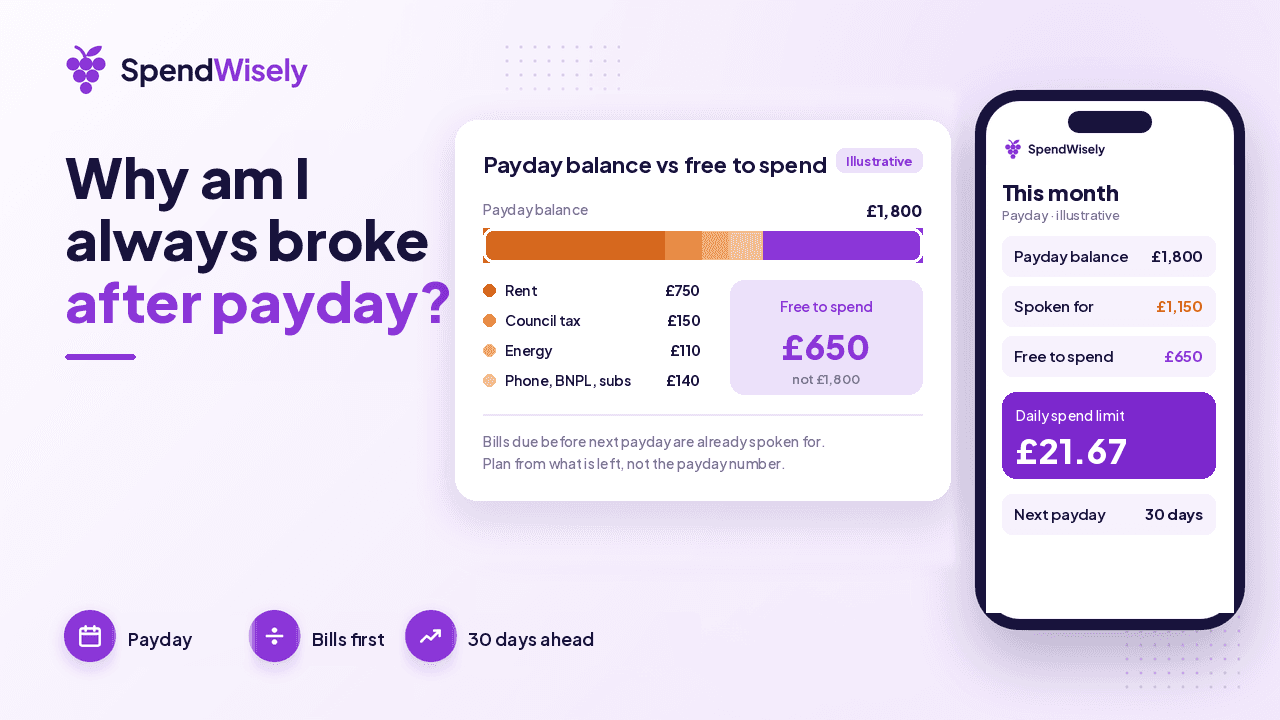
Short answer: if you're always broke after payday, the problem is usually not that you're bad with money. On payday your balance shows the biggest number of the month and none of the bills that are about to take it. So you spend from a number that is mostly spoken for, and the shortfall only shows up a week or two later. The fix is to see the gap: take out every bill due before your next payday, then divide what's left by the days until you're paid again.
This is educational money-management information from SpendWisely (Adleads Ltd). It is not personalised financial advice, and Adleads Ltd is not authorised by the FCA. If you are struggling with debt, contact StepChange, National Debtline, or MoneyHelper. If money worry is affecting how you feel, Mind has guidance on getting support.
Why does it feel like I'm broke right after payday?
Because payday is the one day your balance tells you the least. The money has arrived, but the rent, direct debits, subscriptions and buy now, pay later instalments due over the next few weeks haven't left yet. Your banking app shows them as available.
That creates a familiar pattern:
- Payday feels rich. A takeaway, a night out or a "payday treat" feels affordable against the full balance.
- Bills leave in a cluster. Rent and the big direct debits often go in the first week after pay.
- The middle goes quiet. Smaller payments drip out and the balance falls faster than you expected.
- The last week is skint. You're borrowing from the overdraft or a card to reach payday, and the cycle starts again.
None of that is a character flaw. You made each decision with the information on the screen. The screen just didn't show what was coming.
If every pay is gone before the next one, see living paycheck to paycheck.
For a step-by-step plan, see how to stop spending money.
Where does my money go every month?
If your money runs out before payday and you can't work out why, it usually goes in five places:
- Bills you forgot were monthly or yearly. Car insurance, breakdown cover, an annual subscription renewal.
- Buy now, pay later. Each instalment is small, but three or four running at once add up, and they don't show in your balance until they leave.
- Subscriptions. Streaming, apps, gym, cloud storage. A few pounds each, every month.
- Weekend timing. Pay can land on a Friday while some payments wait for a working day, so Saturday's balance looks bigger than Monday's will be. See why your weekend bank balance looks higher.
- Small daily spending. Coffees, meal deals and delivery fees. Not wrong in itself, but easy to underestimate when there's no daily limit.
Go through one month of your bank statement and list everything under these five headings. Most people find one or two leaks they didn't know about.
The payday gap, explained (illustrative)
Take-home pay of £1,800, paid monthly. Figures for illustration only.
| Due before next payday | Amount |
|---|---|
| Rent | £750 |
| Council tax | £150 |
| Energy | £110 |
| Phone and broadband | £55 |
| BNPL instalments | £50 |
| Subscriptions | £35 |
| Total spoken for | £1,150 |
- Payday balance: £1,800. What's actually free: £650.
- Over 30 days, that's about £21.67 a day.
- Spend £200 on the first payday weekend and you have £450 for the remaining 27 days: about £16.67 a day.
The £1,800 was never really there to spend. Only £650 was. When you plan from £650, the last week stops being a surprise.
How to stop being broke all the time
- Write down your next payday. Count the days until then.
- List everything due before it. Rent, bills, BNPL, subscriptions and debt repayments, with dates.
- Move bill money out on payday into a separate pot or account, before you spend anything.
- Work out a daily spend limit: what's left ÷ days to payday.
- Give yourself a small payday treat on purpose. A planned £20 is better than an unplanned £100.
- Check again mid-month. If you're over, adjust now, not in the last week.
If you want the longer list of fixes, see how to stop overspending between paydays.
Paid weekly or fortnightly?
The gap is shorter but it still exists. Monthly bills don't line up with weekly or fortnightly pay, so some paydays have to carry rent and others carry nothing. Set aside each bill's share from every pay (monthly × 12 ÷ 52 for weekly, × 12 ÷ 26 for fortnightly). Our free weekly budget template does the maths. And watch December: many employers pay early before Christmas, which makes the gap to January payday five or six weeks long.
When it isn't a spending problem
Sometimes there simply isn't enough money after bills, however carefully you plan. That isn't a failure either. Check you're getting any benefits or discounts you're entitled to, speak to your energy supplier or council if you're behind, and get free debt advice from StepChange, National Debtline or MoneyHelper.
If spending feels driven by stress, mood or impulse, read impulse spending and ADHD or why being "bad with money" is usually a timing problem.
See the gap before it runs out
A 30-day cashflow forecast shows your balance day by day, with every bill and payday on it, so you can see on payday what's actually free to spend. In SpendWisely, the AI Guide sets up your balance, pay and bills with you in a chat. You refresh your balance when pay lands, and the forecast and daily spend limit update. There's no Open Banking or bank login.
Frequently asked questions
Why am I always broke?
Usually because you're spending from your full balance on payday, before the bills due over the next few weeks have left. The money looks free but is already spoken for. Take bills out first and spend from what's left.
Why does my money run out before payday?
Bills, BNPL and subscriptions leave after you've already spent part of your pay, and small daily spending adds up faster than it feels. A daily spend limit based on what's left after bills stops the last-week squeeze.
Where does my money go every month?
Usually into forgotten monthly or yearly bills, BNPL instalments, subscriptions, weekend timing and small daily spending. Go through one month of statements and sort everything into those headings.
How do I stop being broke all the time?
List every bill due before your next payday, move that money out on payday, then divide what's left by the days to payday. Check again mid-month and adjust early.
Is it normal to have no money left after paying bills?
It's common, especially when prices rise faster than pay. If there's genuinely nothing left after essential bills, get free advice from StepChange, National Debtline or MoneyHelper. You may be entitled to help you're not getting.
Do I need to connect my bank to use SpendWisely?
No. SpendWisely is a 30-day forecast. No bank login needed: the AI Guide sets up your 30-day forecast from a few quick questions in chat, and you just refresh your balance when pay lands. There is no Open Banking.
Start a 14-day trial
See what's actually free to spend on payday, with a daily spend limit until the next one. Get started free — 14-day free trial. No bank connection or Open Banking login. No payment card required. Cancel at any time. After the trial, Premium is £8.75 a month or £63 a year.
Related: Bad with money? It's timing · Impulse spending and ADHD · Stop overspending between paydays · Why you keep checking your bank balance · December payday gap · How to stop spending money · Living paycheck to paycheck
Read more
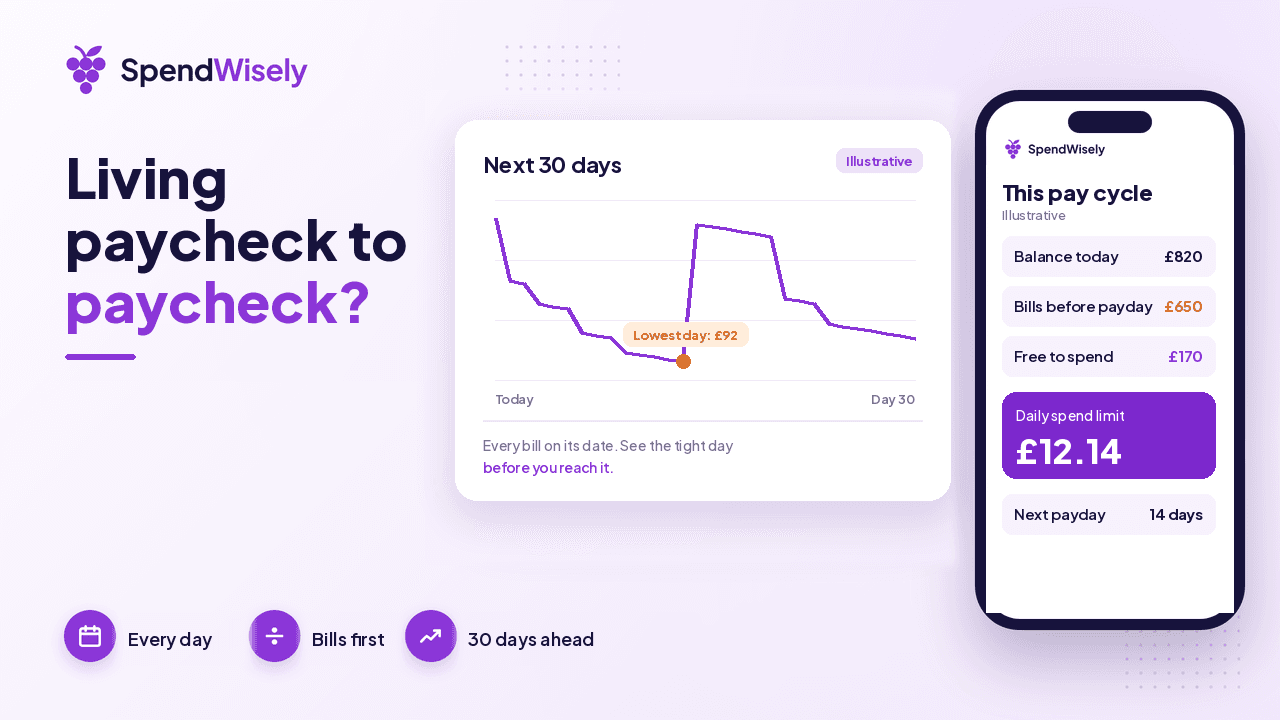
Living paycheck to paycheck: what it means and how to break the cycle
Living paycheck to paycheck means your pay runs out before the next one lands. The signs, why it happens on a decent wage, and how a 30-day forecast breaks the cycle.
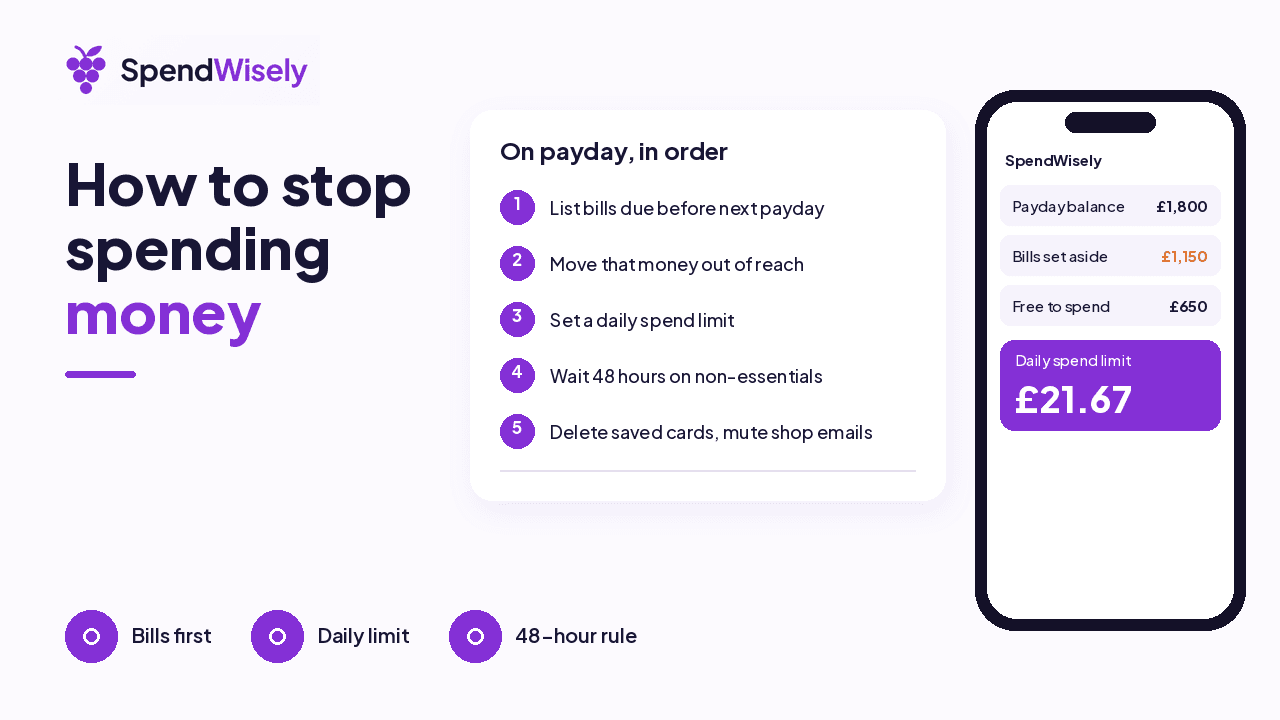
How to stop spending money: 9 steps that work between paydays
To stop spending money, move bills out on payday, set a daily spend limit, add a 48-hour pause and delete saved cards. Nine steps, no willpower needed.
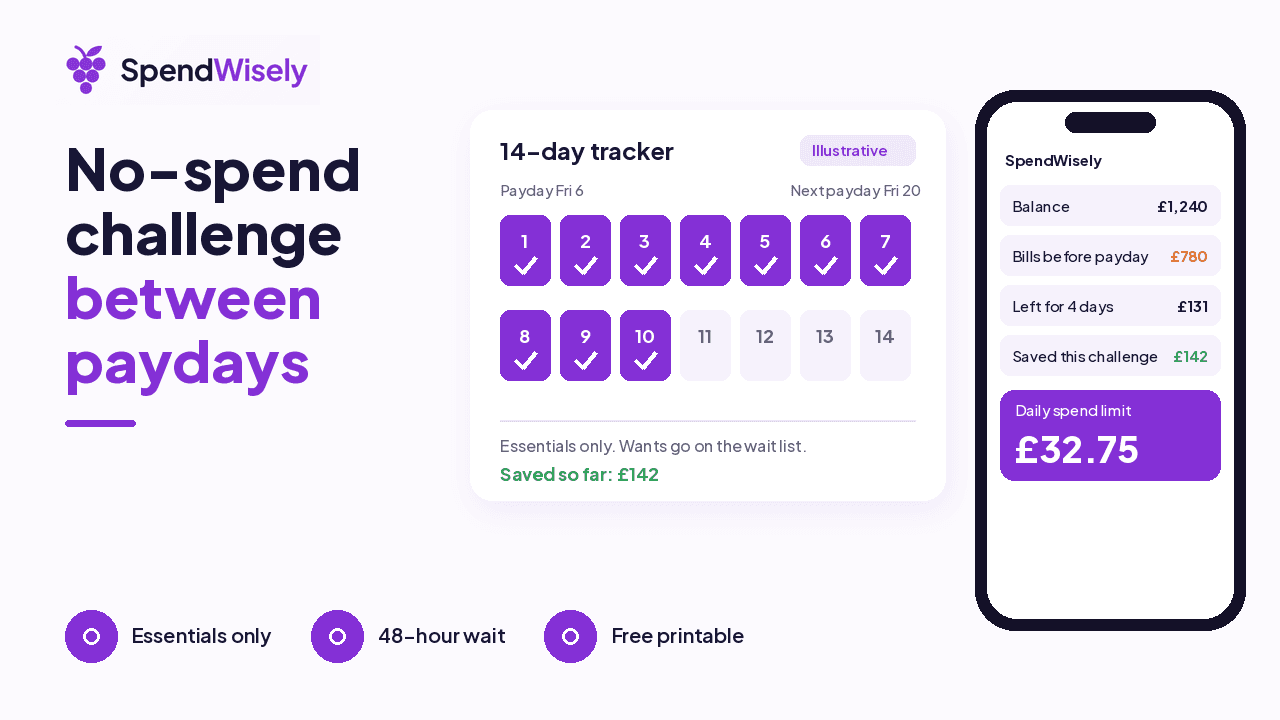
No-spend challenge: how to do one between paydays (free printable)
A no-spend challenge means buying only essentials for a set time. Simple rules, a 7, 14 or 30-day plan timed to your payday, and a free printable tracker.