No-spend challenge: how to do one between paydays (free printable)
A no-spend challenge means buying only essentials for a set time. Simple rules, a 7, 14 or 30-day plan timed to your payday, and a free printable tracker.
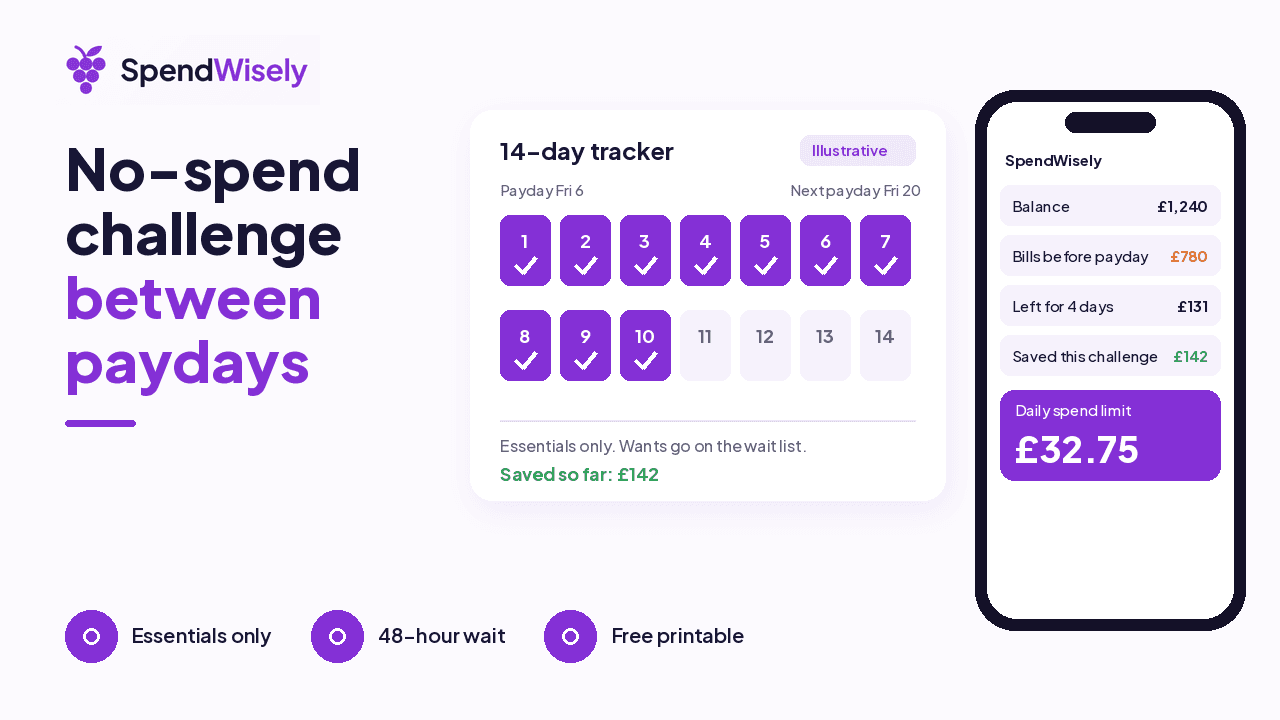
A no-spend challenge means you buy only essentials, such as rent, bills, food and travel to work, for a set number of days. Everything else waits. The easiest version runs from one payday to the next, so you can see exactly how much it saved before the next pay lands.
This is educational money-management information from SpendWisely (Adleads Ltd). It is not personalised financial advice, and Adleads Ltd is not authorised by the FCA. If you are struggling with debt, contact StepChange, National Debtline, or MoneyHelper.
Download the free no-spend challenge printable (PDF): rules, a 31-day tracker and a "wait list" for things you want to buy later.
No-spend challenge rules
Write your rules down before you start. Keep them short:
- Allowed: rent or mortgage, bills, debt repayments, BNPL instalments, basic food shopping, travel to work, medicine.
- Not allowed: takeaways, coffees out, clothes, gadgets, new subscriptions, "treats".
- Grey areas: decide now, for example one planned social plan a week, or birthday gifts already promised.
- Wait list: anything you want goes on a list with the date. If you still want it when the challenge ends, buy it then.
- Slip-ups: log it, don't quit. One coffee doesn't cancel the other 13 days.
Pick a length that fits your pay
Time the challenge to your pay cycle, not the calendar month. Then the result shows up in your balance on the next payday.
| Paid | Challenge length | Why it works |
|---|---|---|
| Weekly | 7 days | Short enough to finish, easy to repeat |
| Fortnightly | 14 days | One full pay cycle |
| Monthly | 30 days, or the last 10 days before payday | The last stretch is where money usually runs out |
A 30-day no-spend month is hard. If you have never done one, start with a week, or with the tightest days before payday.
When to do one: December and January
Searches for no-spend challenges peak in December, and for good reason. Many people are paid early before Christmas, so the gap to the January payday can be five or six weeks. A no-spend stretch in early January, or a "low-spend December" with a fixed gift budget, protects that gap. See the December payday gap for the dates.
No-spend challenge ideas that make it easier
- Delete saved cards from shopping and takeaway apps for the challenge.
- Unsubscribe from shop emails and turn off app notifications.
- Plan free plans: walks, library, film night at home, swapping with friends.
- Shop your cupboards: cook from what you have before buying more.
- Check one number each morning: how much is left until payday, not your full balance.
If impulse buying is the problem, impulse spending and ADHD covers why the urge feels so strong and how to add a pause.
What a no-spend challenge won't fix
It won't fix a budget where essential bills are bigger than your pay. If the challenge shows there is nothing left after rent, bills and food, that is not a willpower problem. Talk to StepChange, National Debtline or MoneyHelper, because you may be entitled to help you're not getting.
It also won't help if the saving disappears the day the challenge ends. Decide in advance where the money goes: a buffer, a bill you're behind on, or next month's gap.
How SpendWisely helps
SpendWisely is a 30-day cashflow forecast. No bank login needed: the AI Guide sets up your forecast from a few quick questions in chat, and you just refresh your balance when pay lands. You see every bill due before payday and a daily spend limit, so during a challenge you can watch the number you're saving grow, day by day.
Frequently asked questions
What is a no-spend challenge?
A set number of days where you buy only essentials, such as rent, bills, food and travel to work. Everything else waits until the challenge ends.
What are the rules of a no-spend challenge?
Pay bills and essentials as normal. Stop non-essential buying, decide grey areas in advance, keep a wait list of things you want, and log any slip-ups rather than quitting.
How long should a no-spend challenge be?
Match it to your pay: 7 days if you're paid weekly, 14 if fortnightly, and 30 days or the last 10 days before payday if monthly.
How much can you save with a no-spend challenge?
Add up a normal fortnight of takeaways, coffees, shopping and subscriptions. That total is roughly what a 14-day challenge saves, and it's usually more than people expect.
Start a 14-day trial
See what's left until payday and how much your challenge is saving, on one 30-day forecast. Get started free: 14-day free trial. No bank login needed. No payment card required. Cancel at any time. After the trial, Premium is £8.75 a month or £63 a year.
Related: How to stop spending money · Why am I always broke after payday? · December payday gap · Free weekly budget template · Stop overspending between paydays
Read more
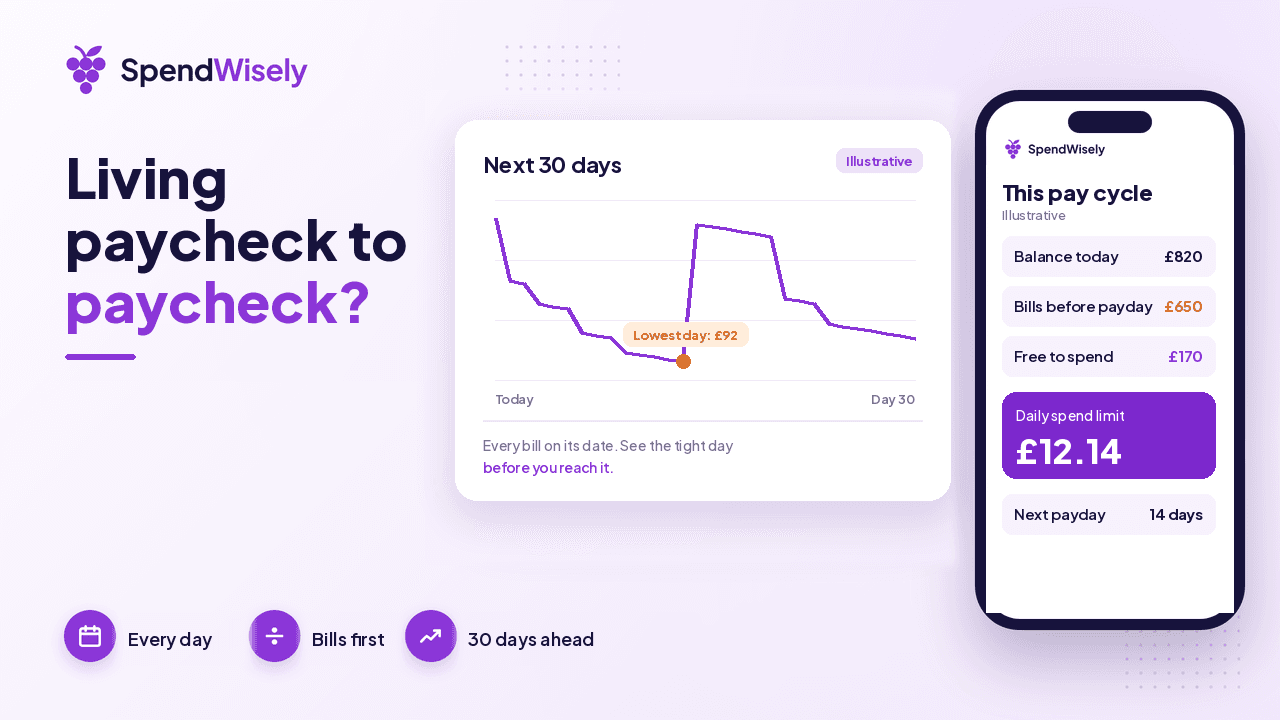
Living paycheck to paycheck: what it means and how to break the cycle
Living paycheck to paycheck means your pay runs out before the next one lands. The signs, why it happens on a decent wage, and how a 30-day forecast breaks the cycle.
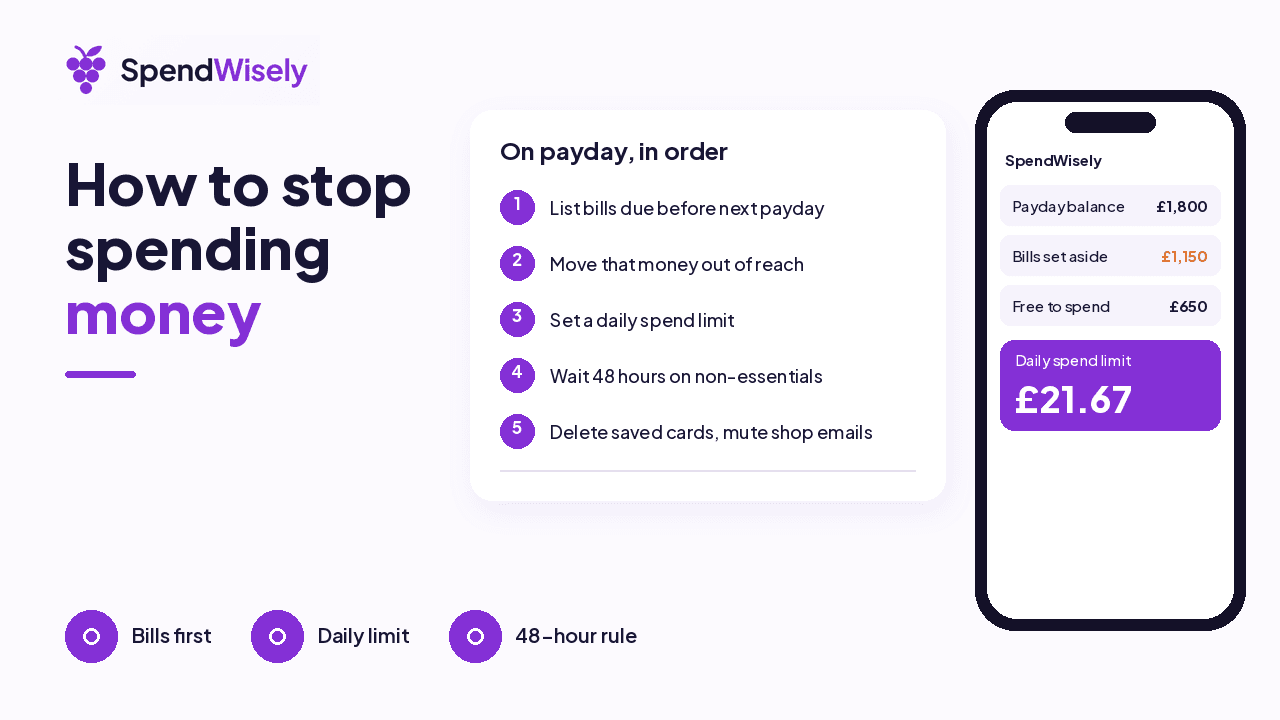
How to stop spending money: 9 steps that work between paydays
To stop spending money, move bills out on payday, set a daily spend limit, add a 48-hour pause and delete saved cards. Nine steps, no willpower needed.
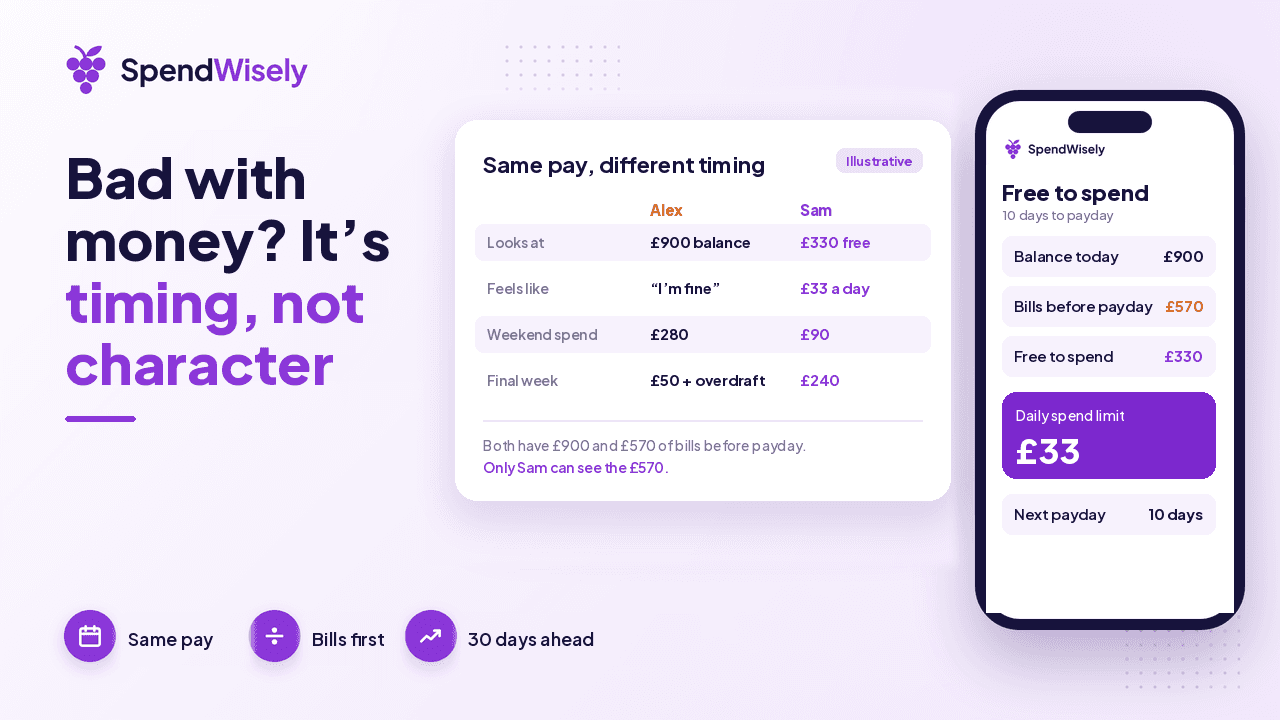
Bad with money? Why am I so bad with money (and why it's usually timing)
Why am I so bad with money? Usually it's timing, not character: today's balance hides the bills due before payday. Signs, causes and 6 steps to fix it.