What months is council tax not paid? 10 vs 12 instalments explained
On the usual 10 instalments, council tax is paid April to January, so February and March are payment-free. Is it paid in advance or arrears, and how do you spread it on weekly pay?
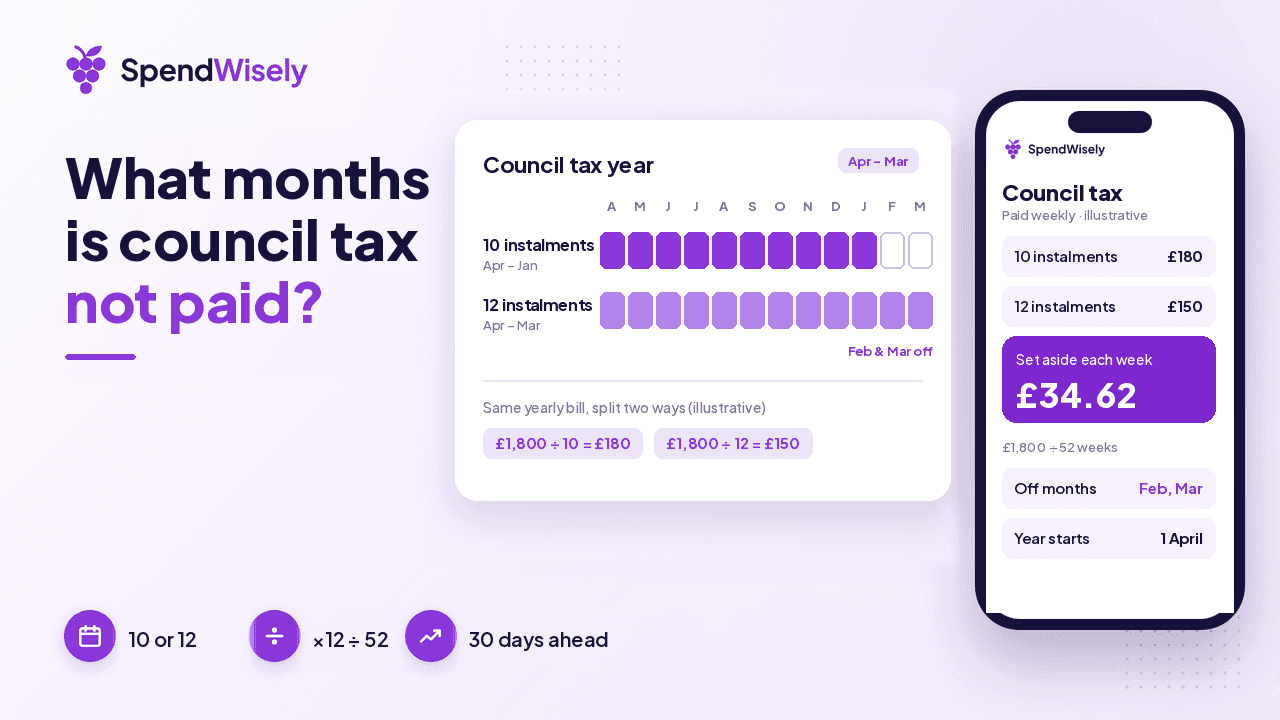
Short answer: on the standard plan, council tax is not paid in February and March. Councils in England, Wales and Scotland usually split the yearly bill (1 April to 31 March) into 10 monthly instalments from April to January. If you ask for 12 instalments, you pay every month from April to March and each payment is smaller. The two months off are not free: by January you have already paid for the whole year.
This is educational money-management information from SpendWisely (Adleads Ltd). It is not personalised financial advice or benefits advice, and Adleads Ltd is not authorised by the FCA. If you are struggling with debt, contact StepChange, National Debtline, or MoneyHelper. If you are behind on council tax, speak to your council as soon as you can.
Which months you pay on 10 and 12 instalments
The council tax year runs from 1 April to 31 March. Your bill usually arrives in March and shows the amount for the year and the dates each instalment is due. GOV.UK says the cost is usually split into 10 monthly payments.
| Plan | Months you pay | Months with no payment | £1,800 bill (illustrative) |
|---|---|---|---|
| 10 instalments (the default) | April to January | February and March | £180 a month |
| 12 instalments (on request) | April to March | None | £150 a month |
Figures are illustrative only. The yearly total is the same on both plans. Only the size of each payment changes.
This page covers council tax in England, Wales and Scotland. Northern Ireland uses domestic rates instead, which work differently.
Is council tax paid in advance or arrears?
Council tax is paid during the year it covers, not after it, so it is closer to paying in advance than in arrears. Each April's bill is for the year ahead (April to March), and the first instalment is due in April. On the 10-instalment plan you finish in January, two months before the year ends, which is why February and March are payment-free.
In council tax language, "arrears" means money you owe from missed payments, not the normal way the bill works. If you miss an instalment, the council sends a reminder. Miss more, and you can lose the right to pay in instalments, which means the rest of the year's bill becomes due at once. GOV.UK explains what happens if you miss payments. Council tax is a priority bill, so deal with it before things like credit cards.
Can you pay council tax over 12 months?
Yes, in most cases. Councils in England must let you pay in 12 monthly instalments if you ask, and councils in Wales and Scotland generally offer it too. Check your council's website for its form.
- Ask before the year starts (ideally by February or March) to get 12 equal payments from April.
- Ask part-way through the year and the council usually spreads what is left over the remaining months to March, then gives you 12 instalments from the next April.
- Ask about dates. Many councils let you choose your Direct Debit date, and some accept weekly or fortnightly payments.
If money is tight, also check whether you can get a discount or Council Tax Reduction. For example, people who live alone can usually get a 25% single person discount.
How to spread council tax on weekly or fortnightly pay
Monthly bills and weekly or fortnightly pay never line up neatly. Council tax adds a twist, because the 10-instalment plan puts a whole year's bill into 10 months. There are two ways to handle it.
Option 1: switch to 12 instalments (simplest). Then set aside the yearly bill ÷ 52 every week, or ÷ 26 every fortnight. That is the same as the monthly instalment × 12 ÷ 52 used in our free weekly budget template.
Option 2: stay on 10 instalments. Set aside the 10-month instalment × 12 ÷ 52 each week from April to January, then stop in February and March. Restart in April, because the new bill starts straight away.
| £1,800 yearly bill (illustrative) | Weekly set-aside | Fortnightly set-aside | Months you set aside |
|---|---|---|---|
| 12 instalments of £150 | £34.62 | £69.23 | All year |
| 10 instalments of £180 | £41.54 | £83.08 | April to January |
Figures are illustrative only. Option 2 makes February and March feel like a pay rise. Decide in advance where that money goes, such as your buffer or the January stretch after an early December payday, so it doesn't just disappear.
Paid fortnightly? See which payslip should cover which bill. Paid weekly? Put the council tax date on your weekly pay bill calendar so you know which Friday covers it.
Watch for the April change
Most councils change the charge every April, so your new bill can be higher than last year's. When it arrives in March, update your weekly or fortnightly set-aside straight away. A 30-day forecast shows the April instalment against your paydays before it leaves.
Frequently asked questions
What months is council tax not paid?
On the standard 10-instalment plan, council tax is paid from April to January, so there is no payment in February and March. If you pay over 12 months, you pay every month.
Is council tax paid in advance or arrears?
It is paid during the year it covers (April to March), so it is closer to paying in advance. On 10 instalments you have paid the full year by January. "Arrears" in council tax means missed payments that you owe.
Do I get two months free council tax?
No. February and March are payment-free on the 10-instalment plan only because you have already paid the whole year's bill by January.
Can I pay council tax over 12 months instead of 10?
Usually, yes. Ask your council. If you ask part-way through the year, it normally spreads the rest of the bill over the months left until March.
How much should I set aside for council tax each week?
On 12 instalments, set aside the yearly bill ÷ 52 each week (for example, £1,800 ÷ 52 = £34.62, illustrative). On 10 instalments, set aside the instalment × 12 ÷ 52 from April to January and stop in February and March.
Can I pay council tax weekly or fortnightly?
Some councils accept weekly or fortnightly payments. Check your council's website or ask its council tax team.
Do I need to connect my bank to use SpendWisely?
No. SpendWisely is a 30-day forecast. No bank login needed: the AI Guide sets up your 30-day forecast from a few quick questions in chat, and you just refresh your balance when pay lands. There is no Open Banking.
Start a 14-day trial
See council tax, rent and every other bill against your weekly or fortnightly paydays on one 30-day forecast, with a daily spend limit. Get started free — 14-day free trial. No bank connection or Open Banking login. No payment card required. Cancel at any time. After the trial, Premium is £8.75 a month or £63 a year.
Related: Free weekly budget template · Bills if paid fortnightly · Weekly pay bill calendar · Weekly pay guide · December payday gap
Read more
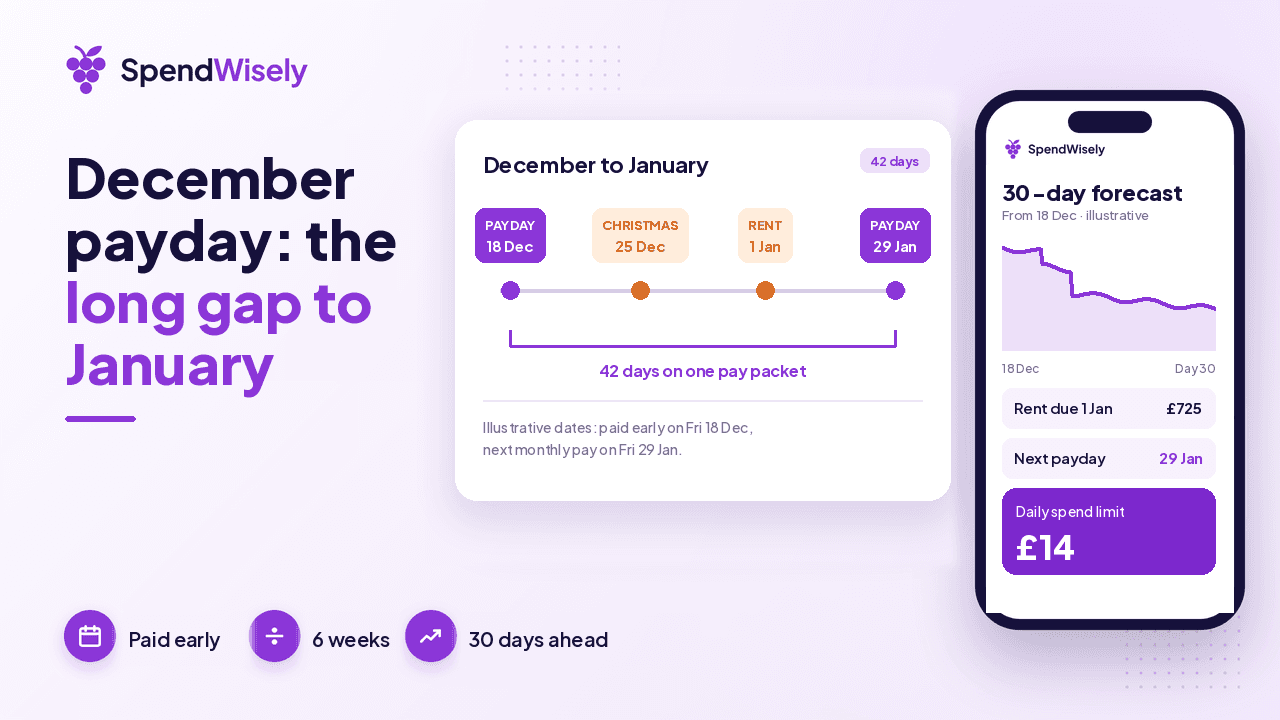
December payday: paid early for Christmas, then the long gap to January
Paid early in December? Your next pay may be six weeks away. How to plan the long gap to January payday on monthly, weekly or fortnightly pay, with a 30-day forecast.
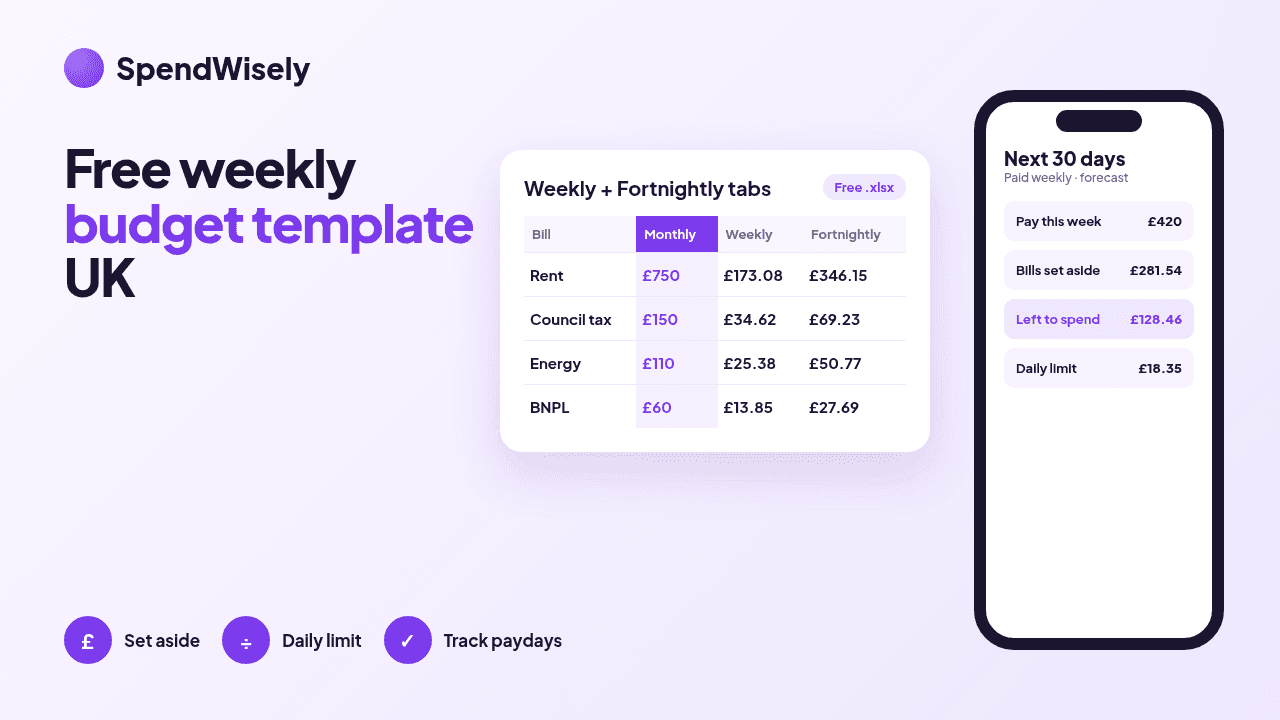
Free weekly budget template for Excel and Google Sheets, with a fortnightly tab
Free weekly budget template and budget spreadsheet for Excel and Google Sheets, with a fortnightly tab. Turn monthly bills into a weekly amount and get a daily spend limit.
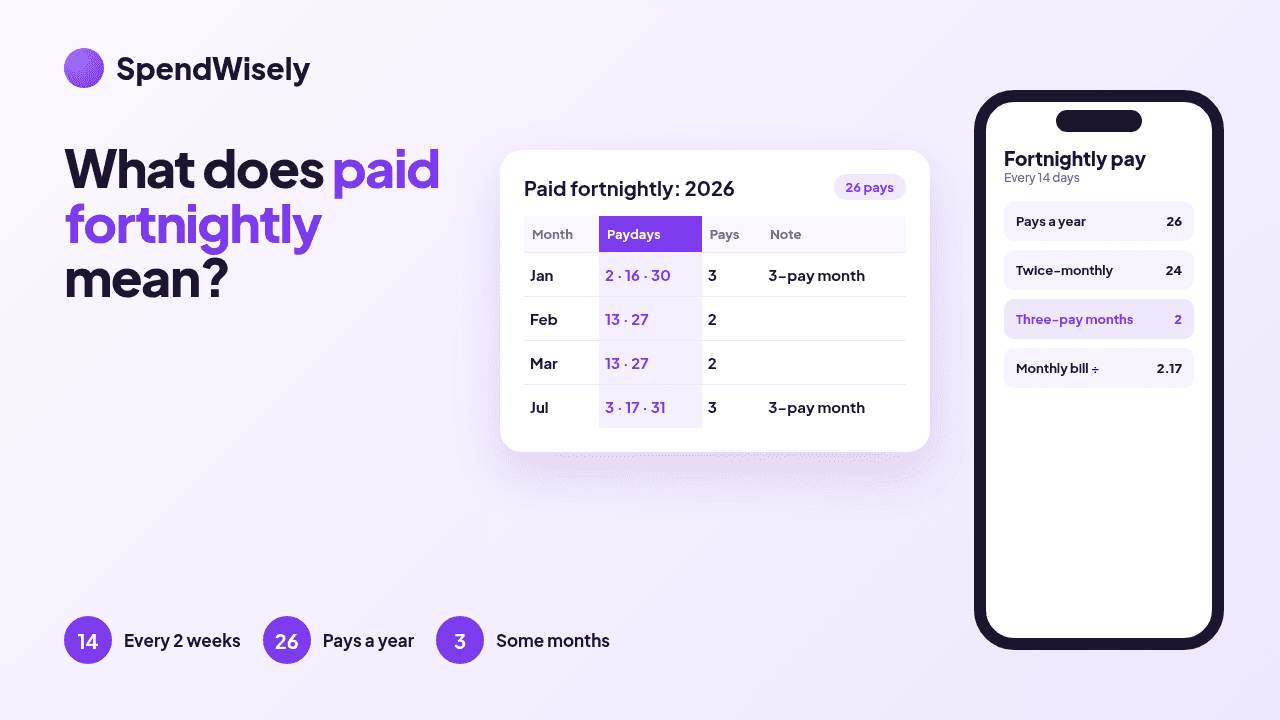
What does paid fortnightly mean? Fortnightly pay explained
Fortnightly means every 14 days: 26 paydays a year, not 24. See which 2026 months get three pays and how to split monthly bills across each pay.