How to stop overspending between paydays: 7 fixes for weekly or fortnightly pay
How to stop overspending between paydays in the UK: park bill money first, set a daily spend limit, plan for BNPL and weekends, and check 30 days ahead.
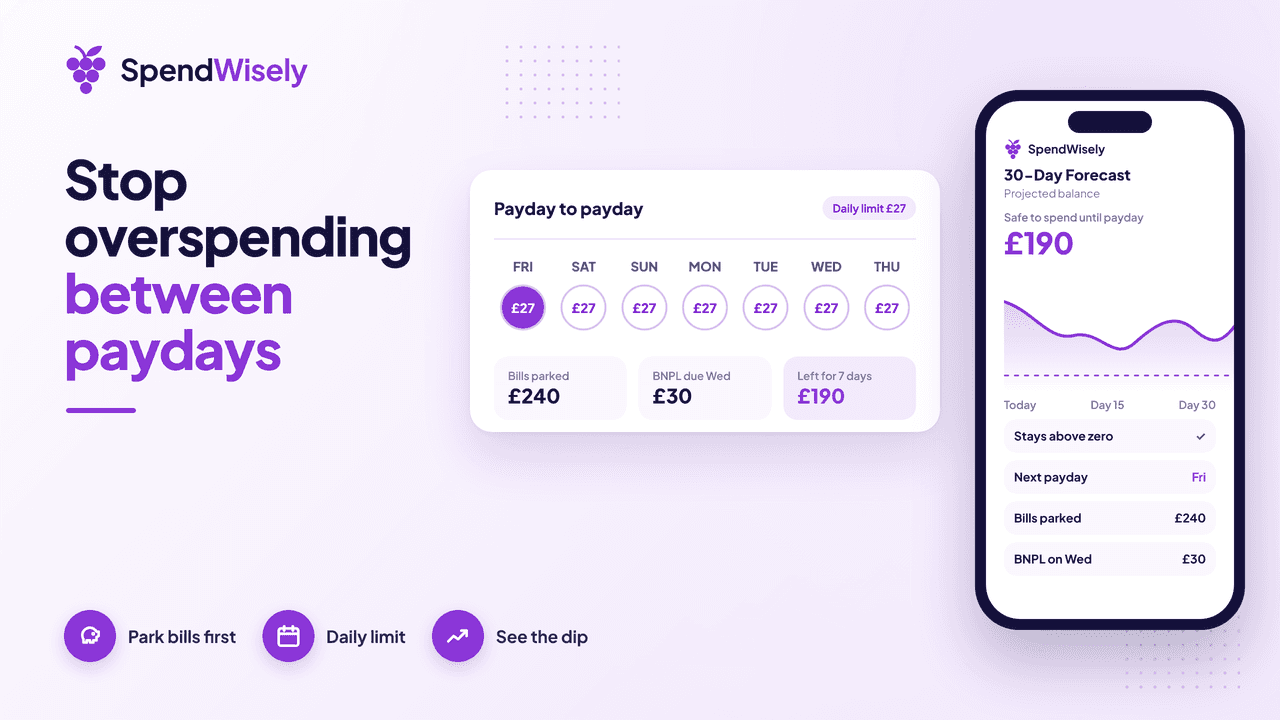
To stop overspending between paydays, stop treating today’s bank balance as money you can spend: park what bills will take first, then set a daily spend limit until the next payday. On weekly or fortnightly pay, most overspending is a timing problem (the balance looks bigger than it is), so fix what you can see before you lean on willpower.
This is educational money-management information from SpendWisely (Adleads Ltd). It is not personalised financial advice and Adleads Ltd is not authorised by the FCA. If you are in debt crisis, contact StepChange, National Debtline, or MoneyHelper.
What overspending really means on weekly or fortnightly pay
Overspending is not just “buying too much”. On short pay cycles it usually means spending money that is already needed for something else before the next packet lands: rent share, council tax, a Klarna instalment, Monday’s direct debits.
The banking app does not separate those. It shows one number. On payday that number is at its highest, so it is the worst moment to decide what you can afford.
Why do I keep overspending?
If you keep overspending even when you try hard, check these before blaming yourself:
- Pay rhythm vs bill rhythm. Weekly or fortnightly money, monthly bills. Four weekly pays is not a month (it is about 4.33), and two fortnightly pays is not a month either.
- The weekend balance. Pay can land on a Friday or Saturday while many standing orders wait for a working day, so Saturday looks richer than Monday will be.
- Split payments. Buy now, pay later spreads the cost into instalments that sit outside your banking app’s balance until they leave.
- No finish line. Without a “safe to spend until payday” figure, every purchase is judged against the whole balance.
There is more on the visibility side in why you can’t control spending when your bank balance is lying.
Sometimes spending is tied to mood, stress, or mental health. If that sounds familiar, free help is available. Mind has guidance on money and mental health, and MoneyHelper can point you to free support.
7 fixes to stop overspending between paydays
- Park spoken-for money the day pay lands. Convert each monthly bill into a per-pay share: monthly × 12 ÷ 52 (about ÷ 4.33) if you are paid weekly, monthly × 12 ÷ 26 if you are paid fortnightly. Move that share out of sight first (a separate pot works).
- Set a daily spend limit. What is left ÷ days until the next payday. Treat it as a ceiling, not a target. A big food-shop day goes over; quiet days come in under.
- Read the weekend balance as Monday’s balance. Before spending on a Saturday, take off anything due on the next working day. See the weekend bank balance illusion.
- Put every BNPL instalment on a date. Klarna, Clearpay, PayPal Pay in 3: each instalment is a commitment with a due date, not a forgotten email. More on BNPL commitments.
- Preview bigger buys against the next 30 days. The question is not “can I afford this today?” but “can I afford this and rent week?”. That is what Spending Impact shows: the dip before you buy.
- Add friction where the leaks are. Once the numbers are honest, small blockers help: remove saved cards from the shops you overspend in, wait 24 hours on non-essentials, turn off sale notifications.
- Decide the “extra” money before it arrives. A five-payday month, a third fortnightly packet, or a big overtime week feels like a bonus. Mostly it is catch-up. Assign it to bills or a buffer before payday, as covered in five-payday months.
A five-minute payday routine
Fixes stick when they become a habit tied to payday:
- Update your balance once pay has landed.
- Move the bill share out.
- Check the next 30 days for rent, BNPL, and anything annual.
- Note your daily spend limit somewhere you will see it.
SpendWisely is a 30-day cashflow forecast built for this. The AI Guide can set up your balance, pay, and commitments (including BNPL) with you in a chat, and you refresh the balance when pay lands. There is no Open Banking and no bank login: it forecasts from the figures you enter.
Worked example (illustrative)
Weekly pay, figures for illustration only:
- Weekly take-home: £460
- Monthly bills: £1,040 → weekly share (÷ 4.33): £240
- BNPL instalment due this week: £30
- Left for the week: £190
- Days to next payday: 7
- Daily spend limit ≈ £27
Now say £95 goes on Saturday because the app showed £460. The remaining £95 has to last six days: about £16 a day. Nothing “went missing” by Wednesday. The week was decided on Saturday.
The same maths works on fortnightly pay: use ×12÷26 for the bill share and divide by 14 days. The full fortnightly version is in bills if paid fortnightly.
Frequently asked questions
How do I stop overspending?
Park money for bills from each pay first, set a daily spend limit on what is left until the next payday, and check the next 30 days before bigger buys. Add friction such as removing saved cards once the numbers are honest.
Why do I keep overspending even when I budget?
Often the budget is monthly but pay is weekly or fortnightly, or the balance you check does not show bills and BNPL that have not left yet. Fix what you can see first.
What is a daily spend limit?
The money left after bills and commitments, divided by the days until your next payday. It tells you what is safe to spend each day without touching money already spoken for.
Is overspending always a willpower problem?
No. Timing and visibility cause a lot of it. If spending feels tied to stress or mental health, free help is available from organisations such as Mind and MoneyHelper.
Do I need to connect my bank to use SpendWisely?
No. SpendWisely forecasts from the balance, pay, and commitments you enter. There is no Open Banking or bank login.
Start a 14-day trial
See your daily spend limit, BNPL dates, and the next 30 days on one forecast. Get started free — 14-day free trial. No bank connection or Open Banking login. No payment card required. Cancel at any time. After the trial, Premium is £8.75 a month or £63 a year.
Related: Why you can’t control spending · Spending Impact · Make weekly wages last · Weekly pay guide · Fortnightly bills · BNPL commitments
Read more
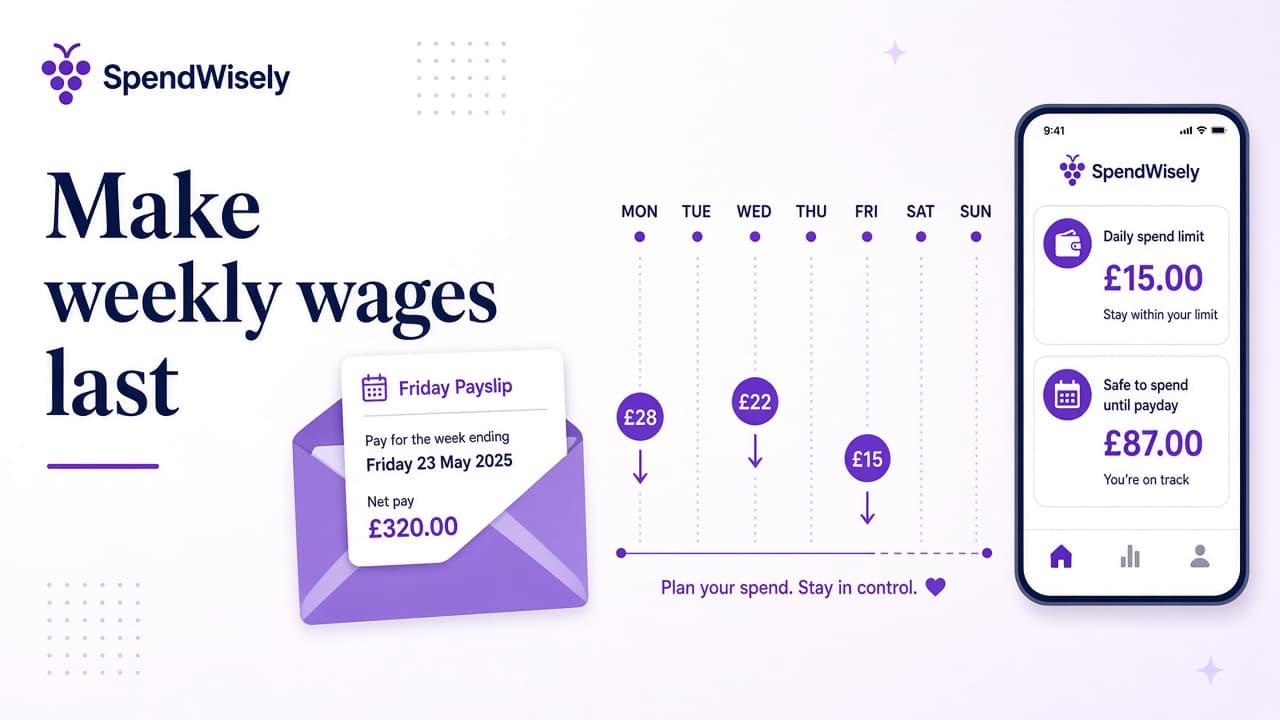
Make weekly wages last: stop overspending before the next payday
Make weekly wages last with a daily spend limit until payday. Stop rich-Friday overspending, see the weekend balance trap, and forecast 30 days — no bank connection.
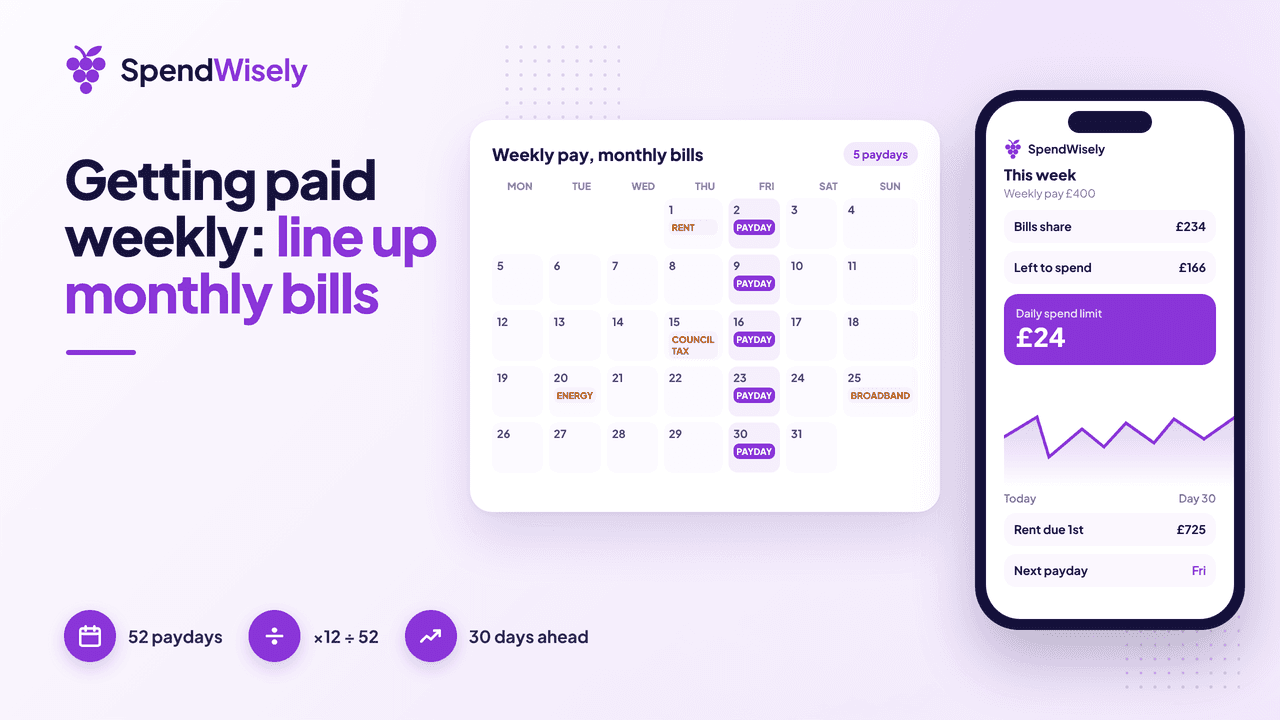
Getting paid weekly in the UK: pros, cons, and how to line up monthly bills
Getting paid weekly in the UK: the real pros and cons, weekly vs monthly pay, and how to line up rent and monthly bills with ×12÷52 and a 30-day forecast.
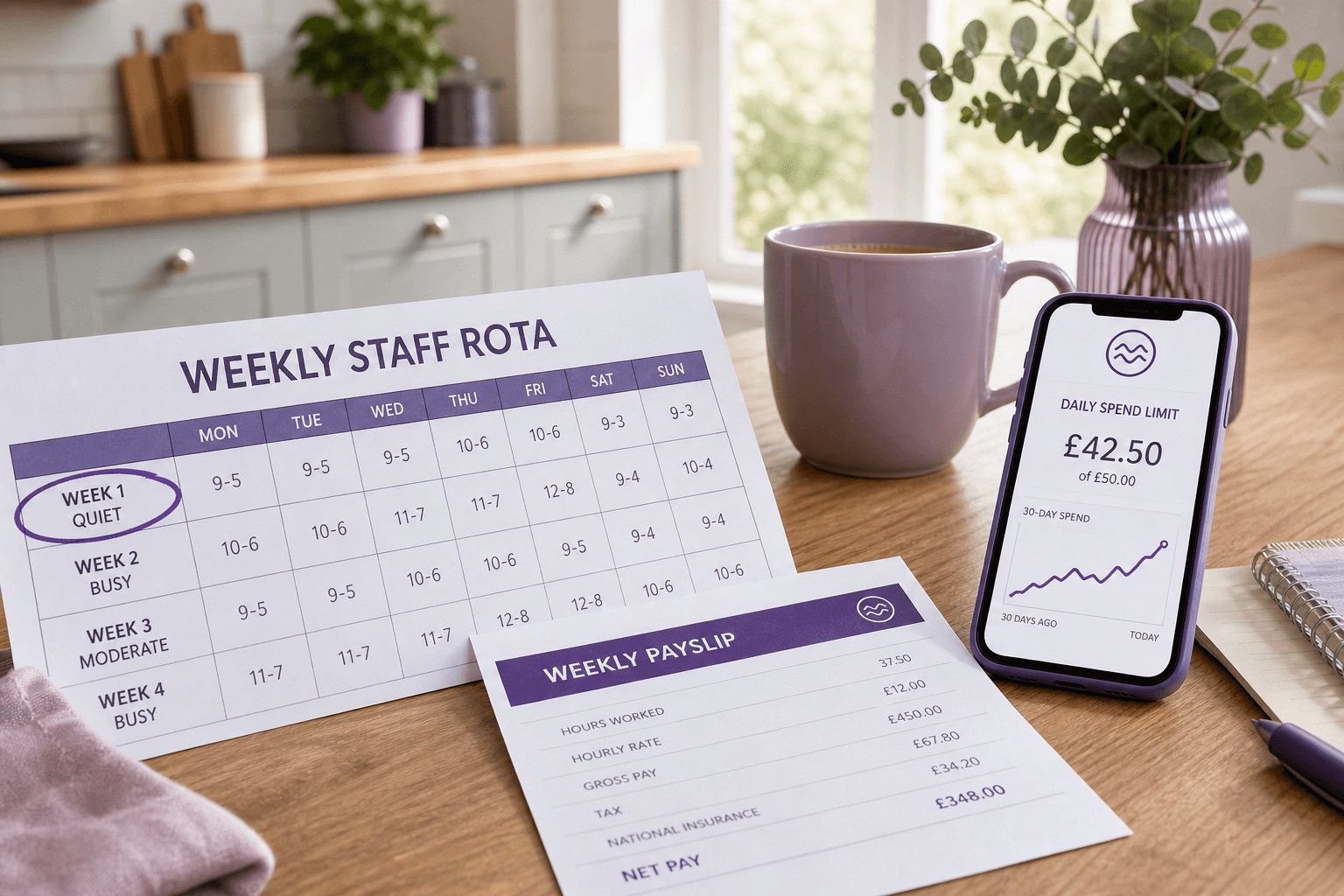
Zero-hours and weekly pay: budget from a floor week
On a zero-hours contract, budget from a quiet week. Extra hours are surplus, not lifestyle. Forecast 30 days when hours drop — no bank login.