Free weekly budget template (UK) with a fortnightly tab
Free weekly budget template and spreadsheet for the UK, with a fortnightly tab. Turn monthly bills into a weekly or fortnightly amount and get a daily spend limit.
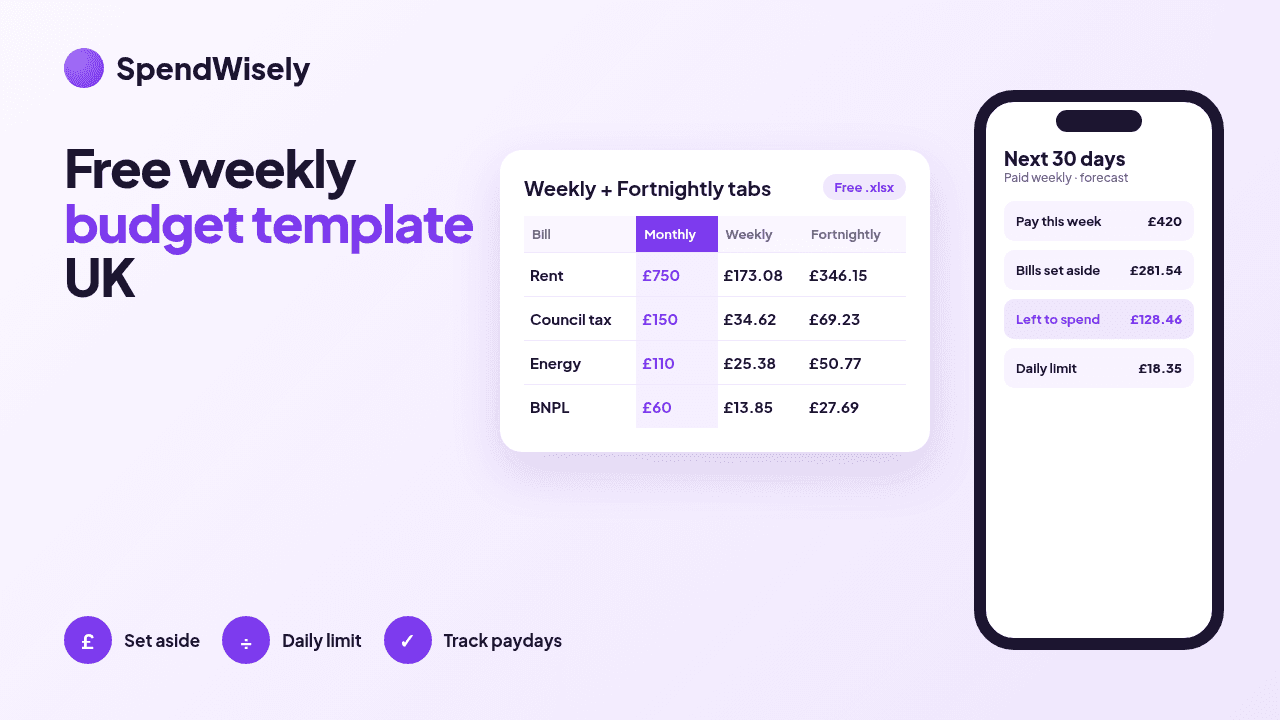
Short answer: this free weekly budget template turns every monthly bill into a weekly amount (monthly × 12 ÷ 52), takes it off your weekly pay, and gives you a daily spend limit until payday. Paid every two weeks? Use the Fortnightly tab, which uses × 12 ÷ 26 instead.
This is educational money-management information from SpendWisely (Adleads Ltd). It is not personalised financial advice and Adleads Ltd is not authorised by the FCA. If you are struggling with debt, contact StepChange, National Debtline, or MoneyHelper.
What's in the weekly budget spreadsheet
The Excel file has three tabs: How to use, Weekly and Fortnightly. Purple cells are the only ones you edit. Everything else is a formula.
| Section | What you enter | What it works out |
|---|---|---|
| Pay | Take-home per week (or fortnight) and next payday | Days until payday |
| Bills | Each monthly bill and its due day, including BNPL | Amount to set aside every payday |
| Spending | A buffer top-up you can manage | Left to spend and a daily spend limit |
| Tracker | Pay received and amount spent each payday | What was left each week or fortnight |
How to use the weekly budget template
- Open the tab that matches how often you're paid.
- Enter your take-home pay per week or fortnight, and your next payday.
- List every monthly bill: rent, council tax, energy, water, phone, insurance, subscriptions, BNPL and debt repayments.
- On payday, move the "set aside" total into a bills pot before you spend anything.
- Spend no more than the daily limit until the next payday.
- Log each payday in the tracker so you can see which weeks run short.
Weekly vs fortnightly: what it means for your bills
Bills mostly leave monthly. Pay doesn't. That mismatch is why a plain monthly budget breaks on weekly or fortnightly pay.
| Monthly bill | Set aside weekly (× 12 ÷ 52) | Set aside fortnightly (× 12 ÷ 26) |
|---|---|---|
| Rent £750 | £173.08 | £346.15 |
| Council tax £150 | £34.62 | £69.23 |
| Energy £110 | £25.38 | £50.77 |
| BNPL £60 | £13.85 | £27.69 |
Example figures only.
- Weekly pay: 52 paydays a year. Four months have five paydays. See the weekly pay budgeting guide.
- Fortnightly pay: 26 paydays a year. Two months have three. Which payslip should cover rent is covered in bills if paid fortnightly, and the basics in what does paid fortnightly mean.
Worked example (illustrative)
Take-home £420 a week. Monthly bills £1,220, so £281.54 is set aside each week. With a £10 buffer top-up, £128.46 is left: a daily spend limit of about £18.35. On fortnightly pay of £840, the set-aside is £563.07, and with a £20 buffer the daily limit is the same £18.35 over 14 days.
Paid a different amount every week?
This template assumes a steady wage. If your hours, shifts or invoices change a lot, a fixed weekly figure will overstate what you can spend. Use the irregular income budget template instead. It plans from a low floor income, then sorts the extra when it lands.
Where a spreadsheet stops
A spreadsheet tells you how much to set aside. It doesn't show when rent and direct debits will hit against your paydays. SpendWisely is a 30-day cashflow forecast that does this automatically. The AI Guide sets up your balance, pay and commitments (including BNPL) with you in a chat, and you refresh your balance when pay lands. No Open Banking or bank login. Start a 14-day free trial, no payment card required. After that, Premium is £8.75 a month or £63 a year.
Frequently asked questions
Is this weekly budget template really free?
Yes. Download the Excel file or the CSVs and use them as often as you like. There is no sign-up and no email needed to download.
How do I make a weekly budget spreadsheet?
List your take-home pay per week, list each monthly bill, convert each bill to a weekly amount with monthly × 12 ÷ 52, subtract the total from your pay, then divide what is left by 7 for a daily spend limit. The template does these sums for you.
What is the difference between a weekly and a fortnightly budget?
A weekly budget plans 52 paydays a year and sets aside monthly bills × 12 ÷ 52 from each pay. A fortnightly budget plans 26 paydays a year and sets aside monthly bills × 12 ÷ 26 from each pay. Use the tab that matches how often you are paid.
Why not just divide my monthly bills by 4?
Because a month is about 4.33 weeks, not 4. Dividing by 4 over-saves in most months, and dividing by 2 on fortnightly pay ignores the two three-pay months each year. × 12 ÷ 52 and × 12 ÷ 26 give the true amount.
Does it work in Google Sheets?
Yes. Open the .xlsx in Google Sheets, Excel or Numbers and the formulas keep working. The CSV files also open in all three.
My pay changes every week. Which template should I use?
If your hours or income change a lot, use the irregular income budget template, which plans from a low floor income instead of a fixed weekly wage.
Start a 14-day trial
See weekly or fortnightly pay, monthly bills, and a daily spend limit on one 30-day forecast. Get started free — 14-day free trial. No bank connection or Open Banking login. No payment card required. Cancel at any time. After the trial, Premium is £8.75 a month or £63 a year.
Related: What does paid fortnightly mean · Bills if paid fortnightly · Weekly pay guide · Irregular income budget template · SpendWisely 30-day forecast
Read more
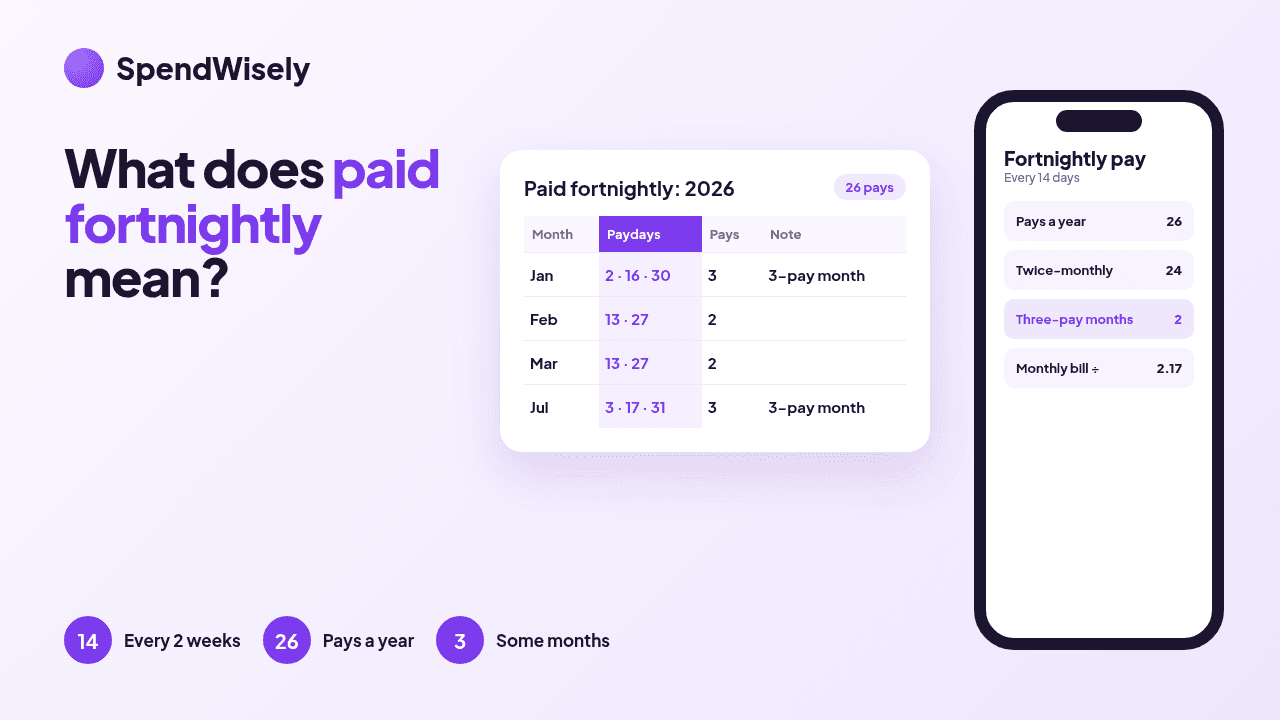
What does paid fortnightly mean? Fortnightly pay explained (UK)
Paid fortnightly means every two weeks: 26 paydays a year, not 24. How fortnightly pay differs from bi-weekly and twice-monthly, and why some months have three.
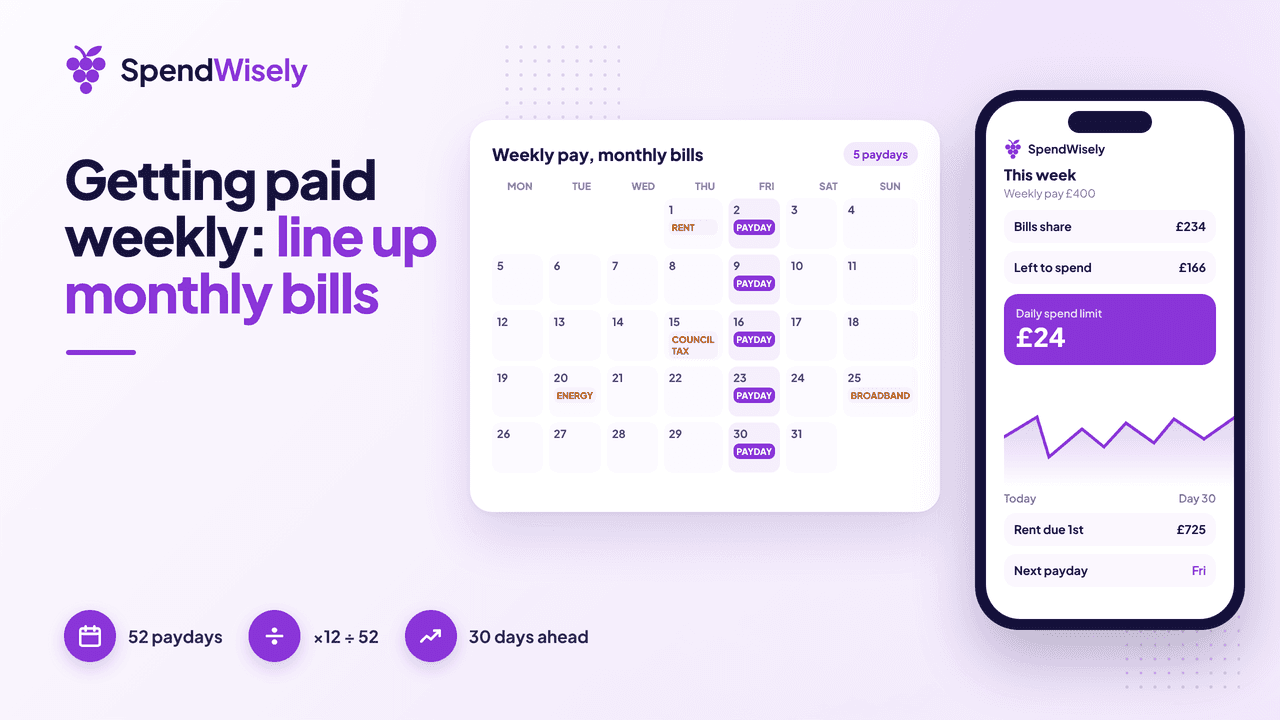
Getting paid weekly in the UK: pros, cons, and how to line up monthly bills
Getting paid weekly in the UK: the real pros and cons, weekly vs monthly pay, and how to line up rent and monthly bills with ×12÷52 and a 30-day forecast.
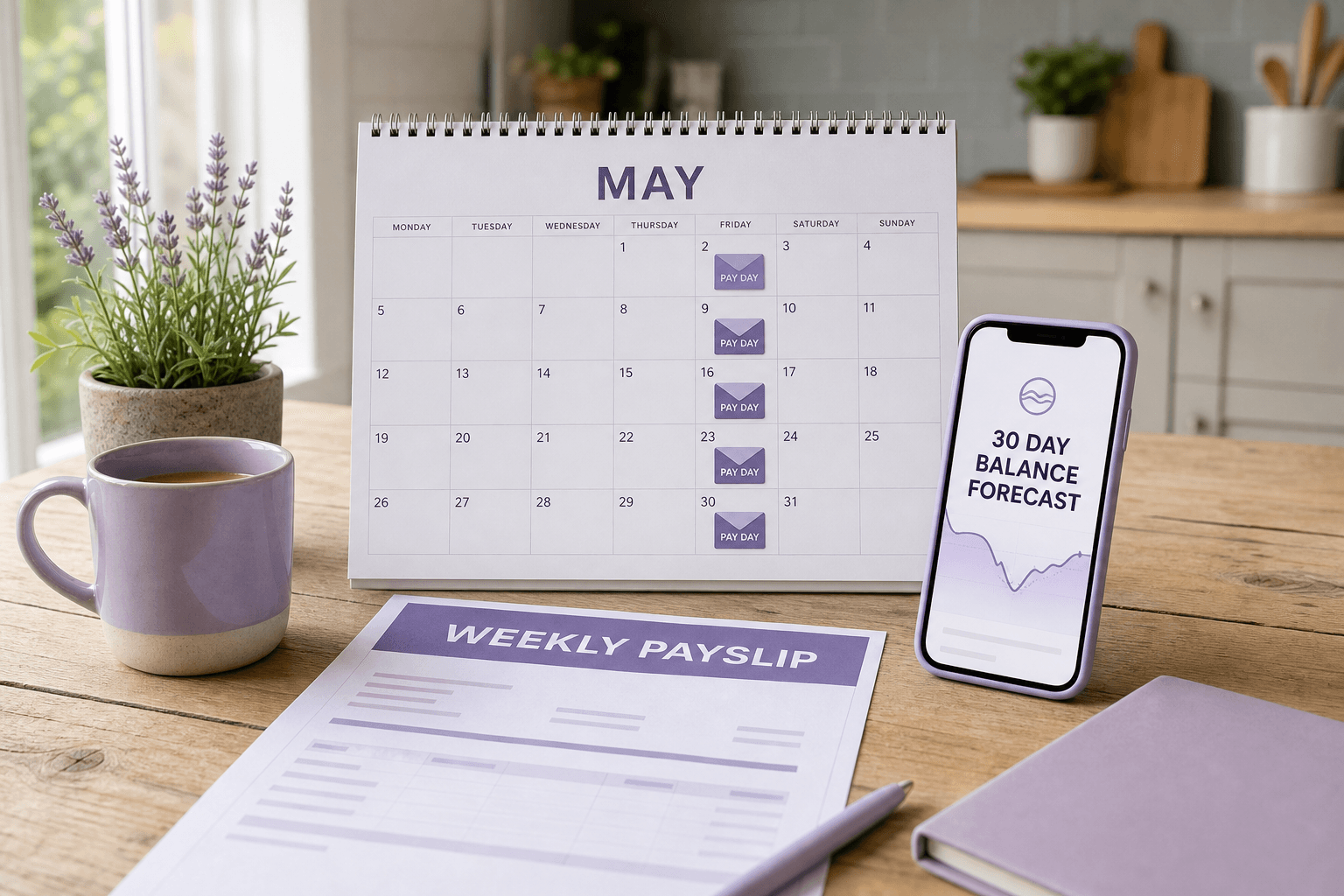
Five payday months on weekly pay: the extra week isn’t spare money
A five-payday month on weekly pay is not a bonus. 52 weeks ÷ 12 = 4.33. Use the fifth packet for four-payday months or a one-week buffer — not Friday night.