Living paycheck to paycheck: what it means and how to break the cycle
Living paycheck to paycheck means your pay runs out before the next one lands. The signs, why it happens on a decent wage, and how a 30-day forecast breaks the cycle.
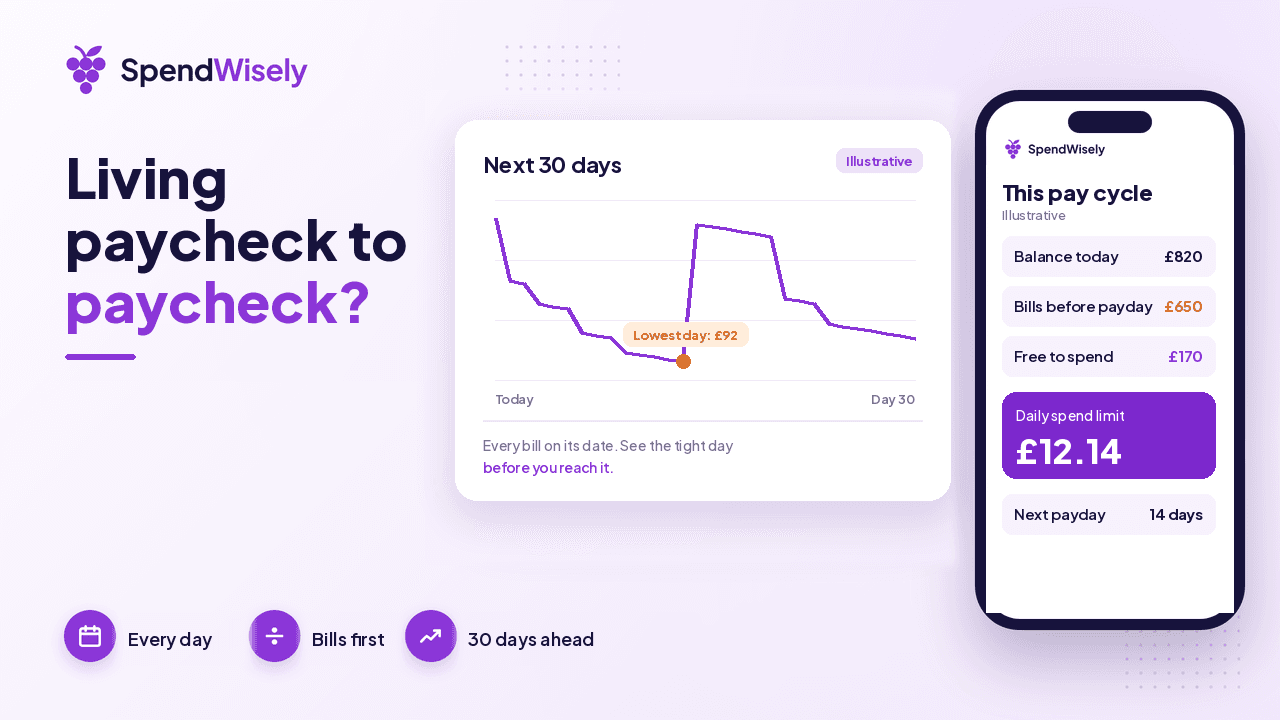
Living paycheck to paycheck means almost all of your pay is gone before the next payday, with little or nothing left over to save. It's common on good wages as well as low ones. The cycle usually breaks when you can see your balance for every day until payday, plan from what's left after bills, and build a small buffer one pay at a time.
This is educational money-management information from SpendWisely (Adleads Ltd). It is not personalised financial advice, and Adleads Ltd is not authorised by the FCA. If you are struggling with debt, contact StepChange, National Debtline, or MoneyHelper.
What does living paycheck to paycheck mean?
"Paycheck" is the American word, but the idea is the same as living payday to payday. Your pay comes in, rent, bills and food take it, and you reach the next payday with close to zero. One unexpected cost, such as a car repair or a late shift pattern, means borrowing, an overdraft or going without.
It isn't only about income. Plenty of people on decent salaries live this way, because spending and commitments grow to match whatever comes in.
Signs you're living paycheck to paycheck
- You know your balance to the pound in the last week and dread checking it.
- Payday feels like a reset, not a top-up. Nothing carries over.
- You use your overdraft or a credit card to reach payday most months.
- One surprise bill causes a crisis, because there's no buffer.
- You can't say what you'll have left on a given day next week.
- Buy now, pay later instalments keep landing in the same week as rent.
If three or more sound familiar, you're probably in the cycle. That's not a judgement. It's a starting point.
Why it happens
Most people living paycheck to paycheck aren't reckless. The usual causes are:
- Costs have risen faster than pay. Rent, energy and food take a bigger share than they did a few years ago.
- The payday balance looks bigger than it is. On payday the bills haven't left yet, so money that's already spoken for looks free. More in why am I always broke after payday?
- Bills and pay don't line up. Weekly or fortnightly pay with monthly bills makes some weeks tight and others feel flush.
- Small commitments add up. Subscriptions, BNPL and phone contracts are easy to forget individually.
- There's no early warning. You find out the money's gone when it's gone.
Notice that only one of these is about income. The rest are about timing and visibility, which you can change without a pay rise. If you've started to think you're just bad with money, it's usually timing too.
How to stop living paycheck to paycheck
1. See every day until payday, not just today
Today's balance tells you what's left from the past. What you need is what you'll have on each day until payday, after every bill due before then. That shows you the tightest day in advance, while you can still do something about it.
2. Plan from what's left after bills
On payday, add up every bill due before the next one: rent, council tax, energy, phone, subscriptions, BNPL and debt repayments. Take it off your balance. What's left is what you can actually spend.
3. Turn it into one daily number
Divide what's left by the days until payday. That's your daily spend limit. It's much easier to stick to one number than a budget with 20 categories. On weekly pay, see how to make weekly wages last.
4. Build a buffer one pay at a time
Start with a small amount, even £10 or £20 a pay, into a separate pot. The first goal is one week of essentials. That's enough to stop one surprise bill becoming a crisis. Extra paydays help here: a five-payday month or a third fortnightly pay can go straight into the buffer.
5. Cut what you wouldn't sign up to again
Go through subscriptions and contracts once. Cancel anything you wouldn't sign up to today. Then look at your main overspending triggers: our guide on how to stop spending money has nine steps.
6. Check once a week
Five minutes on the same day each week: update your balance, check the next 30 days, adjust the daily number. Small, regular checks beat a big budget you abandon after a fortnight.
Worked example (illustrative)
Figures for illustration only.
| Amount | |
|---|---|
| Balance today | £820 |
| Bills due before payday (rent share, energy, phone, BNPL) | £650 |
| Free to spend until payday | £170 |
| Days to payday | 14 |
| Daily spend limit | £12.14 |
Without a forecast, £820 feels comfortable. With one, you can see the balance drops to about £92 on the day before payday. Knowing that on day one, not day thirteen, is the difference between a tight fortnight and the overdraft.
When it isn't a planning problem
If you've cut back and there's still not enough for rent, bills and food, the problem is income or debt, not planning. Get free, confidential help early from StepChange, National Debtline or MoneyHelper. Avoid high-cost borrowing to bridge the gap. It usually makes the next month harder.
How SpendWisely helps
SpendWisely is a 30-day cashflow forecast. It shows your balance every day for the next 30 days, with every bill and payday on its date, and a daily spend limit until payday. No bank login needed: the AI Guide sets up your 30-day forecast from a few quick questions in chat, and you just refresh your balance when pay lands. See pricing.
Frequently asked questions
What does living paycheck to paycheck mean?
It means almost all of your pay is spent before the next payday, with little or nothing saved. It's the same as living payday to payday, and it happens on good wages as well as low ones.
How common is living paycheck to paycheck?
Very common. Many working households have little or no savings buffer, so one unexpected bill can cause a shortfall. It's a sign of tight timing and rising costs, not a personal failing.
How do I stop living paycheck to paycheck?
See your balance for every day until payday, plan from what's left after bills, use one daily spend limit, and save a small amount each pay until you have a one-week buffer.
Can you live paycheck to paycheck on a good salary?
Yes. Spending and commitments often rise with income. If bills, subscriptions and BNPL take most of each pay, a higher salary still runs out before payday.
Start a 14-day trial
See your balance for every day of the next 30 days, and your daily spend limit. Get started free: 14-day free trial. No bank login needed. No payment card required. Cancel at any time. After the trial, Premium is £8.75 a month or £63 a year.
Related: Why am I always broke after payday? · Bad with money? It's timing · How to stop spending money · Make weekly wages last · Stop overspending between paydays · Pricing
Read more
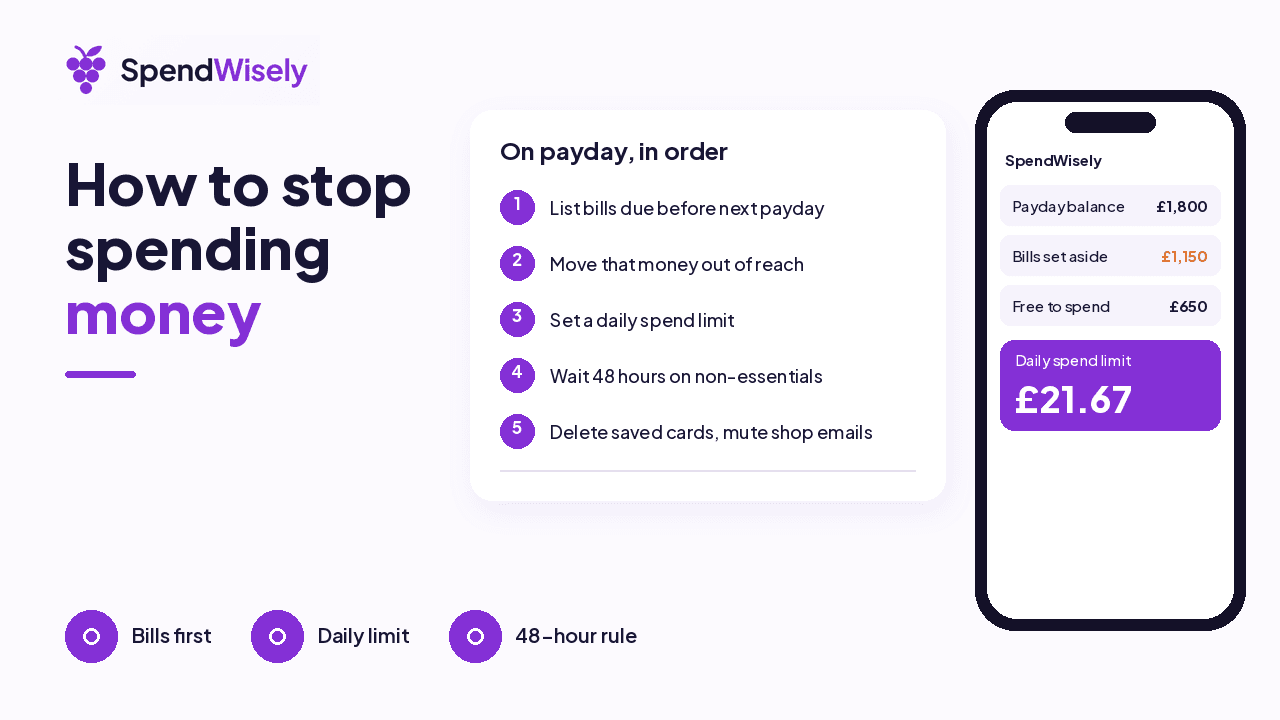
How to stop spending money: 9 steps that work between paydays
To stop spending money, move bills out on payday, set a daily spend limit, add a 48-hour pause and delete saved cards. Nine steps, no willpower needed.
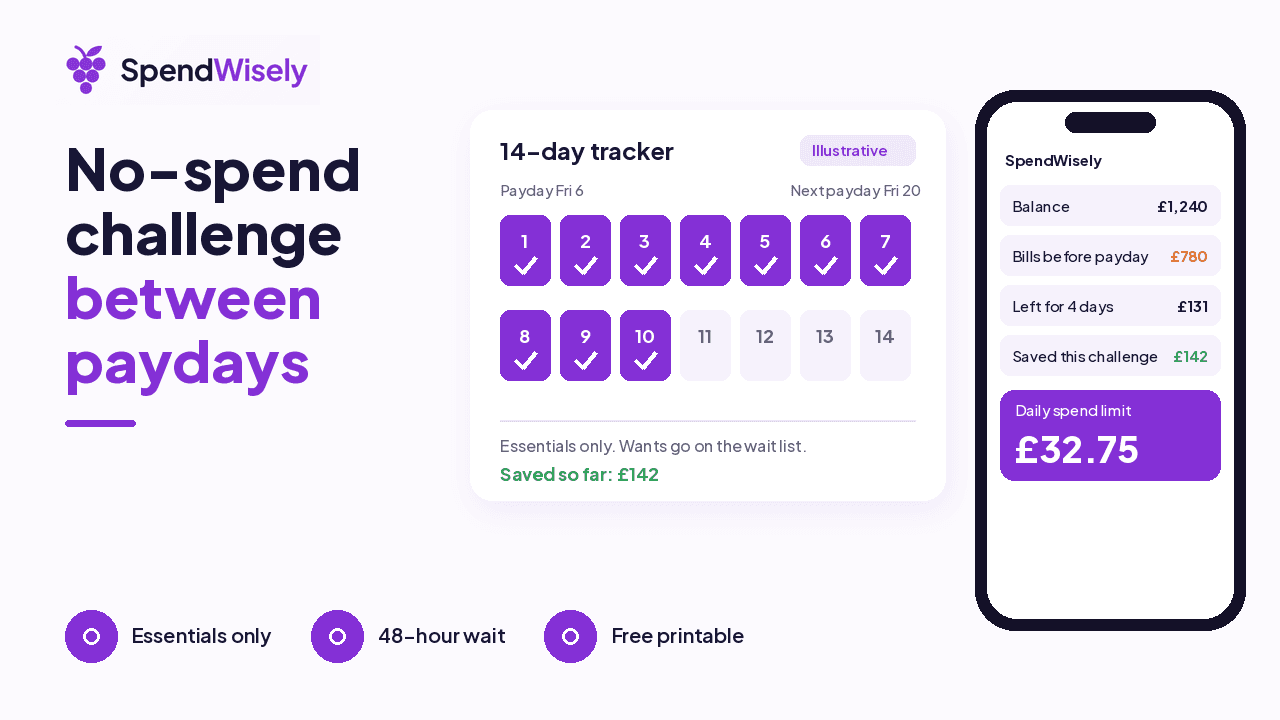
No-spend challenge: how to do one between paydays (free printable)
A no-spend challenge means buying only essentials for a set time. Simple rules, a 7, 14 or 30-day plan timed to your payday, and a free printable tracker.
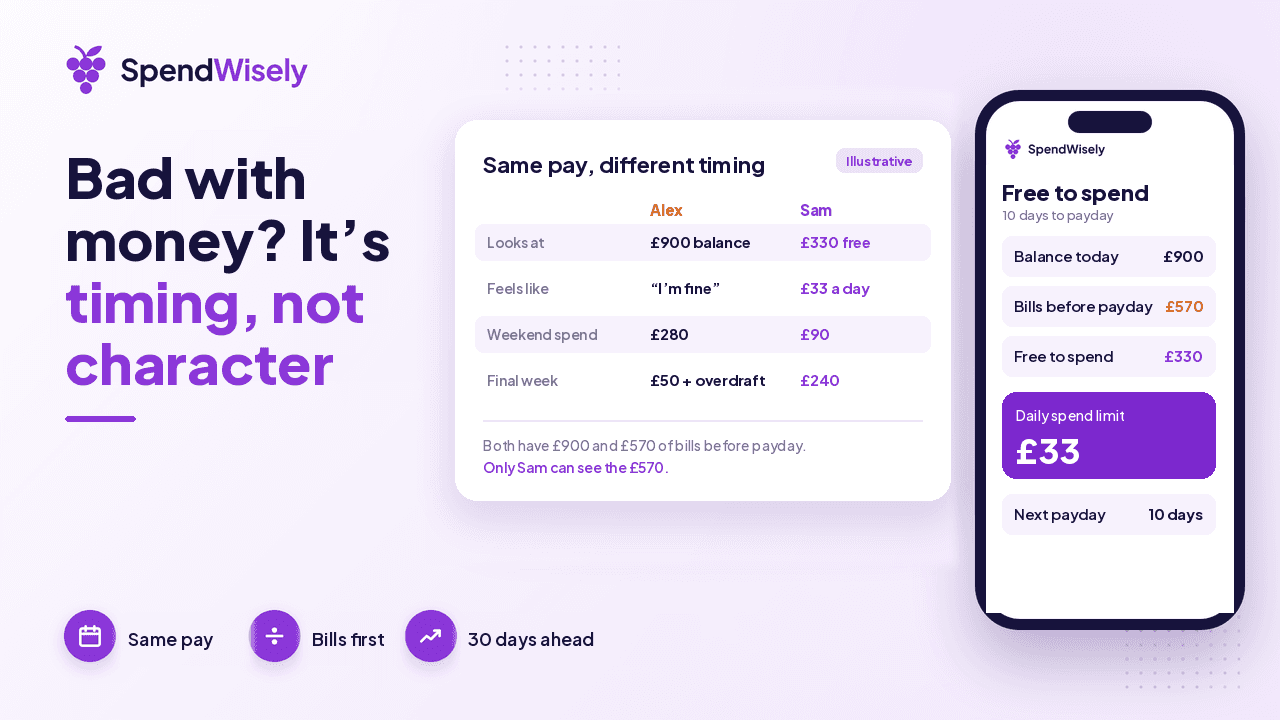
Bad with money? Why am I so bad with money (and why it's usually timing)
Why am I so bad with money? Usually it's timing, not character: today's balance hides the bills due before payday. Signs, causes and 6 steps to fix it.