Money management in the UK: if you don’t use a forecast, are you just hoping it will be okay?
Money management is a 30-day forecast of income and commitments — not hoping today’s balance is enough. Weekly pay, BNPL, weekend bills. No bank login.
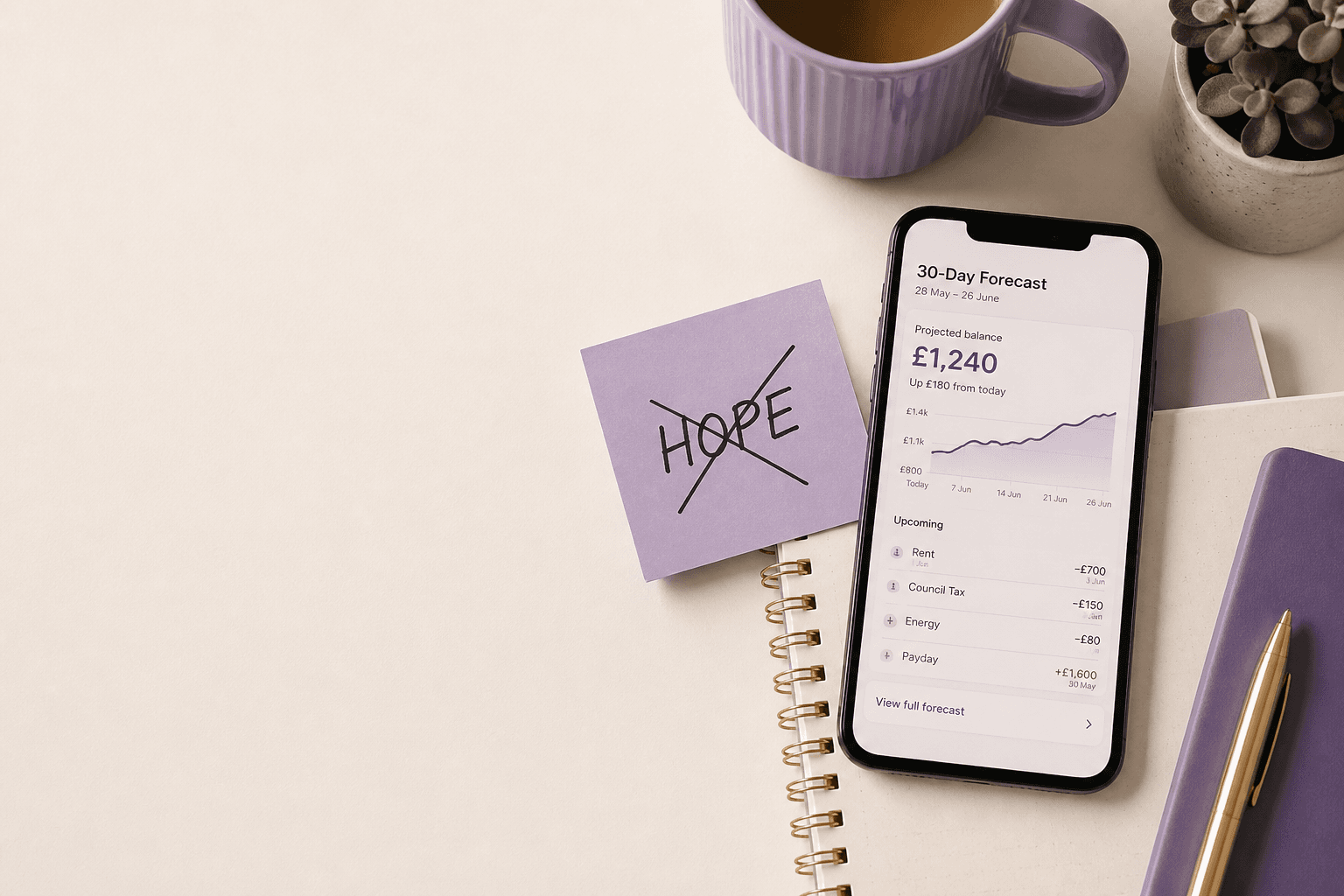
Yes. If you are not looking 30 days ahead at income and commitments, you are hoping today’s bank balance is enough. That is not a plan. Money management is seeing rent, BNPL, and weekend clearances before they hit — especially if you are paid weekly.
What “hope” looks like in practice
SpendWisely (Adleads Ltd) is a forecasting tool, not personalised advice, and is not FCA-authorised. Crisis: StepChange, National Debtline, MoneyHelper. If money worry is affecting how you feel, Mind has guidance on getting support.
Hope is:
- Checking the app on Saturday and treating the number as spendable
- Telling yourself Klarna is “later”
- Using a monthly budget while pay lands every Friday
- Opening the banking app after a purchase to see if it was fine
Hope is not stupid. It is the default when the tools you have only show the past and today.
A forecast shows the next 30 days. That is the difference between money management and crossed fingers.
What actually counts as money management
A usable UK money-management loop:
- Income on real dates — weekly, fortnightly, zero-hours.
- Commitments on real dates — rent, council tax, subscriptions, BNPL.
- Weekend / bank-holiday honesty — balances that look too high.
- A daily spend limit between paydays.
- A purchase preview — Spending Impact — before you tap.
If your “system” is missing the dates, it is still hope with extra steps.
If you don’t use SpendWisely, then what?
You can do this on paper or a spreadsheet. Many people do.
What you still need, with or without the app:
- A 30-day view, not a vibe
- Weekly pay converted properly (bills ÷ 4.33)
- BNPL on the same list as rent
- A check before the purchase, not after
SpendWisely is one way to run that loop without Open Banking and without living in another finance app (Slack/Notion digests if you want them). The alternative is not “be more disciplined.” The alternative is the same forecast, slower.
Hoping it will be okay is the third option. It is the common one. It is how overspending sneaks in.
Money management vs banking apps vs budgets
| Approach | What it shows | Gap |
|---|---|---|
| Banking app | Today + last month | Not the next 30 days of spoken-for money |
| Monthly budget template | Categories | Breaks on weekly pay |
| Hope | A feeling | No dates |
| 30-day forecast | Income, commitments, dip before you buy | You have to keep it updated |
Frequently asked questions
What is money management, practically?
Matching money in and money already promised, on a calendar, then spending only what is left.
Is a money management app required?
No. A dated forecast is required. An app is optional speed.
Why not just “try to spend less”?
Because the balance you see is often money you do not actually have. Less willpower, more visibility.
Start a 14-day trial
Stop hoping the next four weeks will work out. Put them on a forecast. Get started free — no bank login.
Related: How it works · Weekly pay · Spending Impact
Read more
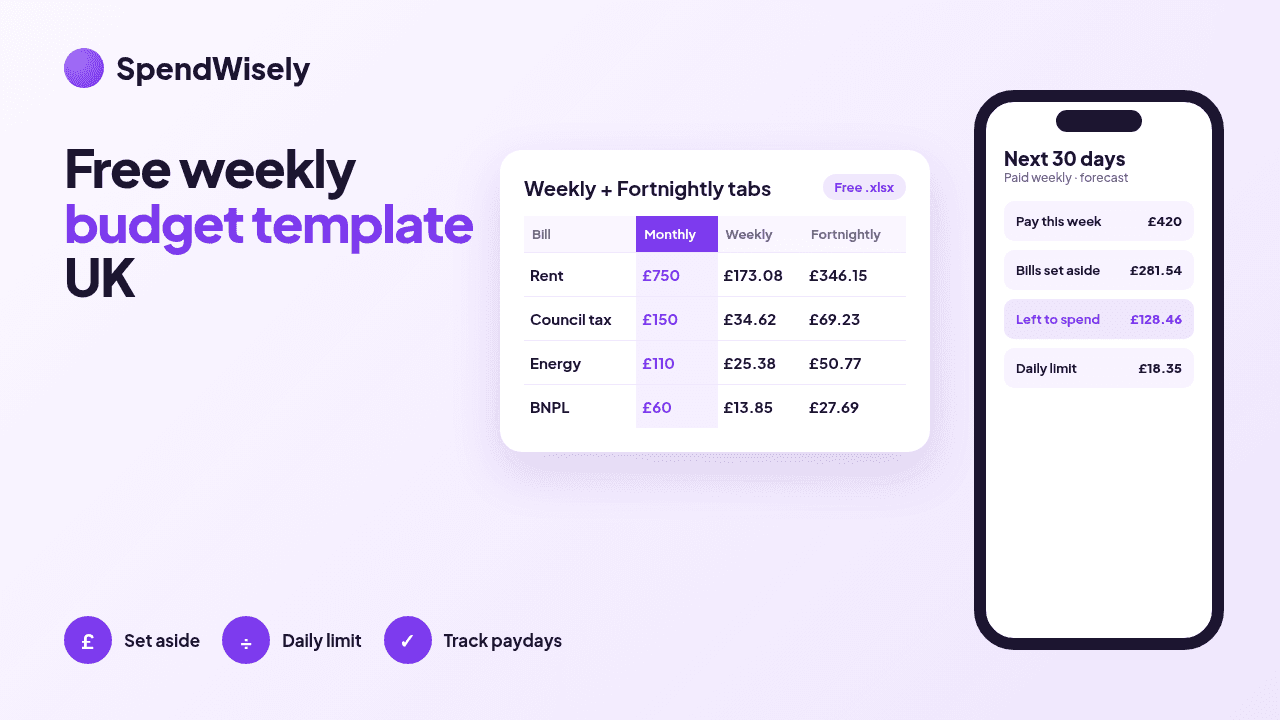
Free weekly budget template (UK) with a fortnightly tab
Free weekly budget template and spreadsheet for the UK, with a fortnightly tab. Turn monthly bills into a weekly or fortnightly amount and get a daily spend limit.
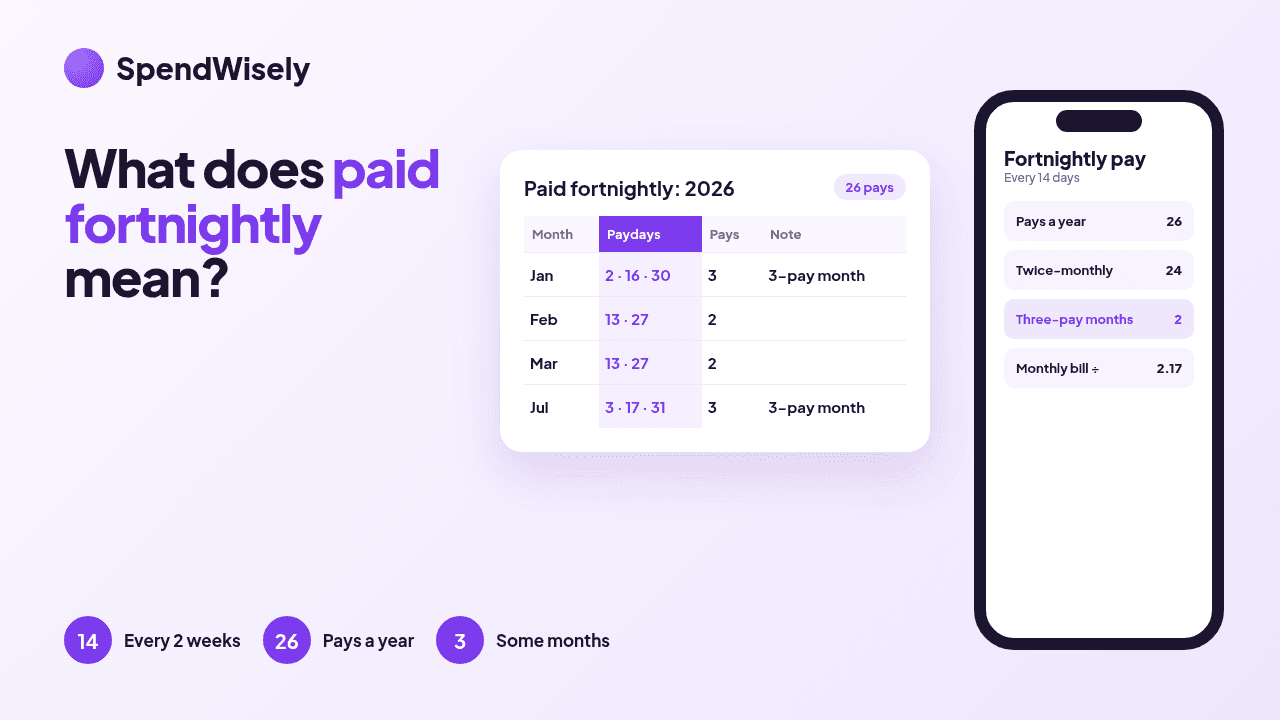
What does paid fortnightly mean? Fortnightly pay explained (UK)
Paid fortnightly means every two weeks: 26 paydays a year, not 24. How fortnightly pay differs from bi-weekly and twice-monthly, and why some months have three.
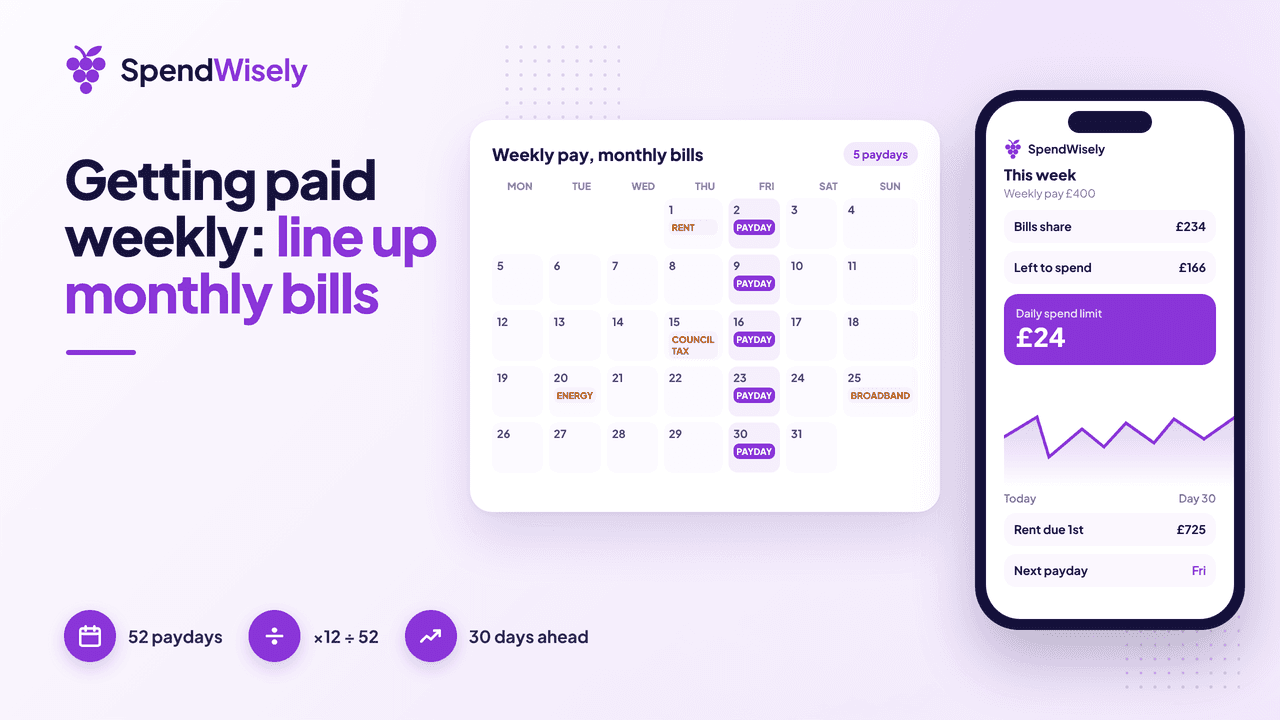
Getting paid weekly in the UK: pros, cons, and how to line up monthly bills
Getting paid weekly in the UK: the real pros and cons, weekly vs monthly pay, and how to line up rent and monthly bills with ×12÷52 and a 30-day forecast.