Five payday months on weekly pay: the extra week isn’t spare money
A five-payday month on weekly pay is not a bonus. 52 weeks ÷ 12 = 4.33. Use the fifth packet for four-payday months or a one-week buffer — not Friday night.
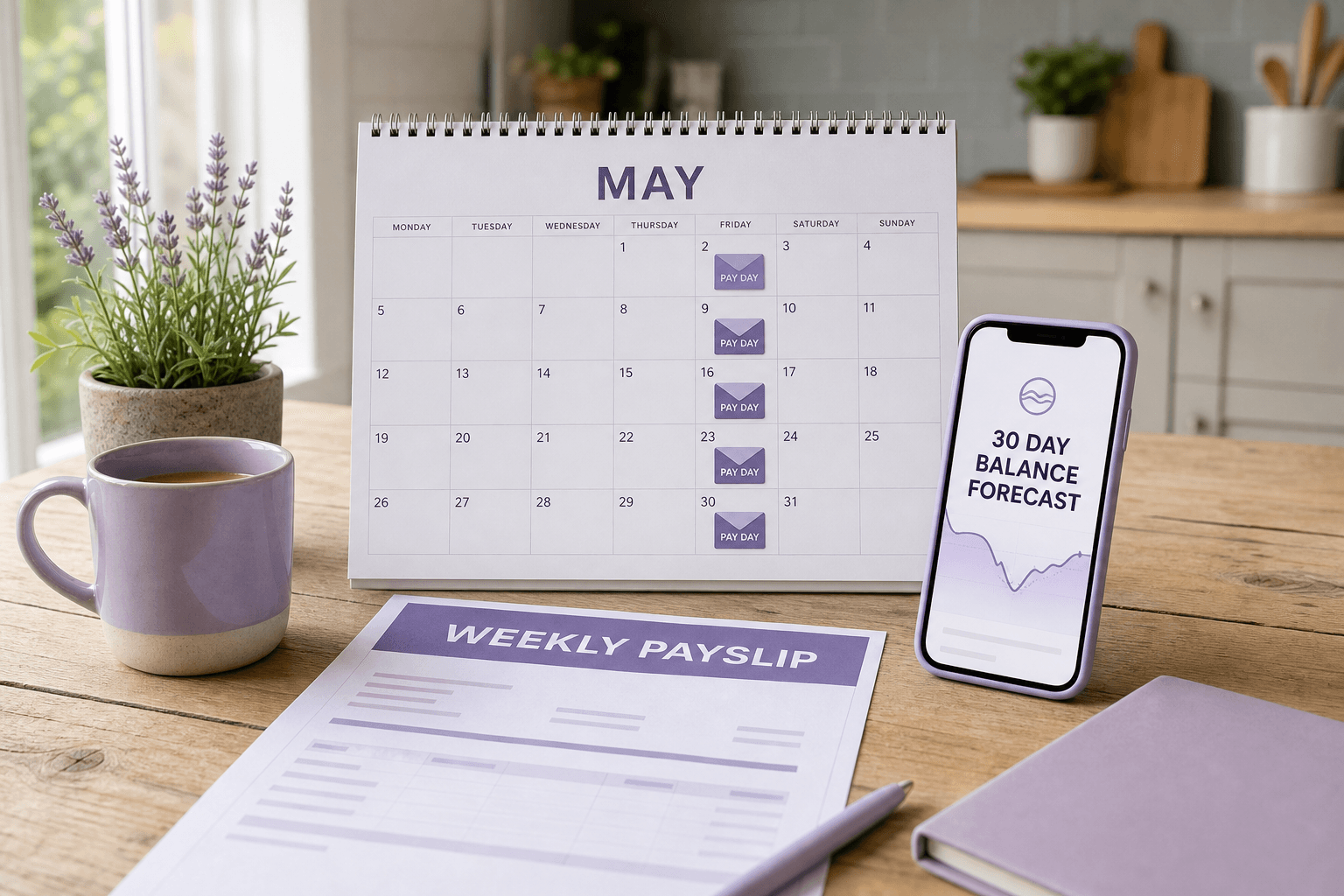
If you get five weekly paydays in a month, the extra packet is not a bonus. There are 52 weeks in a year, so 52 ÷ 12 = 4.33 paydays per month on average. The fifth packet funds the months that only have four Fridays — or a one-week buffer. It is not Friday night money.
Four weekly pays is not a month
This is educational money-management information from SpendWisely (Adleads Ltd). It is not personalised financial advice and Adleads Ltd is not authorised by the FCA. If you are in debt crisis, contact StepChange, National Debtline, or MoneyHelper.
Most people budget as if ×4 is a month. It is not.
There are 52 weeks and 12 months. Honest maths:
52 ÷ 12 = 4.33 weekly pays per month
Treat four Fridays as a full month and you are short 0.33 of a week, every month — about four weeks a year. Those weeks show up as the “bonus” months with five Fridays. They are catch-up, not extra.
Monthly bills — rent, council tax, broadband — still leave 12 times a year. They do not shrink because this calendar month only has four paydays.
The full weekly-pay method lives here: how to budget if you’re paid weekly in the UK. This post is only the extra-week mechanic.
Why a five-payday month feels like a bonus
Five packets hit the same 28–31 day window as four usually do. The banking app looks fat. Friday feels like a windfall.
Then a four-payday month arrives. Rent and council tax are the same. Standing orders still leave. You wonder where the money went.
Nothing vanished. You spent the fifth week as lifestyle. The year never had 13 spare weeks. It had 52, which already belong to 12 sets of bills.
Weekend balances make this worse. A Saturday figure after the fifth Friday can look even richer before Monday’s direct debits. That is the weekend bank balance illusion — not spare cash. Faster Payments can land on a Saturday; many standing orders wait for a working day.
What the fifth packet is actually for
Park it. Two honest uses:
- Cover four-payday months — the extra week is the 0.33 you skipped when you budgeted ×4.
- A one-week buffer — one packet sitting there so a quiet Friday, a late payment, or a BNPL date does not wipe you out.
Do not treat it as Friday night money. Do not raise the daily spend limit just because five pays landed. Raise it only after the extra packet is parked toward bills or the buffer.
If hours vary, still use a low week as the floor. A fifth payday of overtime is not a lifestyle upgrade until the four-payday months are funded.
How to spot five-Friday months in 2026
If you are paid on a Friday, a five-payday month is a calendar month with five Fridays.
2026 has several of those months. Do not guess from memory. Open a calendar and mark every Friday. The months with five Friday stickers are the ones with five packets.
The same rule works for any payday weekday: five Mondays, five Thursdays, and so on. Bank holidays can move the clearing day even when the payslip date stays put. Put both on a 30-day forecast.
Worked example (illustrative)
- Weekly take-home: £420
- Five-payday month: 5 × £420 = £2,100
- Four-payday month: 4 × £420 = £1,680
- True monthly average: 52 × £420 ÷ 12 ≈ £1,820 (or £420 × 4.33)
That fifth packet is £420. Against a four-payday month it looks spare. Against 4.33 it is not.
Say monthly bills are £1,300 (rent, council tax, broadband). Weekly share:
£1,300 ÷ 4.33 ≈ £300 already spoken for, every week
In the five-payday month, £2,100 in does not mean five weeks of lifestyle. Bills still need the 4.33 rate. Keep the fifth packet for a four-Friday month — or as a one-week buffer. Spend it on Friday night and the next four-payday month is already short.
Put the extra week on a forecast, not a feeling
A weekly pay budget that uses 4.33 does not care which month has five Fridays. The fifth packet is already spoken for.
SpendWisely is a 30-day cashflow forecast: weekly pay on real dates, commitments on real dates, a daily spend limit between paydays. No Open Banking. Before you spend the “extra” Friday, run Spending Impact and see the dip through the next four-payday month.
Frequently asked questions
What is a five-payday month on weekly pay?
A calendar month with five paydays — usually five Fridays. It is not 13 months of income. It is 52 weeks showing up unevenly across 12 months.
Is the fifth payday spare money?
No. Use it for months that only have four paydays, or keep it as a one-week buffer. It is not Friday night money.
How do I budget months with only four paydays?
Convert monthly bills with 4.33, not 4. Hold back part of every packet — especially the fifth — so four-payday months still cover rent and council tax.
Do I need to connect my bank to plan this?
No. SpendWisely forecasts from income and commitments you enter — no bank login.
Start a 14-day trial
See five-Friday months and four-Friday months on one 30-day forecast, with a daily spend limit. Get started free — no bank or personal details required to try the idea.
Related: Weekly pay guide · Budgeting on weekly pay · How it works · Spending Impact · Weekend balances
Read more

How to budget if you’re paid weekly in the UK
Monthly budgets fail on weekly pay. Convert bills with 4.33, set a daily spend limit between paydays, and forecast 30 days ahead — no bank login.
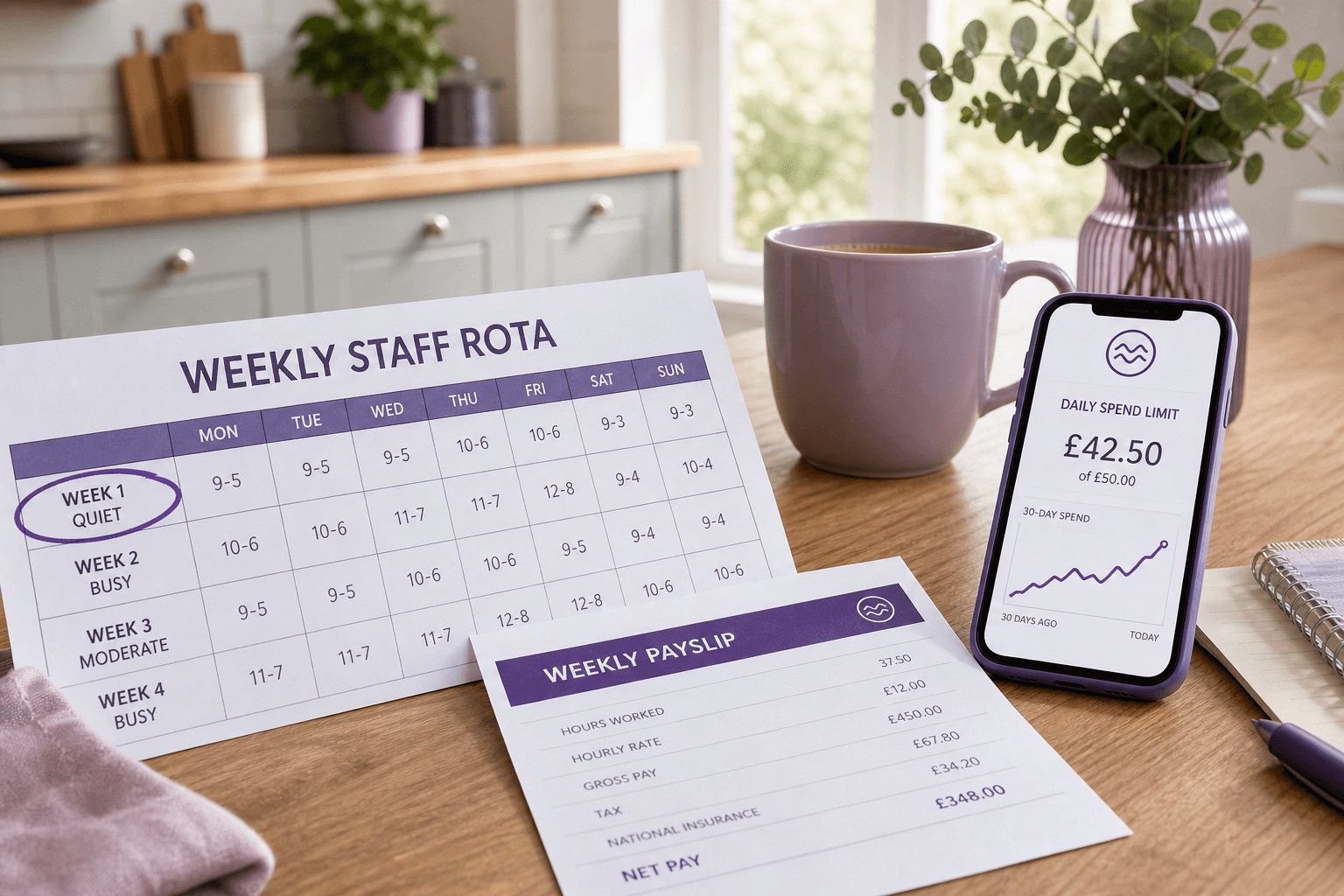
Zero-hours and weekly pay: budget from a floor week
On a zero-hours contract, budget from a quiet week. Extra hours are surplus, not lifestyle. Forecast 30 days when hours drop — no bank login.

How to manage on a tight budget in the UK
Managing on a tight budget is a 30-day forecast plus a daily spend limit — especially on weekly pay. See spoken-for money before you spend. No bank login.