Irregular income UK: stop budgeting from the average week
Irregular income in the UK fails when you average the good weeks. Budget from a floor, forecast 30 days of lumpy pay, and stop overspending the spike — no bank connection.
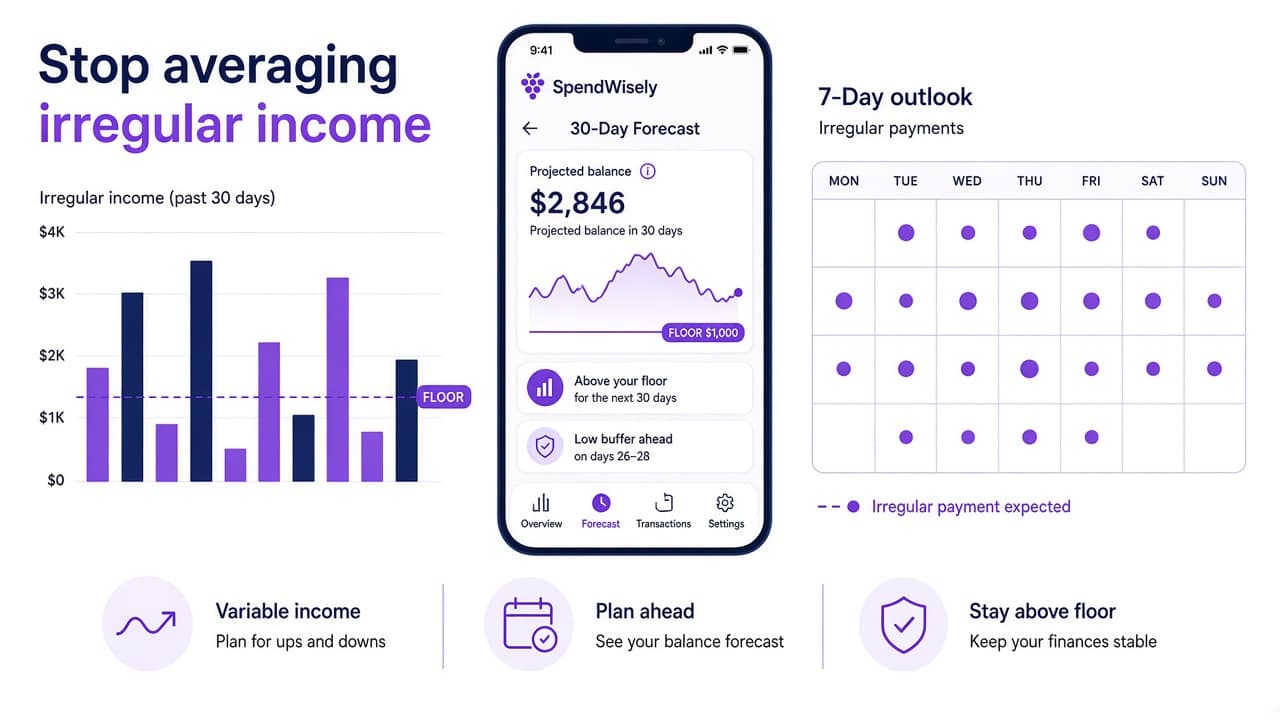
On irregular income, the dangerous number is the average. Average the good weeks, spend like that average is guaranteed, and the quiet week becomes an overdraft story. Budget from a floor, put real pay dates on a 30-day forecast, and treat spikes as surplus — not a new lifestyle.
This is educational money-management information from SpendWisely (Adleads Ltd). It is not personalised financial advice, tax advice, or employment-law advice, and Adleads Ltd is not authorised by the FCA. If you are in debt crisis, contact StepChange, National Debtline, or MoneyHelper.
This is not the same as a zero-hours rota post
If your pain is a hospitality rota that swings week to week, start here: zero-hours and weekly pay — floor week.
This post is the average trap for:
- Self-employed / freelancers with lumpy invoices
- Commission and bonus-heavy pay
- Gig and mixed freelancing
- Anyone who “does fine if you average the month”
Same pillars — Irregular Income, Overspending, often Paid Weekly rhythm — different mistake: believing the mean.
Why averages create overspending
Say four weeks look like £600, £280, £900, £310. The average is about £522. Spend as if every week is £522 and the £280 week cannot carry rent share, BNPL, and food.
The banking app after the £900 week makes the lie feel true. That is the same “today’s balance” problem as weekly pay — louder when income itself jumps.
MoneyHelper’s irregular income guidance makes the same core point: plan for a lower reliable figure, then revise up when money actually arrives.
Floor first, then 4.33 / spoken-for money
- Pick a floor: a quiet but real take-home you have actually received (not a fantasy).
- Convert monthly bills with ÷ 4.33 if you think in weeks, or put exact due dates on a calendar if pays are random.
- Flexible spend and the daily spend limit come from floor − spoken-for, never from the average.
- When a spike lands, park it toward bills buffer or the next quiet gap — make wages last still applies.
Put lumpy dates on a 30-day forecast
Irregular income is a calendar problem. Invoices clear on odd days. Clients pay late. VAT or tax set-asides sit in the same account as lifestyle cash.
A 30-day forecast with actual expected pay dates beats a monthly average every time. Update the income line when a payment slips. Before a bigger buy after a fat invoice, run Spending Impact — the dip through the quiet fortnight is the point.
No Open Banking required: enter the figures. See weekly pay budgeting if your floor still arrives weekly.
Worked example (illustrative)
- Quiet week / floor take-home: £320
- Weekly share of monthly bills (÷ 4.33): £200
- Leftover from floor: £120 → daily limit over 7 days ≈ £17
- Fat invoice week: £980 lands
Raise lifestyle only after the floor week’s bills and buffer are covered. The £660 “extra” is not seven days of £90 spending — not if next week might be £320 again.
Frequently asked questions
How should I budget irregular income in the UK?
Use a realistic low figure (floor), cover commitments from that, and treat above-floor money as surplus until it is parked.
Why is averaging bad?
Averages hide quiet weeks. Overspending happens on the gap between the mean and the floor.
Is this only for freelancers?
No. Commission, overtime spikes, and mixed gig work hit the same trap.
Do I need to connect my bank?
No. Forecast from income and commitments you enter — no bank connection.
Start a 14-day trial
Map lumpy pay and a floor-based daily limit on one 30-day view. Get started free — 14-day free trial. No bank connection or Open Banking login. No payment card required. Cancel at any time.
Related: Zero-hours floor week · Weekly pay guide · Make weekly wages last · Fortnightly bills · Budgeting on weekly pay · How it works
Read more
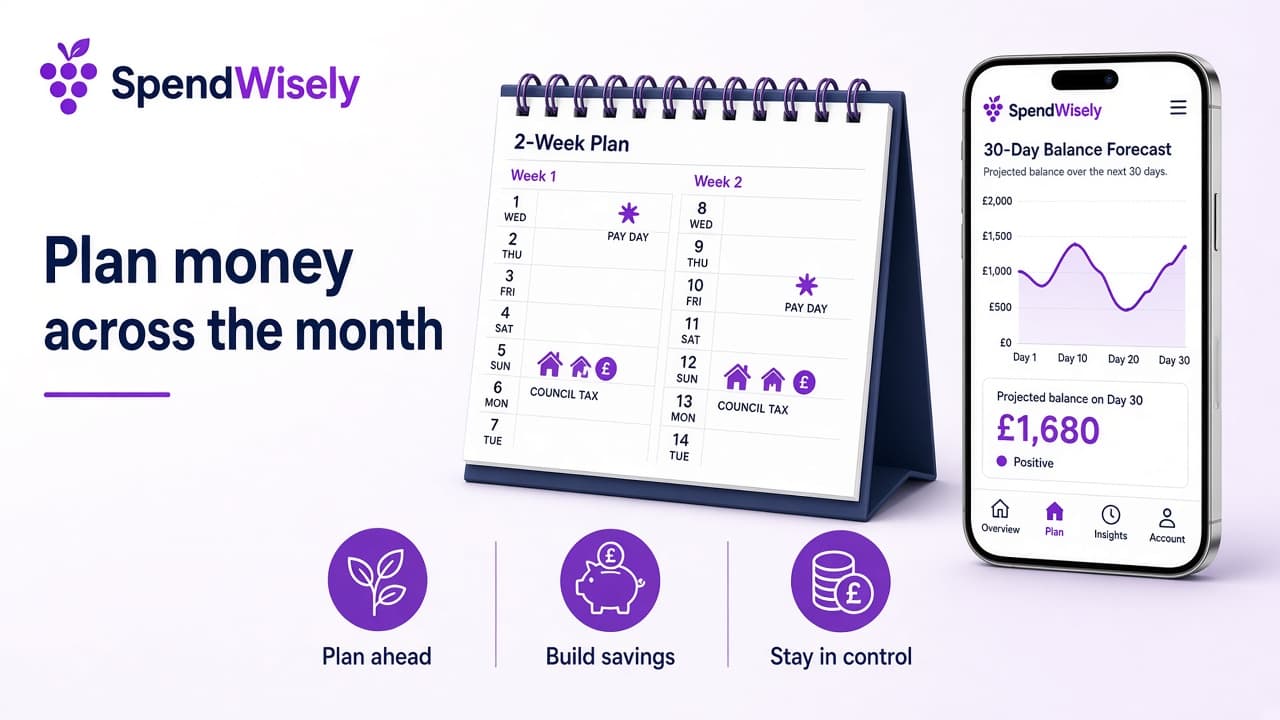
Bills if paid fortnightly: how to cover monthly costs on a two-week pay
Paid fortnightly in the UK? Monthly bills still leave 12 times a year. Convert with ×12÷26, plan three-pay months, and forecast 30 days — no bank connection.
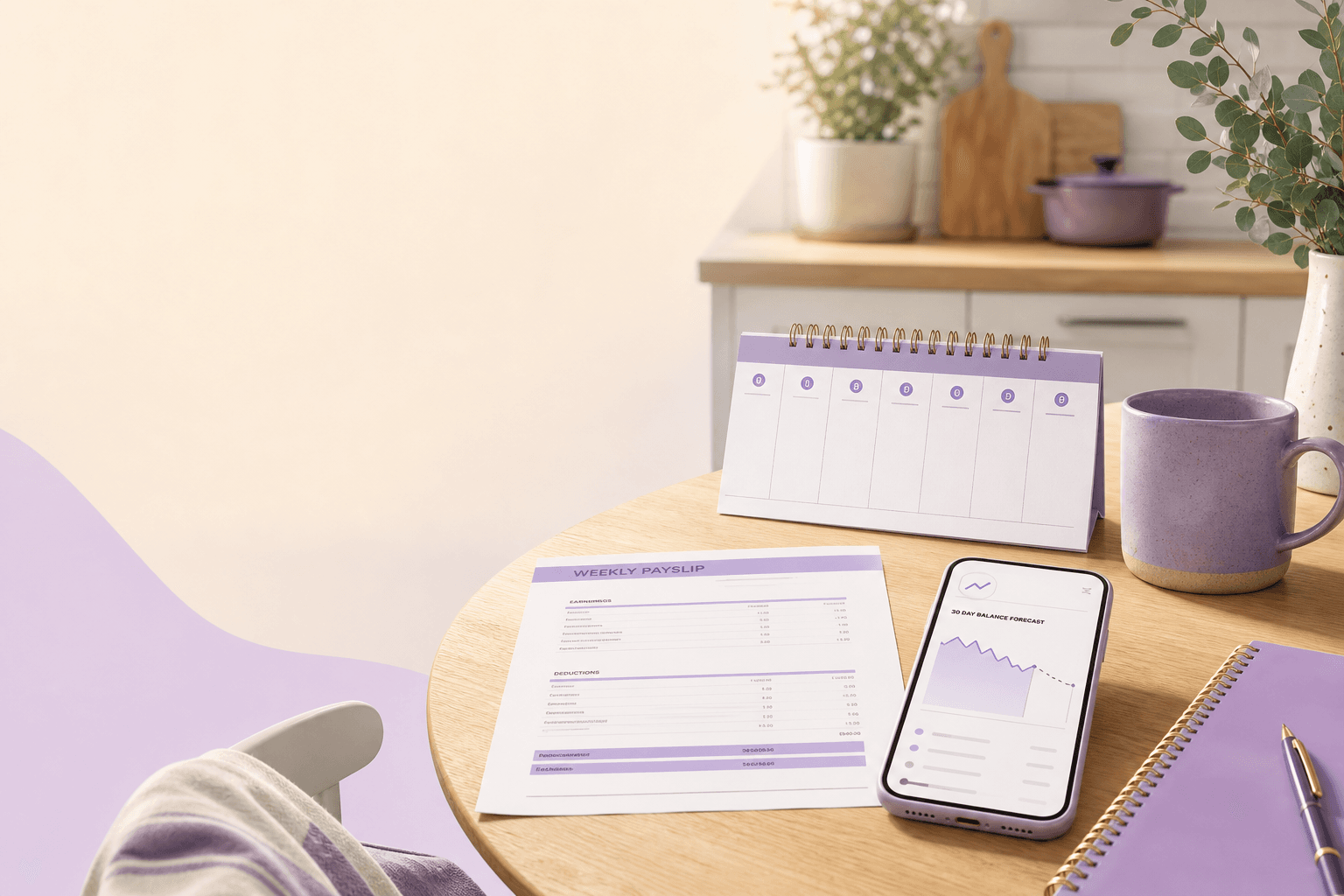
How to budget if you’re paid weekly in the UK
How to budget weekly pay in the UK: convert bills with 4.33, set a daily spend limit between paydays, and forecast 30 days ahead — no bank connection.
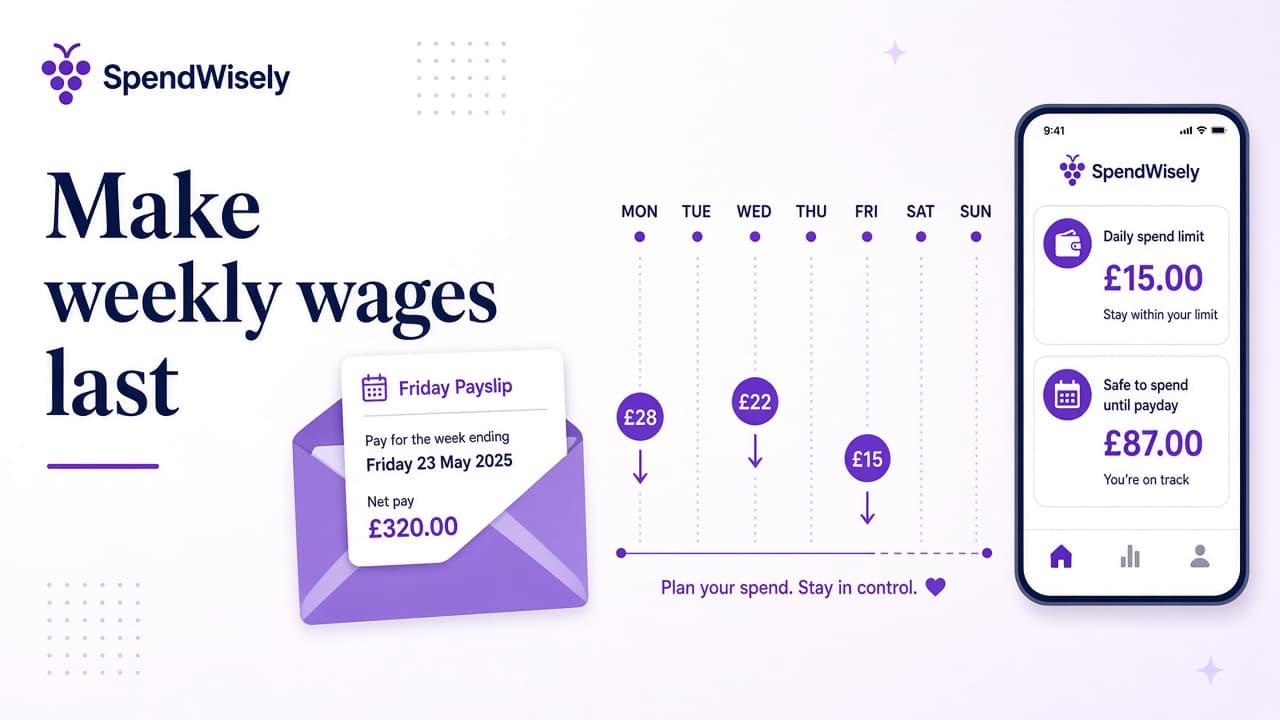
Make weekly wages last: stop overspending before the next payday
Make weekly wages last with a daily spend limit until payday. Stop rich-Friday overspending, see the weekend balance trap, and forecast 30 days — no bank connection.