Weekly pay bill calendar: turn monthly bills into weekly amounts
Paid weekly? Turn rent, council tax and BNPL into a weekly amount (÷ 4.33), see which Friday each bill hits, and stop the weekend clearance surprise.
If you're paid weekly, your bills still arrive on monthly dates. This post shows how to turn each one into a weekly amount (÷ 4.33) and map it to the Friday it will hit. For the full plan, see how to budget when you get paid weekly.
Why monthly budgets fail on weekly pay
This is educational money-management information from SpendWisely (Adleads Ltd). It is not personalised financial advice and Adleads Ltd is not authorised by the FCA. If you are in debt crisis, contact StepChange, National Debtline, or MoneyHelper. If money worry is affecting how you feel, Mind has guidance on getting support.
Most banking apps and “50/30/20” guides assume a monthly salary. Weekly (or fortnightly, or shift-by-shift) pay does not line up with rent, council tax, and subscriptions.
Four weekly pays is not a month. There are 52 weeks in a year, so the honest converter is:
Monthly bill ÷ 4.33 = weekly amount you must set aside
Example (illustrative only): rent and bills of £1,300/month is about £300 a week already spoken for — before groceries, travel, or Friday night.
That mismatch is why people on weekly pay feel “fine on Friday” and broke by Wednesday.
Step 1 — list income and commitments, not last month’s categories
Write down:
- What you usually take home this week (net, after tax and NI)
- Every commitment in the next 30 days: rent, council tax, broadband, BNPL, overdraft buffer
- The date each one leaves, not just the name
If hours vary, use a low week as the floor. Treat extra hours as surplus, not lifestyle.
SpendWisely does this as a 30-day forecast from what you enter. No bank login required.
Step 2 — set a daily spend limit between paydays
Once spoken-for money is parked, what is left is flexible spend until the next payday.
Daily spend limit ≈ (this week’s leftover after commitments) ÷ days until next payday
Example (illustrative): £180 leftover and 7 days to payday is about £25 a day. That is a ceiling, not a target.
This is the feature banking apps skip: they show today’s balance, not safe-to-spend until Friday.
See also: Budgeting on weekly pay — daily spend limits that work
Step 3 — watch the weekend (and bank holidays)
UK standing orders and many direct debits do not always leave on Saturday or Sunday the way Faster Payments do. A Saturday balance can look richer than Monday will be.
If you spend the “extra” on Saturday, Monday’s bills still arrive. That is not a willpower failure. It is a weekend balance illusion.
Step 4 — preview a purchase before you tap
Before a bigger buy, ask: what does this do to the next 30 days? Rent week, Klarna week, and a quiet Tuesday are not the same.
That is Spending Impact: see the dip before you spend.
Worked example (illustrative)
- Weekly take-home: £420
- Weekly share of monthly bills (÷ 4.33): £210
- Klarna this week: £35
- Leftover: £175
- Days to next payday: 7
- Daily spend limit: about £25
If you spend £80 on Saturday because the app showed £400, you have already broken the week — even if Monday has not happened yet.
Frequently asked questions
How to budget weekly pay?
Budget to the next payday. Convert monthly bills by dividing by 4.33 (or ×12÷52), set a daily spend limit on what’s left after commitments, and look 30 days ahead for rent, council tax, and BNPL.
How do I budget if I’m paid weekly in the UK?
Budget to the next payday. Convert monthly bills by dividing by 4.33, set a daily spend limit on what’s left, and look 30 days ahead for rent and BNPL.
Is four weeks the same as a month?
No. Use 4.33 (52 weeks ÷ 12), or you will be short on bills.
What if my hours change every week?
Forecast from a low week. Raise the daily limit only after extra pay is in.
Do I need to connect my bank?
No. SpendWisely is a forecast from income and commitments you enter — no bank login.
Start a 14-day trial
See a 30-day balance from weekly pay, commitments, and a daily spend limit. Get started free — 14-day free trial. No bank connection or Open Banking login. No payment card required. Cancel at any time.
Related: Weekly pay guide · Weekend balances · BNPL commitments · Fortnightly pay and monthly bills · Make weekly wages last · Irregular income: stop averaging
Read more
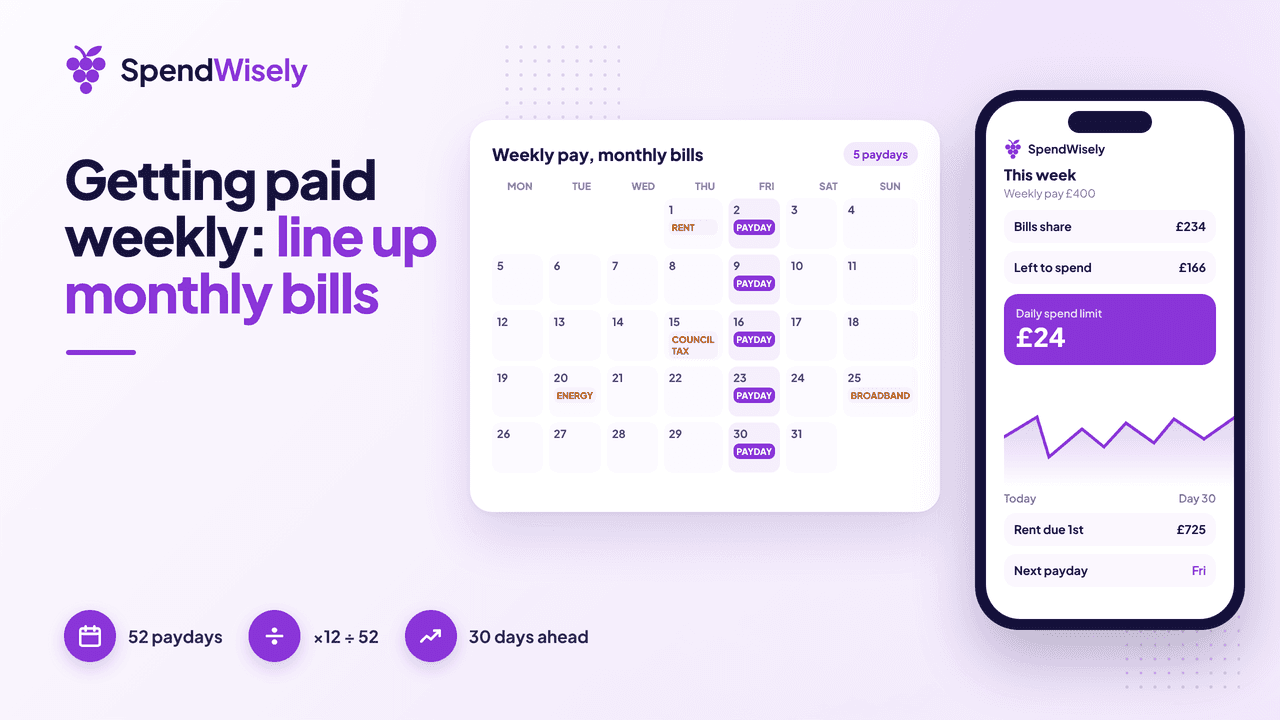
Getting paid weekly in the UK: pros, cons, and how to line up monthly bills
Getting paid weekly in the UK: the real pros and cons, weekly vs monthly pay, and how to line up rent and monthly bills with ×12÷52 and a 30-day forecast.
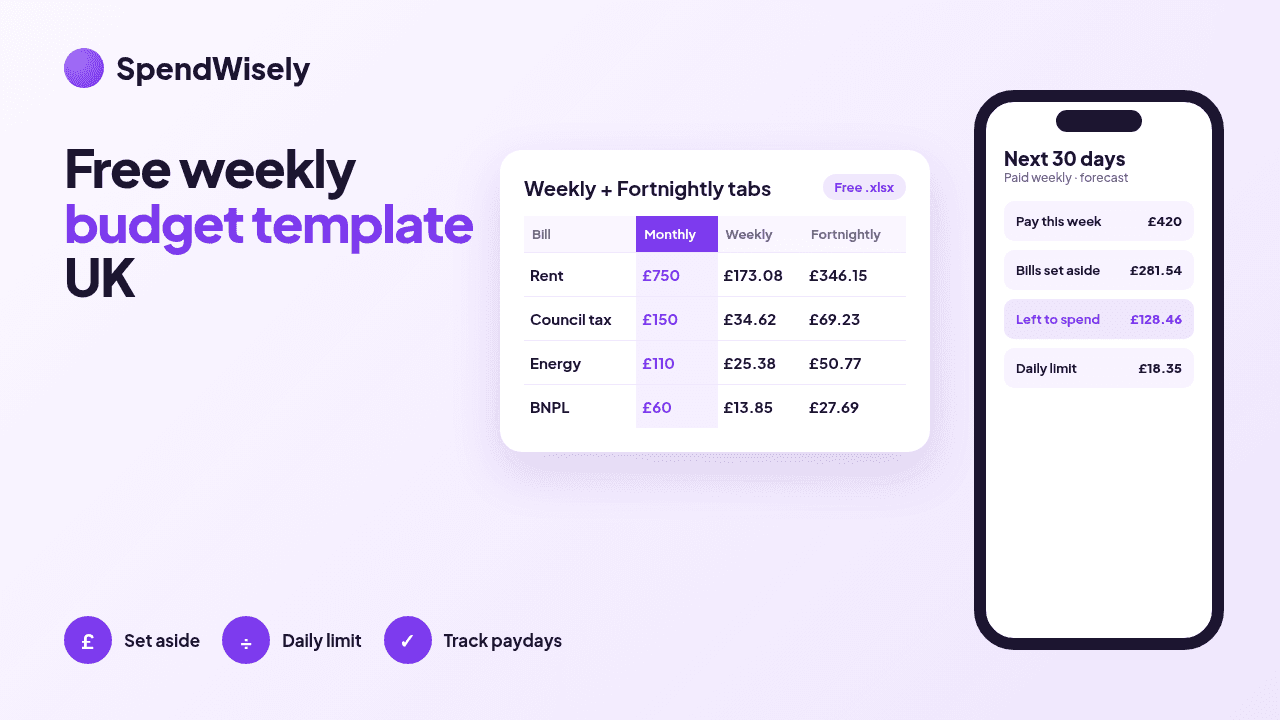
Free weekly budget template (UK) with a fortnightly tab
Free weekly budget template and spreadsheet for the UK, with a fortnightly tab. Turn monthly bills into a weekly or fortnightly amount and get a daily spend limit.
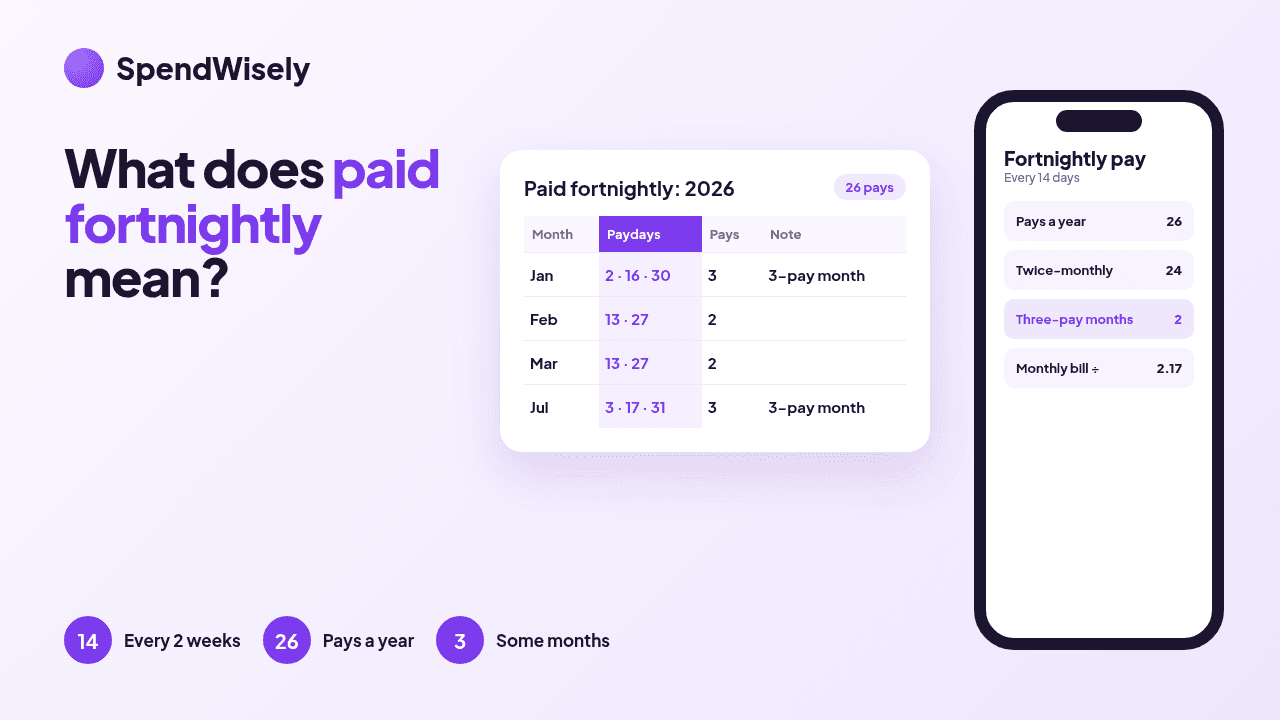
What does paid fortnightly mean? Fortnightly pay explained (UK)
Paid fortnightly means every two weeks: 26 paydays a year, not 24. How fortnightly pay differs from bi-weekly and twice-monthly, and why some months have three.