Bills if paid fortnightly: how to cover monthly costs on a two-week pay
Paid fortnightly in the UK? Monthly bills still leave 12 times a year. Convert with ×12÷26, plan three-pay months, and forecast 30 days — no bank connection.
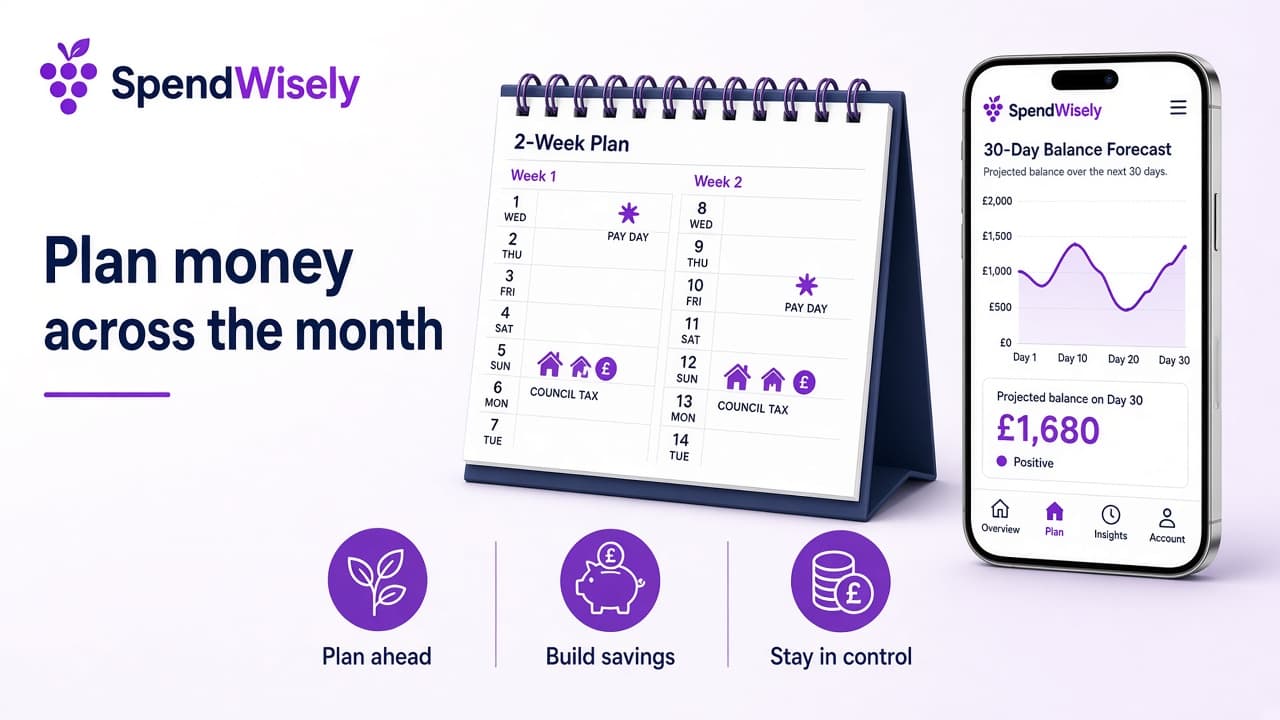
If you are paid fortnightly in the UK, rent and council tax still leave on a monthly rhythm. The fix is not hope — it is converting bills with ×12 ÷ 26 (about ÷ 2.17), parking that share from every packet, and looking 30 days ahead so a three-pay month or a bill-heavy fortnight does not wipe you out.
This is educational money-management information from SpendWisely (Adleads Ltd). It is not personalised financial advice and Adleads Ltd is not authorised by the FCA. If you are in debt crisis, contact StepChange, National Debtline, or MoneyHelper.
Fortnightly pay is not “half a month”
A fortnight is 14 days. A calendar month is 28–31. There are 26 fortnightly pays in a year (sometimes 27), not 24 neat halves.
So bills if paid fortnightly are a timing problem:
- Monthly costs leave 12 times a year
- Your income arrives 26 times a year
- Some months you get two packets; some you get three
Treat “half the month’s bills from each pay” as ÷2 and you will be slightly short over the year — the same class of mistake as weekly earners using ÷4 instead of 4.33.
Weekly pay uses the same idea with a different converter: see budgeting on weekly pay and the weekly pay guide.
The honest converter: monthly × 12 ÷ 26
Fortnightly share of a monthly bill = monthly amount × 12 ÷ 26
That is about monthly ÷ 2.17.
Example (illustrative only):
- Rent + council tax + broadband: £1,300 / month
- Fortnightly share: £1,300 × 12 ÷ 26 ≈ £600 already spoken for every packet
- If your take-home is £1,050 fortnightly, about £450 is left for food, travel, BNPL, and life — before you look at dates
Do this for every monthly commitment. Annual costs (MOT, insurance) use ÷ 26 from the yearly total.
Why some months feel rich and others feel broken
On fortnightly pay, a month with three packets feels like a bonus. It is closer to catch-up than windfall — the same story as five-payday months on weekly pay.
If you spend the third packet as lifestyle, the next two-pay month still has full rent. The banking app will not warn you. A 30-day forecast will.
Weekend balances make this worse. A Saturday figure after payday can look safer than Monday when standing orders clear — the weekend bank balance illusion.
Step-by-step: bills if paid fortnightly
- List net take-home for a normal fortnight (low fortnight if hours vary).
- Convert every monthly bill with ×12÷26; list the date each leaves.
- Park the spoken-for share first (separate pot if that helps).
- Daily spend limit ≈ leftover ÷ days until next payday (usually 14).
- Scan 30 days for BNPL, rent week, and whether this month has two or three pays.
- Before a bigger buy, check Spending Impact.
Worked example (illustrative)
- Fortnightly take-home: £1,050
- Monthly bills share (×12÷26): £600
- Klarna due this fortnight: £40
- Leftover: £410
- Days to next payday: 14
- Daily spend limit ≈ £29
Spend £120 on the Saturday after payday because the app showed £1,000, and you have already broken the fortnight — even if rent has not left yet.
Frequently asked questions
What does “bills if paid fortnightly” mean?
It means covering monthly (and annual) commitments when income arrives every two weeks. Use ×12÷26, not a rough half.
Is fortnightly the same as two weekly pays?
Similar rhythm, different maths. Weekly uses 4.33; fortnightly uses 26 pays a year. Do not mix the converters.
What about months with three fortnightly pays?
Treat the third packet as cover for two-pay months or a buffer — not spare Friday money.
Do I need Open Banking?
No. SpendWisely forecasts from income and commitments you enter — no bank connection.
Start a 14-day trial
See fortnightly paydays, monthly bills, and a daily spend limit on one 30-day forecast. Get started free — 14-day free trial. No bank connection or Open Banking login. No payment card required. Cancel at any time.
Related: Weekly pay guide · Budgeting on weekly pay · Five-payday months · Weekend balances · Make weekly wages last · Irregular income
Read more
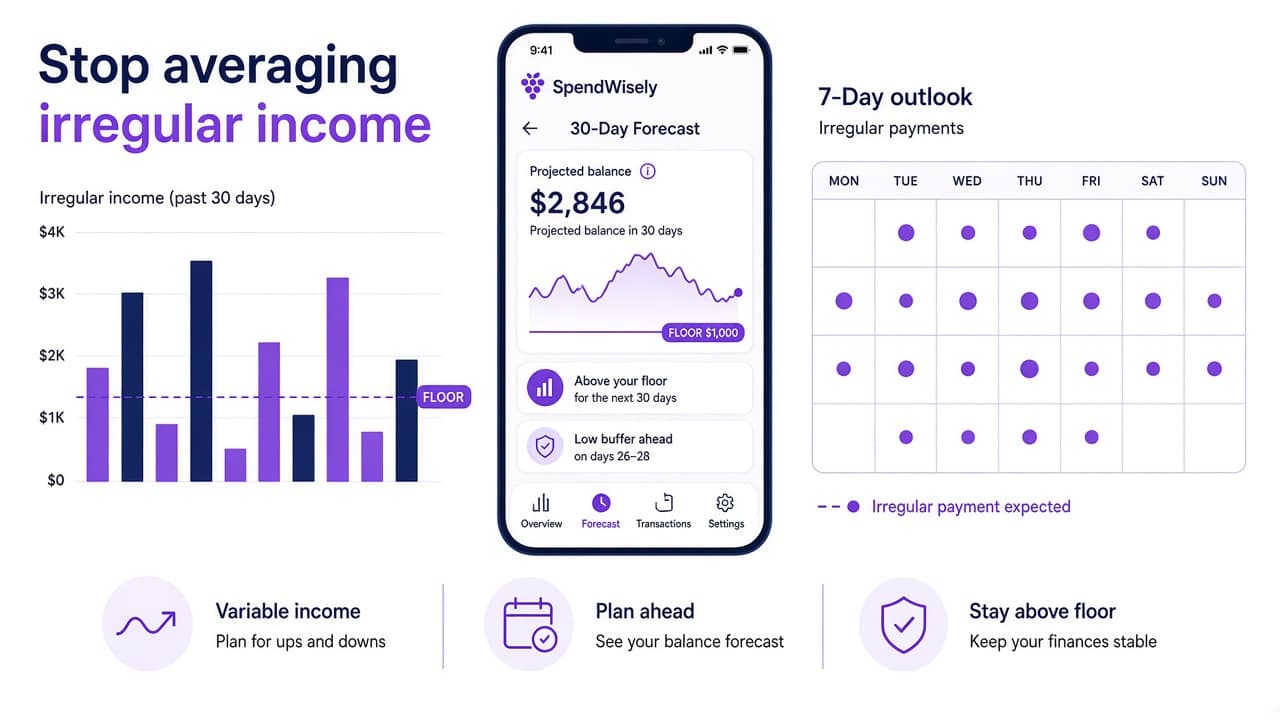
Irregular income UK: stop budgeting from the average week
Irregular income in the UK fails when you average the good weeks. Budget from a floor, forecast 30 days of lumpy pay, and stop overspending the spike — no bank connection.
How to budget if you’re paid weekly in the UK
How to budget weekly pay in the UK: convert bills with 4.33, set a daily spend limit between paydays, and forecast 30 days ahead — no bank connection.
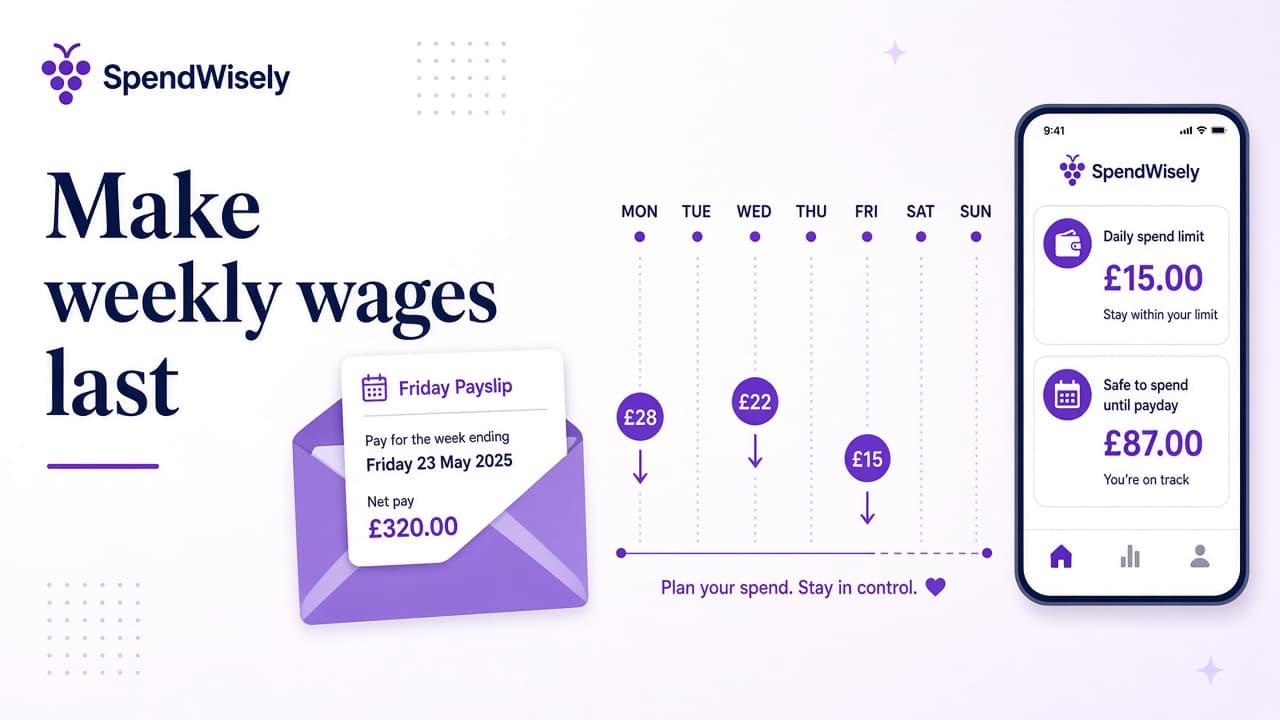
Make weekly wages last: stop overspending before the next payday
Make weekly wages last with a daily spend limit until payday. Stop rich-Friday overspending, see the weekend balance trap, and forecast 30 days — no bank connection.