Zero-hours and weekly pay: budget from a floor week
On a zero-hours contract, budget from a quiet week. Extra hours are surplus, not lifestyle. Forecast 30 days when hours drop — no bank login.
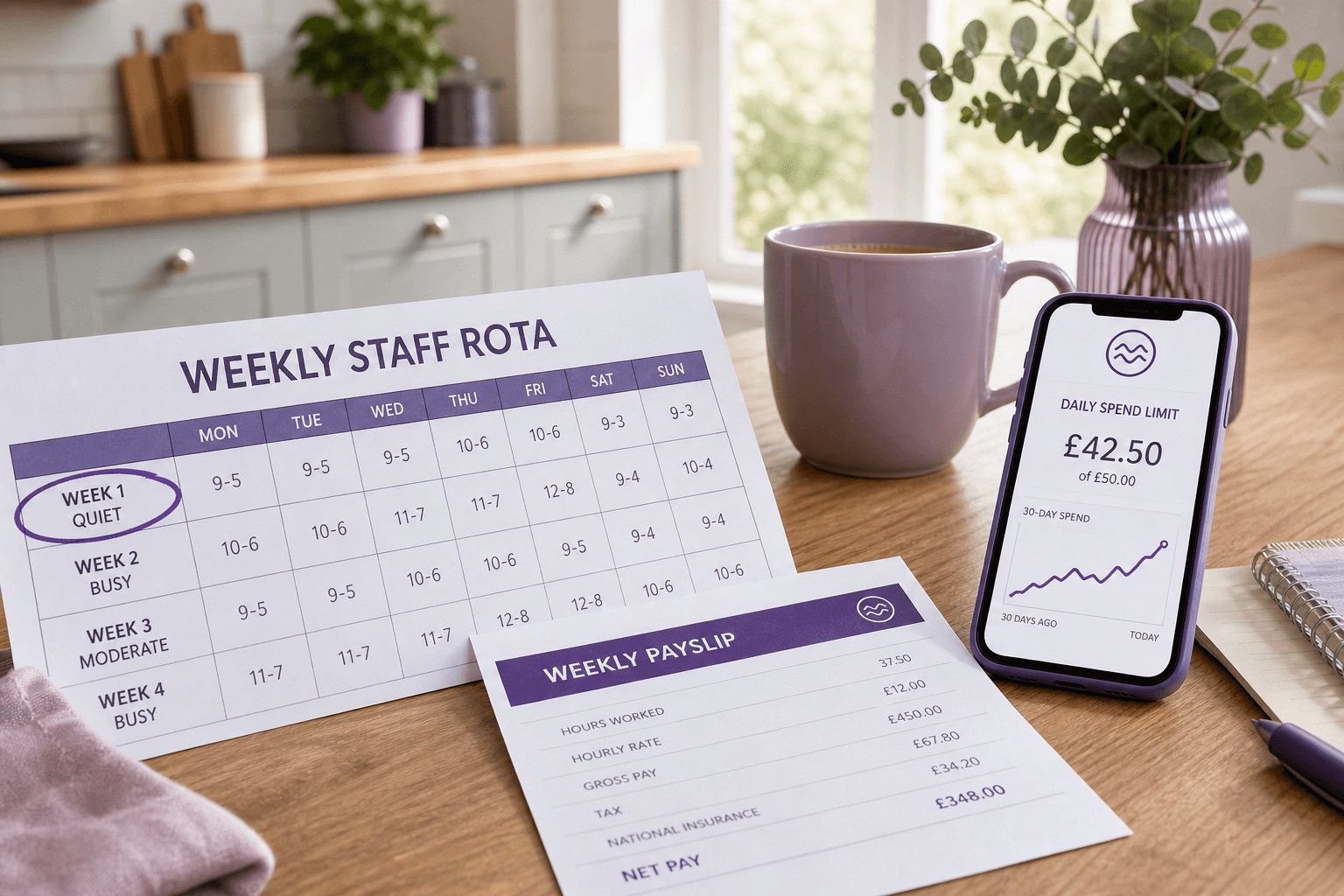
On a zero-hours contract, budget from a floor week: a quiet take-home you can actually get. Extra hours are surplus, not a new lifestyle. When hours drop, the 30-day trail shows it before Wednesday — so you lower the daily spend limit instead of living last week's overtime.
A floor week is a quiet week you can survive
This is educational money-management information from SpendWisely (Adleads Ltd). It is not personalised financial advice, not employment-law advice, and Adleads Ltd is not authorised by the FCA. If you are in debt crisis, contact StepChange, National Debtline, or MoneyHelper.
If you work hospitality, retail, or any variable-hours rota, a busy week is not your income. It is a spike.
Pick a realistically low take-home week — net, after tax and NI — from a week the rota actually gave you, not a fantasy average. That number is the floor. You budget to the next payday from that floor, not from last Friday's overtime.
This is not the generic weekly-pay problem (monthly bills vs Friday pay). It is hours that move. The same spine still applies — 4.33, a daily limit, 30 days — but it is built on a quiet week so a dead rota does not break the plan.
Convert monthly bills ÷ 4.33, then freeze the leftover
Four weekly pays is not a month. Monthly bills ÷ 4.33 is the weekly share you must set aside even when the rota is quiet.
Take that weekly share off the floor take-home. What is left is flexible spend until the next payday. The daily spend limit comes from that leftover, not from a busy week.
Extra shifts and overtime sit above the line until they actually land in the account. Do not raise the daily number because the manager "might" give you Saturday.
Extra hours are surplus, not a new lifestyle
A busy week feels like a raise. It is not.
Until the extra take-home is in, it does not exist. When it does land, park it toward the next month's bills or leave it as buffer. Raise the floor only if the quiet week itself has changed — a new contracted pattern, not one good rota.
If you spend the spike, the next quiet week has no floor left. That is how hospitality and retail weeks turn into Wednesday panic.
Hours drop is a forecast story, not a character story
A dead week is not a willpower failure. It is a number that moved.
Put the lower take-home into a 30-day forecast the day the rota is posted. The trail shows the squeeze before Wednesday: rent, council tax, BNPL, and the weekend balance illusion still sit on their dates. You cut the daily spend limit to match. You do not wait to "see how you feel" on Friday.
Before a bigger buy on a quiet week, run Spending Impact. Today's balance can still look like last week's overtime.
SpendWisely forecasts from what you enter. Hours can change; you update the income line. No Open Banking. No bank login.
Worked example (illustrative)
- Quiet (floor) week take-home: £280
- Weekly share of monthly bills (÷ 4.33): £180
- Leftover: £100
- Days to next payday: 7
- Daily spend limit from the floor: about £14 (£100 ÷ 7)
A busy week at £420 take-home does not raise that £14 until the extra £140 is actually in the account. If you spend as if £420 is the new normal, the next quiet week has already failed.
Same bills, same 4.33. The only change is which take-home you treat as real.
For the weekly-pay spine this sits on, see how to budget if you're paid weekly. For a squeezed leftover, see how to manage on a tight budget.
Frequently asked questions
How do I budget on a zero-hours contract with weekly pay?
Use a realistically low take-home week as the floor. Convert monthly bills ÷ 4.33, set a daily spend limit from that leftover, and treat extra hours as surplus until they land.
Should I use my average week?
No. An average hides the quiet week. Budget from the floor; surplus from busy weeks sits above the line.
What if the rota drops after I've already spent?
Update the 30-day forecast the day hours change. The trail shows the squeeze before Wednesday — lower the daily limit then, not after the week breaks.
Do I need to connect my bank?
No. SpendWisely is a forecast from income and commitments you enter — no bank login. Not a debt service; not employment-law advice.
Start a 14-day trial
Put a floor week on a 30-day forecast and a daily spend limit. Get started free — no bank login.
Related: Weekly pay guide · Budgeting on weekly pay · Tight budget · How it works · Spending Impact · Weekend balances
Read more

How to manage on a tight budget in the UK
Managing on a tight budget is a 30-day forecast plus a daily spend limit — especially on weekly pay. See spoken-for money before you spend. No bank login.
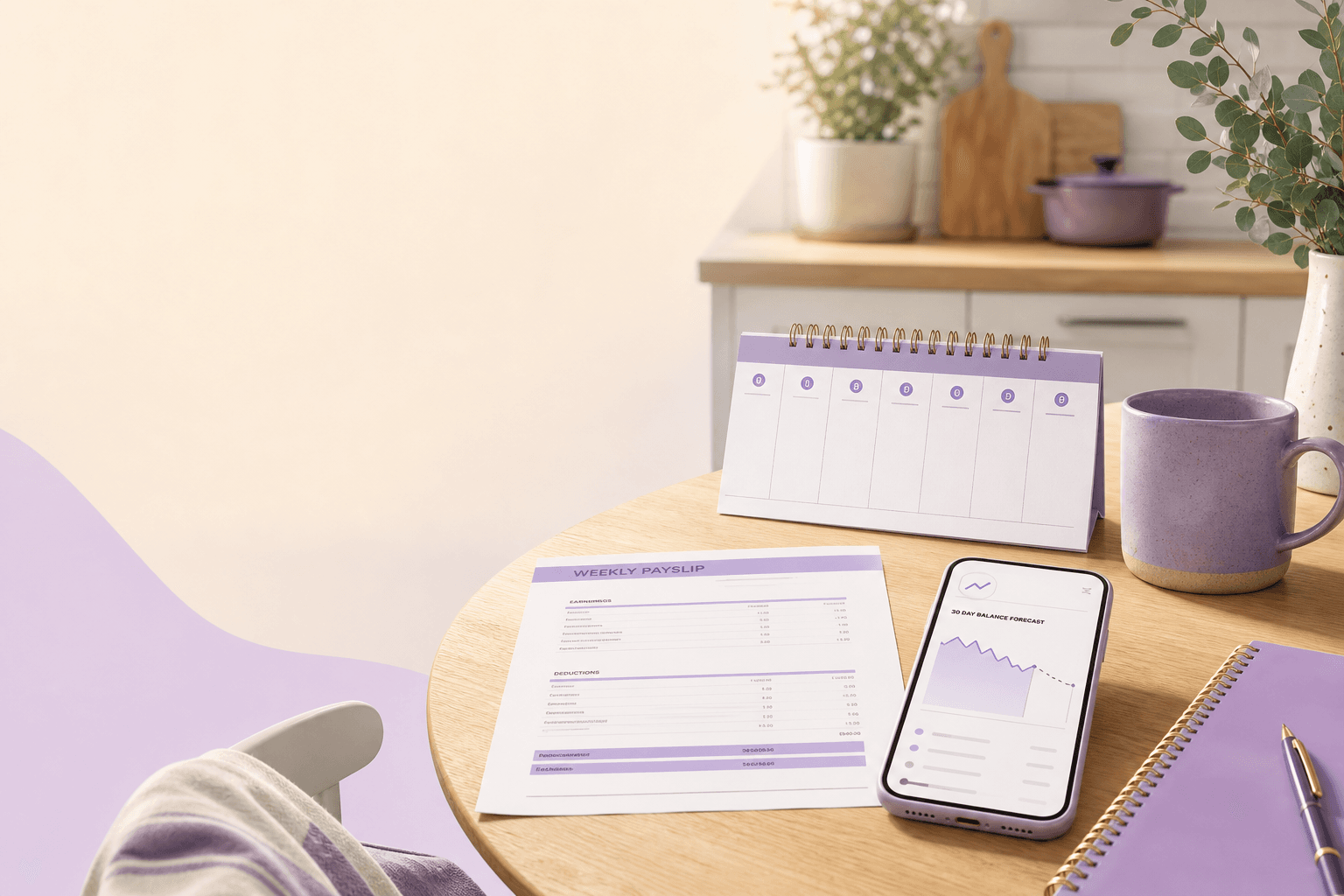
How to budget if you’re paid weekly in the UK
Monthly budgets fail on weekly pay. Convert bills with 4.33, set a daily spend limit between paydays, and forecast 30 days ahead — no bank login.
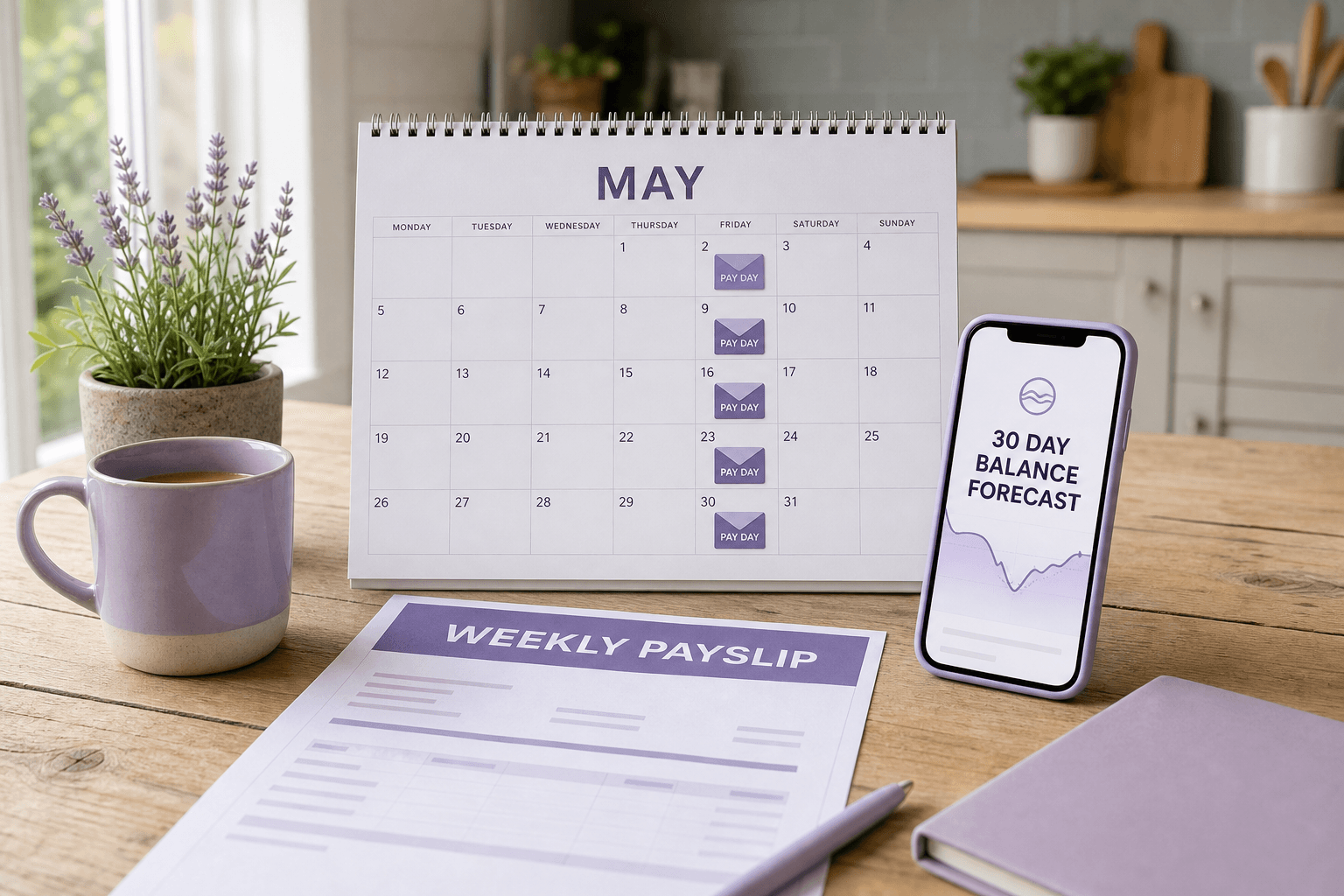
Five payday months on weekly pay: the extra week isn’t spare money
A five-payday month on weekly pay is not a bonus. 52 weeks ÷ 12 = 4.33. Use the fifth packet for four-payday months or a one-week buffer — not Friday night.