What does paid fortnightly mean? Fortnightly pay explained (UK)
Paid fortnightly means every two weeks: 26 paydays a year, not 24. How fortnightly pay differs from bi-weekly and twice-monthly, and why some months have three.
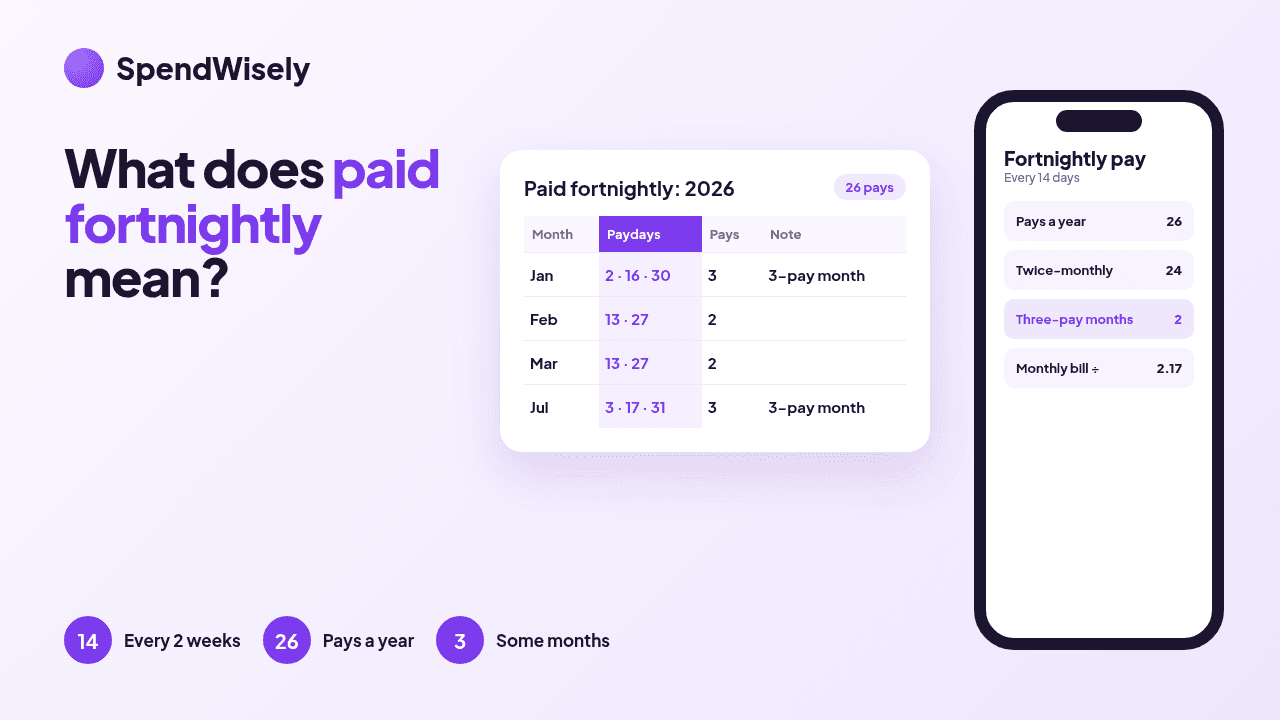
Being paid fortnightly means you get paid every two weeks (every 14 days), usually on the same weekday, which works out at 26 paydays a year. It is not the same as being paid twice a month (24 paydays), so most months have two fortnightly paydays and two months a year have three.
This is educational money-management information from SpendWisely (Adleads Ltd). It is not personalised financial advice, and Adleads Ltd is not authorised by the FCA. If you are struggling with debt, contact StepChange, National Debtline, or MoneyHelper.
Fortnightly pay meaning, in plain English
A fortnight is two weeks. If your employer pays you fortnightly, your wages land every second Friday (or whichever day they use), regardless of where that falls in the month.
A fortnightly payment works the same way in any direction: wages, a repayment plan, some childcare or benefit payments. Anything charged or paid every 14 days is fortnightly.
To compare a fortnightly amount with a monthly one, use this:
- Fortnightly to monthly: fortnightly amount × 26 ÷ 12 (about × 2.17)
- Monthly to fortnightly: monthly amount × 12 ÷ 26 (about ÷ 2.17)
So £900 every fortnight is about £1,950 a month, not £1,800. That gap is the two "extra" paydays across the year.
Fortnightly vs bi-weekly vs twice-monthly
These get mixed up all the time, especially on US websites and in payroll software.
| Term | How often | Paydays a year | Fixed date? |
|---|---|---|---|
| Weekly | Every 7 days | 52 | No, same weekday |
| Fortnightly | Every 14 days | 26 | No, same weekday |
| Bi-weekly (US usage) | Every 14 days | 26 | No, same weekday |
| Twice-monthly (semi-monthly) | Two set dates, e.g. 15th and last day | 24 | Yes |
| Four-weekly | Every 28 days | 13 | No, same weekday |
| Monthly | Once a month | 12 | Usually |
Bi-weekly is the American word for fortnightly. In the UK it can also mean "twice a week", so if a job advert or contract says bi-weekly, check which they mean.
Twice-monthly is different. You get paid on two fixed dates, so every month looks the same, but each pay is a little bigger than a fortnightly one would be.
26 pays a year, and the three-pay months
Fifty-two weeks divided into fortnights is 26. Twelve months of two paydays is only 24. The two leftover paydays create three-pay months.
On a Friday pay cycle that started on 2 January 2026, paydays fall on 2, 16 and 30 January, and on 3, 17 and 31 July. Every other month has two.
A three-pay month is not a pay rise. Your yearly wage is the same; it is just arriving in a different shape. If rent and other monthly bills are paid from the first two pays every month, the third pay is the one that can build a buffer. Spend it as normal money and the next two-pay month feels tighter than it should.
How to split monthly bills across two payslips (and what to do with the third) is covered in bills if paid fortnightly. This post sticks to what fortnightly pay actually means.
Is fortnightly pay better than monthly?
Neither is better; they suit different people.
- Fortnightly: a shorter gap between paydays, which can make it easier to stay on track, plus two three-pay months a year.
- Monthly: pay lines up with most bills, which mostly leave monthly, but the gap before payday is long.
The catch with fortnightly pay is the mismatch. Your money arrives every 14 days, but rent, council tax, energy and phone usually leave on monthly dates. Some payslips carry rent, others don't, so two payslips of the same size can feel completely different.
Universal Credit and benefits
Universal Credit is normally paid monthly, into one account, in arrears. In Scotland you can choose to receive it twice a month. In Northern Ireland it is paid twice monthly by default. Some other benefits, such as Carer's Allowance, can be paid weekly or every four weeks.
If you are paid fortnightly wages while claiming Universal Credit, the number of paydays inside your monthly assessment period affects your award. A three-pay month can mean a lower payment the following month. GOV.UK explains how this works in Universal Credit: what you'll get. For help with your own claim, speak to Citizens Advice or MoneyHelper.
A simple way to plan fortnightly pay
- Write down your take-home for a normal fortnight.
- Convert every monthly bill to a fortnightly amount (× 12 ÷ 26) and set that aside from each pay.
- Divide what is left by 14 to get a daily spend limit.
- Treat the third pay in a three-pay month as buffer, not bonus.
Our free weekly budget template has a Fortnightly tab that does steps 2 and 3 for you, as a spreadsheet or CSV.
If you want to see it on dates instead of in a sheet, SpendWisely is a 30-day cashflow forecast. The AI Guide sets up your balance, fortnightly pay and commitments (including BNPL) with you in a chat, and you refresh the balance when pay lands. No Open Banking or bank login.
Frequently asked questions
What does paid fortnightly mean?
It means you are paid every two weeks, usually on the same weekday. That is 26 paydays a year. Most months have two paydays and two months have three.
What is a fortnightly payment?
Any amount paid or charged every 14 days, such as wages, a repayment plan or some benefits. To compare it with a monthly cost, multiply it by 26 and divide by 12.
Is fortnightly the same as bi-weekly?
In US usage, yes: both mean every two weeks. In the UK, bi-weekly can also mean twice a week, so check the contract.
Is fortnightly the same as twice a month?
No. Twice-monthly pay lands on two fixed dates, 24 times a year. Fortnightly pay lands every 14 days, 26 times a year.
How many fortnightly pays are there in a year?
Usually 26. Very occasionally, depending on the start day, a tax year contains 27 paydays.
Start a 14-day trial
See every fortnightly payday and bill date on one 30-day forecast, with a daily spend limit until the next pay. Get started free — 14-day free trial. No bank connection or Open Banking login. No payment card required. Cancel at any time. After the trial, Premium is £8.75 a month or £63 a year.
Related: Bills if paid fortnightly · Free weekly & fortnightly budget template · Weekly pay guide · Five-payday months · SpendWisely 30-day forecast
Read more
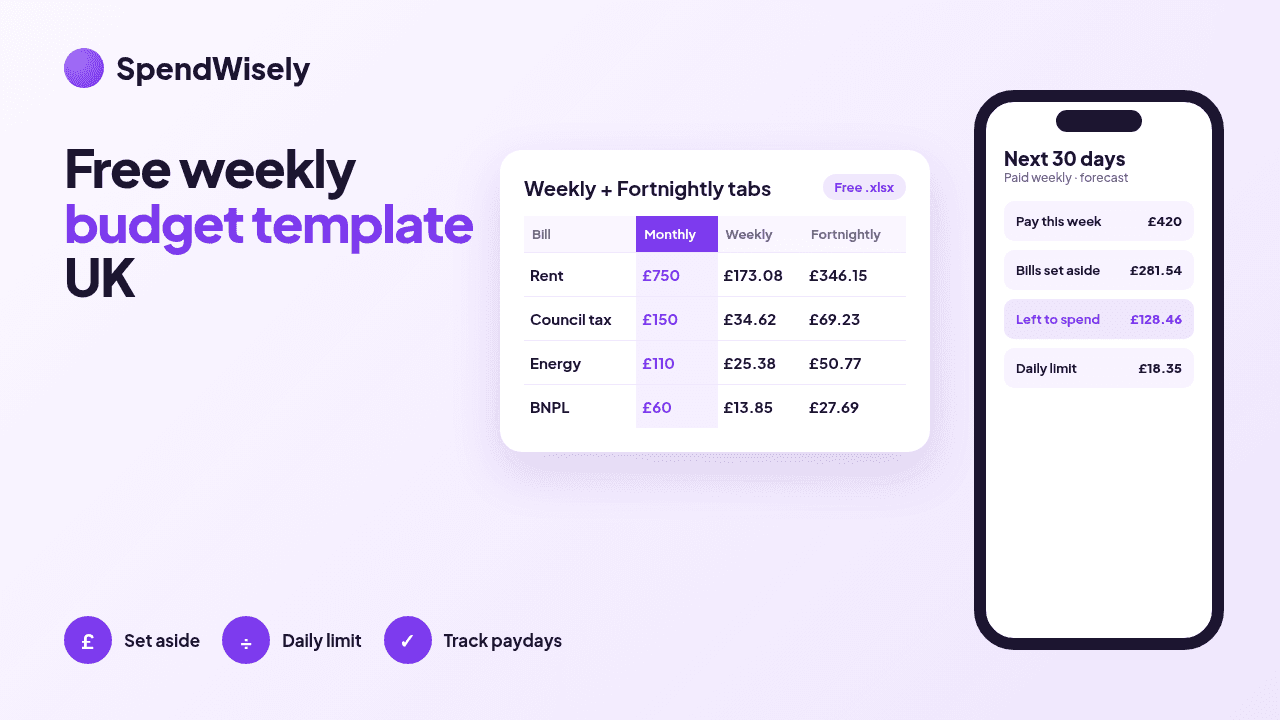
Free weekly budget template (UK) with a fortnightly tab
Free weekly budget template and spreadsheet for the UK, with a fortnightly tab. Turn monthly bills into a weekly or fortnightly amount and get a daily spend limit.
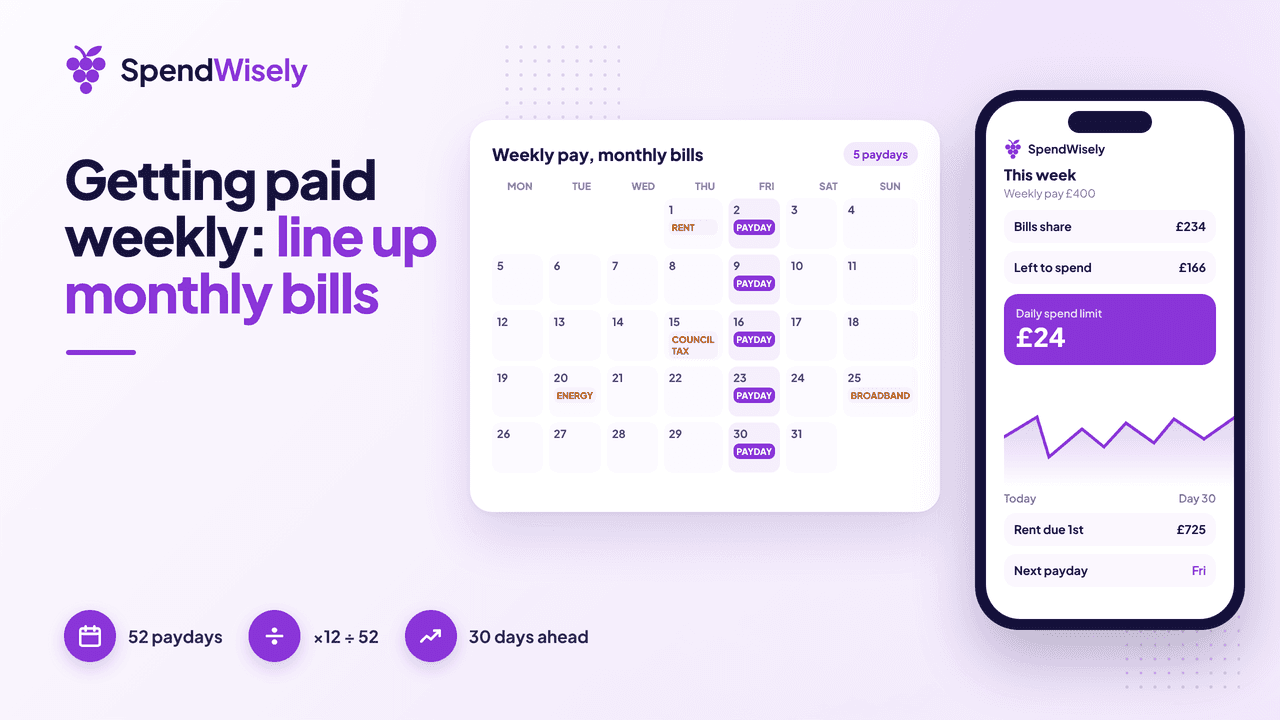
Getting paid weekly in the UK: pros, cons, and how to line up monthly bills
Getting paid weekly in the UK: the real pros and cons, weekly vs monthly pay, and how to line up rent and monthly bills with ×12÷52 and a 30-day forecast.
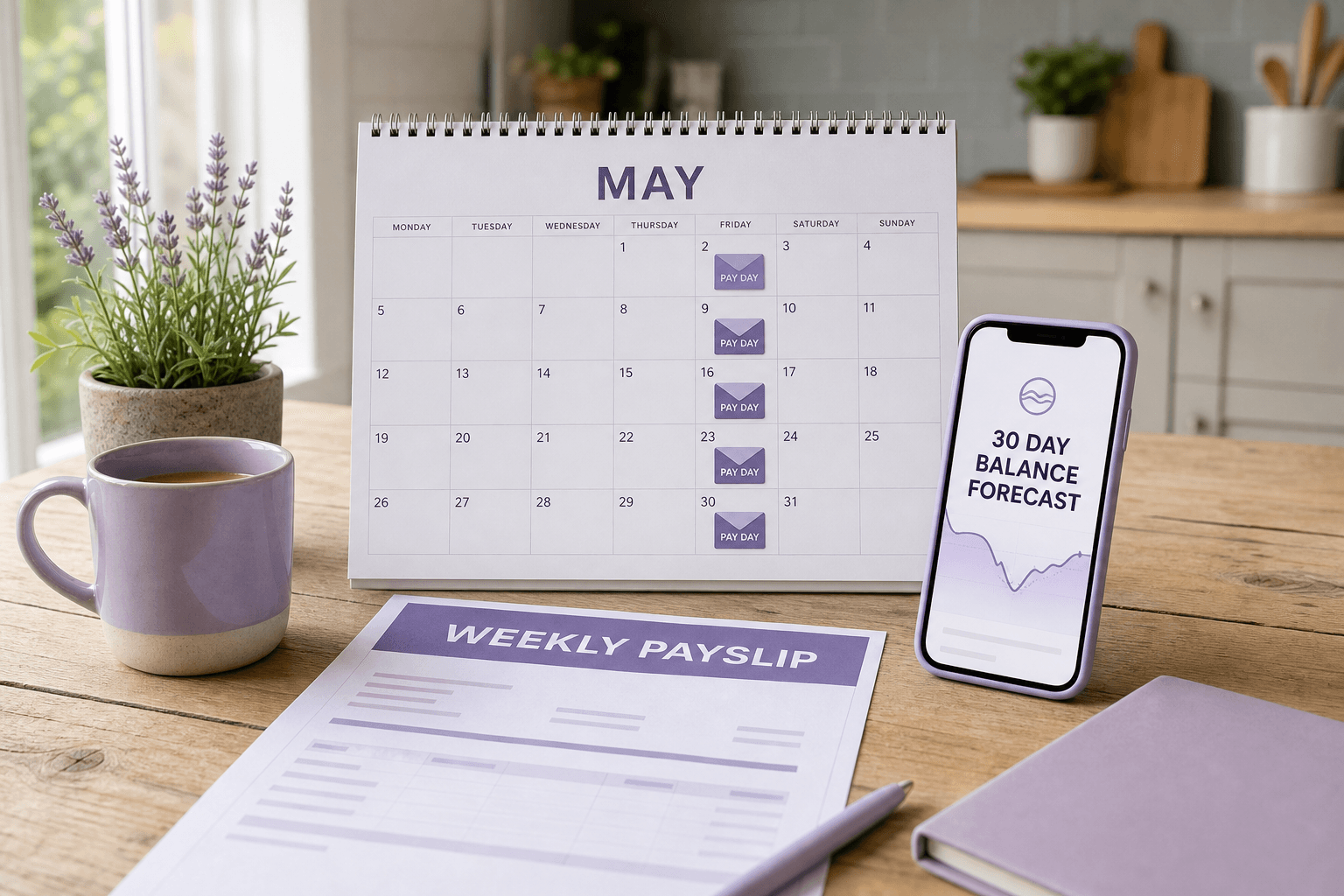
Five payday months on weekly pay: the extra week isn’t spare money
A five-payday month on weekly pay is not a bonus. 52 weeks ÷ 12 = 4.33. Use the fifth packet for four-payday months or a one-week buffer — not Friday night.