How to manage on a tight budget in the UK
Managing on a tight budget is a 30-day forecast plus a daily spend limit — especially on weekly pay. See spoken-for money before you spend. No bank login.

On a tight budget, the job is not a prettier spreadsheet. It is knowing what is already spoken for in the next 30 days, then giving yourself a daily spend limit until payday. That is how you stop a normal week (food, bus, a small treat) from colliding with rent and BNPL.
Tight does not mean “no fun.” It means no surprises
SpendWisely (Adleads Ltd) is a forecasting tool. Not personalised financial advice; not FCA-authorised. If money has already gone to crisis, use StepChange, National Debtline, or MoneyHelper. If money worry is affecting how you feel, Mind has guidance on getting support.
A tight budget fails when today’s balance looks spendable and Tuesday’s rent is invisible. Weekend balances and BNPL make that worse.
The control loop:
- List income (especially if you are paid weekly).
- List commitments with dates for the next 30 days.
- What is left ÷ days to payday = daily spend limit.
- Preview anything bigger than that limit with Spending Impact.
Convert monthly bills if you are paid weekly
Divide monthly bills by 4.33, not 4. There are 52 weeks in a year.
Example (illustrative): £1,000/month rent and bills ≈ £231 a week already spoken for. If take-home is £400 that week, leftover is about £169 — not £400.
That leftover is groceries, travel, and anything you still want. It is not “found money.”
Cut the silent leaks first
On a tight budget, hunt stacked commitments before hunting joy:
- Klarna / Clearpay / Pay in 3 on the same week as rent
- Subscriptions you forgot
- Weekend spending against a balance that has not cleared bills yet
Put them on one timeline. Then decide what to cancel. Shame is optional. Dates are not.
A daily spend limit you can actually keep
Pick a number that survives a boring Tuesday. If the limit is £8 and the bus is £6, the plan is fiction.
When hours drop, lower the limit that week. When a fifth payday or extra shift lands, park the extra toward the next month’s bills before you raise the daily number.
Frequently asked questions
How do I manage money on a tight budget in the UK?
Forecast 30 days of income and commitments, set a daily spend limit until payday, and preview purchases. Use 4.33 if you are paid weekly.
Should I use the 50/30/20 rule?
Only if the percentages match real housing costs. On a tight UK budget, dates and spoken-for money matter more than a 50/30/20 poster.
Do I need to connect my bank?
No. A forecast without bank login is enough to see the squeeze.
Start a 14-day trial
Build a 30-day view and a daily limit that fits a tight week. Get started free.
Related: Weekly pay · Spending Impact · BNPL
Read more
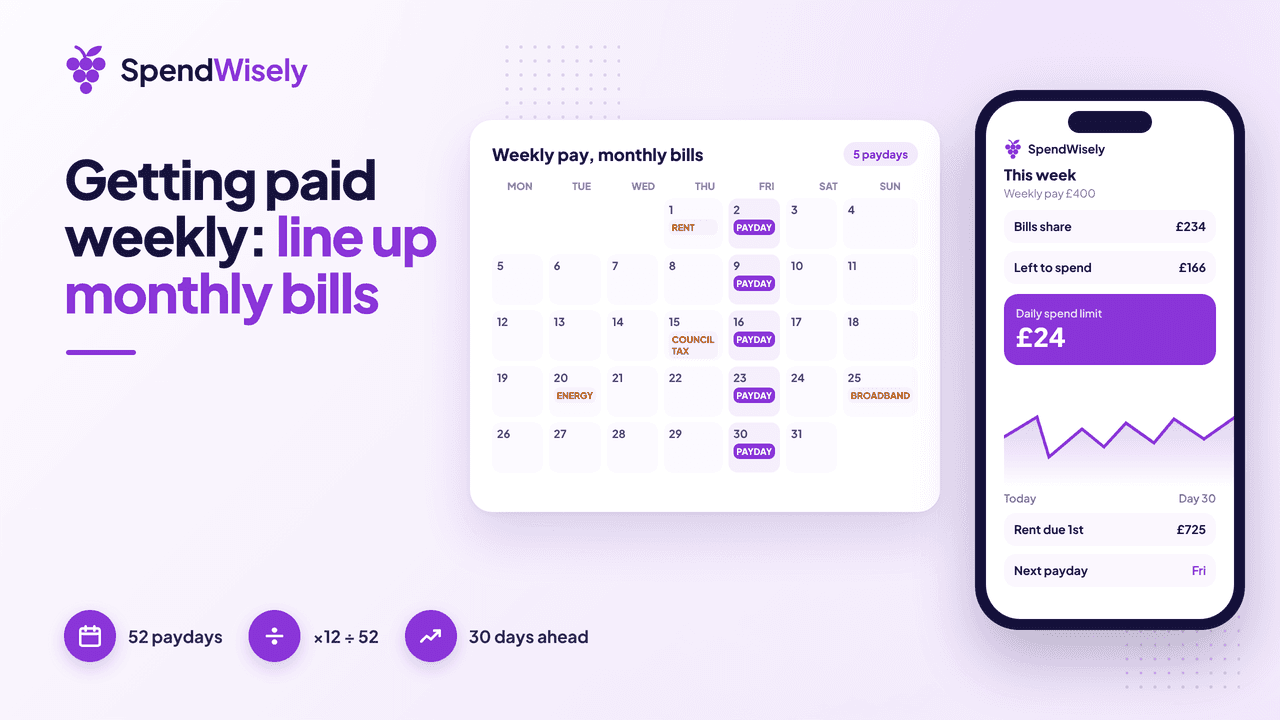
Getting paid weekly in the UK: pros, cons, and how to line up monthly bills
Getting paid weekly in the UK: the real pros and cons, weekly vs monthly pay, and how to line up rent and monthly bills with ×12÷52 and a 30-day forecast.
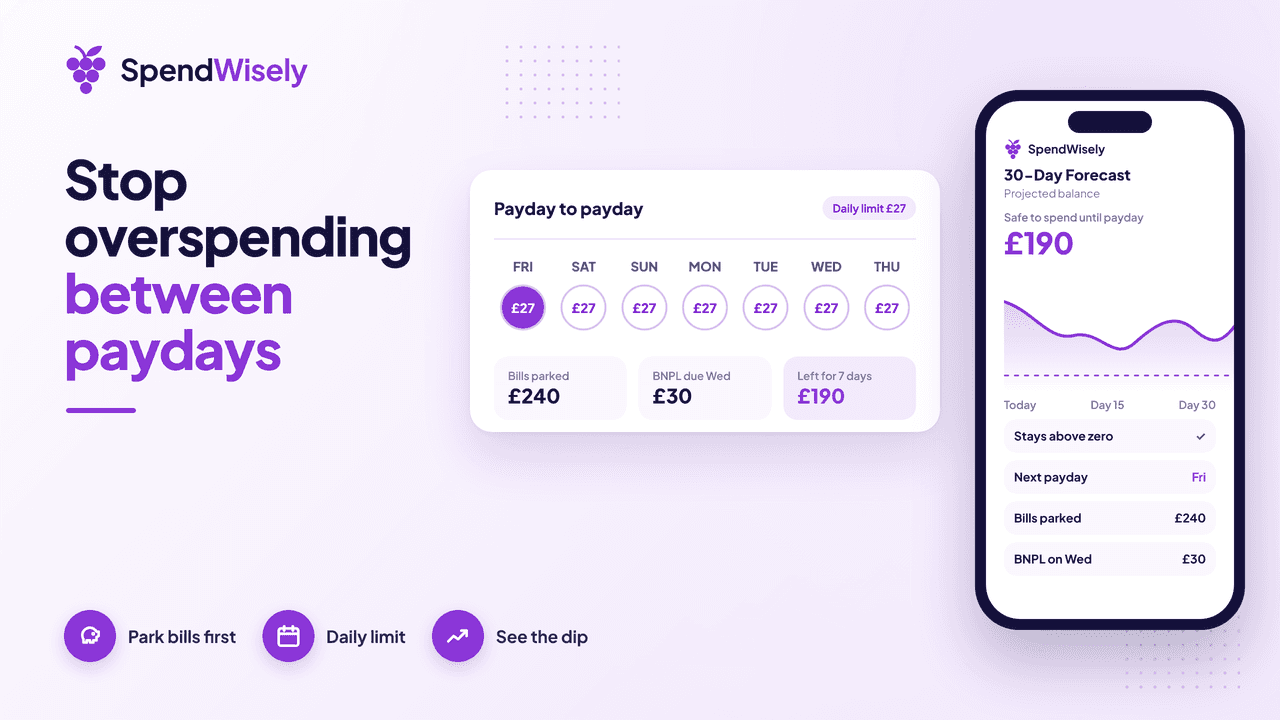
How to stop overspending between paydays: 7 fixes for weekly or fortnightly pay
How to stop overspending between paydays in the UK: park bill money first, set a daily spend limit, plan for BNPL and weekends, and check 30 days ahead.
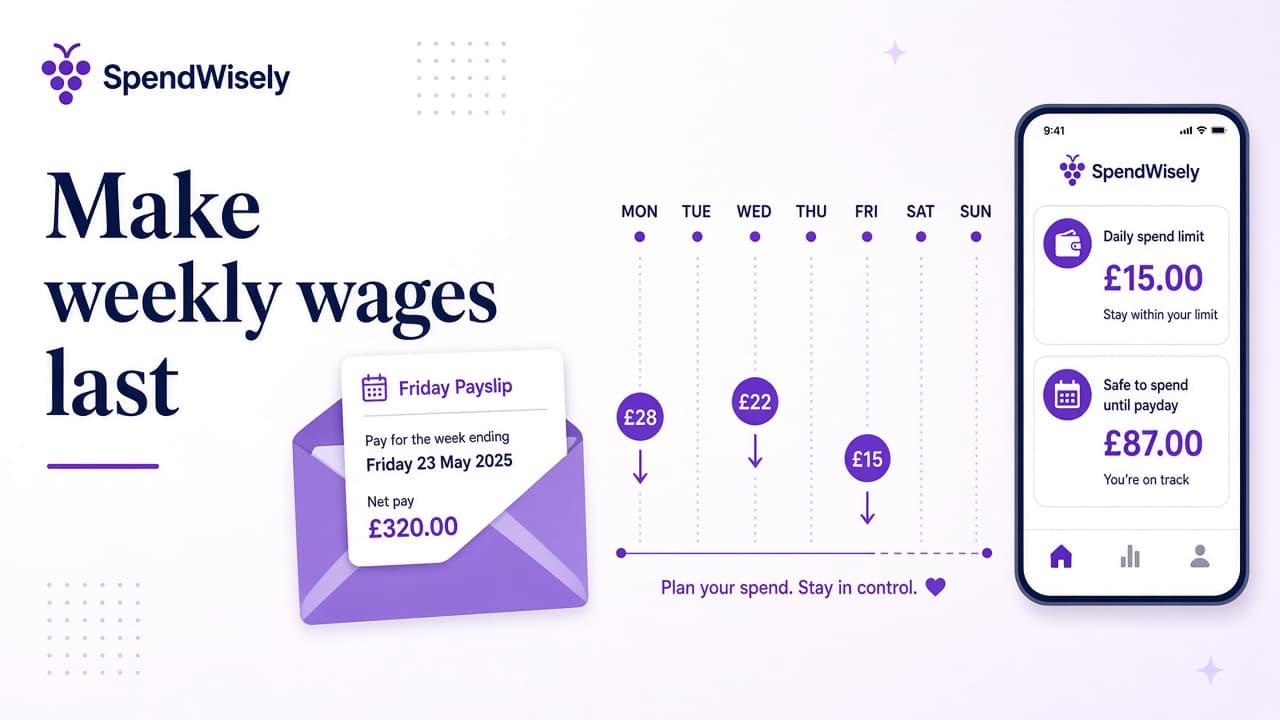
Make weekly wages last: stop overspending before the next payday
Make weekly wages last with a daily spend limit until payday. Stop rich-Friday overspending, see the weekend balance trap, and forecast 30 days — no bank connection.