3 paycheck months in 2026 and 2027: dates and what to do with the extra check
Paid biweekly on Fridays? 3 paycheck months in 2026 and 2027 for both Friday schedules, why they happen, and what to do with the extra check.
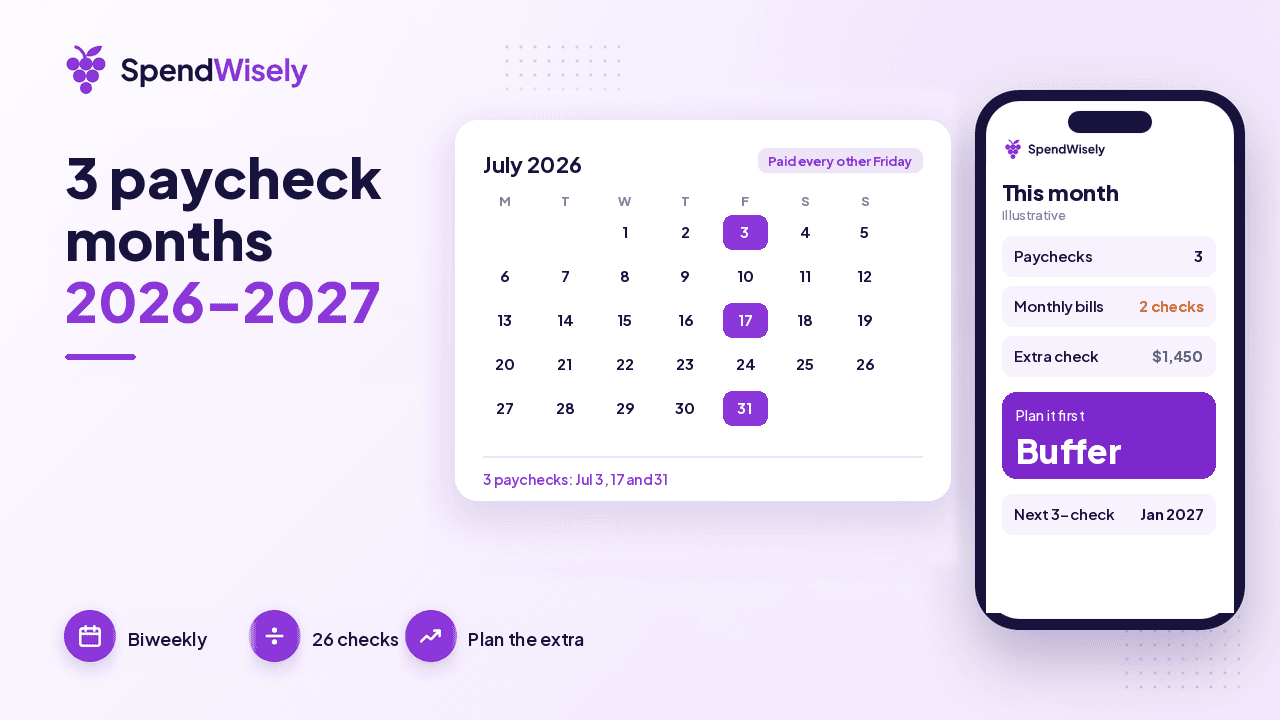
If you're paid biweekly, you get 26 paychecks a year, so two months a year usually have three paychecks. Paid every other Friday starting January 2, 2026, your 3 paycheck months are January and July 2026, then January, July and December 2027. Budget monthly bills from two checks, and plan the third before it lands.
This is educational money-management information from SpendWisely (Adleads Ltd). It is not personalized financial advice, and Adleads Ltd is not authorized by the FCA (the British financial regulator). If you're struggling with debt in the US, the National Foundation for Credit Counseling (NFCC) can connect you with a nonprofit credit counselor. In Britain, contact StepChange, National Debtline, or MoneyHelper.
3 paycheck months 2026 and 2027 (Friday paydays)
Biweekly Friday paydays fall on one of two schedules. Check your last pay date to see which one is yours.
Schedule A: first payday Friday, January 2, 2026
| Year | 3 paycheck months | Paydays |
|---|---|---|
| 2026 | January | Jan 2, 16, 30 |
| 2026 | July | Jul 3, 17, 31 |
| 2027 | January | Jan 1, 15, 29 |
| 2027 | July | Jul 2, 16, 30 |
| 2027 | December | Dec 3, 17, 31 |
Schedule B: first payday Friday, January 9, 2026
| Year | 3 paycheck months | Paydays |
|---|---|---|
| 2026 | May | May 1, 15, 29 |
| 2026 | October | Oct 2, 16, 30 |
| 2027 | April | Apr 2, 16, 30 |
| 2027 | October | Oct 1, 15, 29 |
Schedule A has 27 paychecks in 2027, because January 1 and December 31, 2027 are both paydays. If that's you, check how your employer handles a 27th check: some spread salary across 27 checks, which makes each one a little smaller.
Dates assume pay lands on the Friday. If a payday falls on a federal holiday, such as New Year’s Day, many employers pay the business day before, which can move a check into the previous month. Check your pay stub or HR portal.
Why biweekly pay creates 3 paycheck months
There are 52 weeks in a year, so biweekly pay gives you 26 checks. Twelve months × 2 checks = 24. The 2 left over have to land somewhere, and they land in the months that have three paydays.
That means a 3 paycheck month isn't a bonus. It's money you already earned, showing up unevenly. The real monthly average is 26 ÷ 12 = 2.17 checks, not 2.
Biweekly isn't the same as semimonthly. Semimonthly pay lands on two fixed dates, such as the 1st and 15th, so you always get 24 checks and never a third. For the day-to-day method, see how to make a biweekly budget.
Budget monthly bills from two checks
The simplest rule: build your monthly budget as if every month has two paychecks. Rent, car payment, utilities and phone all come out of checks one and two. Then the third check in a 3 paycheck month is genuinely free to plan.
If you budget from 2.17 checks instead, two-check months are always slightly short. Budgeting from two keeps every normal month covered and turns the extra checks into a plan.
What to do with the extra paycheck
Decide before it arrives. Otherwise it gets absorbed into everyday spending. A good order:
- Cover anything short. If a two-check month left you behind on a bill, catch up first.
- Build a starter emergency fund. One month of essentials stops a surprise bill from going on a card.
- Pay down high-interest debt. Credit card balances cost more than almost anything else.
- Fund annual and irregular costs. Car registration, insurance, holidays, back-to-school.
- Save for a goal. Retirement, a deposit, a trip.
- Keep a little for yourself. A small, planned treat makes the rest easier to stick to.
If you're paid weekly, the same idea applies to months with five Fridays.
Worked example (illustrative)
Figures for illustration only.
| Amount | |
|---|---|
| Take-home per check | $1,450 |
| Normal month (2 checks) | $2,900 |
| 3 paycheck month | $4,350 |
| Monthly bills and spending | $2,750 |
| Left in a normal month | $150 |
| Extra in a 3 paycheck month | $1,450 |
With two of those months a year, that's $2,900 you can plan for in advance: enough for a starter emergency fund and a chunk of debt.
The bills that catch people out
A 3 paycheck month can still feel tight if a bill moves. Watch for:
- Rent due on the 1st when your first check of the month lands on the 2nd or 3rd.
- Annual renewals that happen to fall in the same month.
- Buy now, pay later instalments that run every two weeks and can also hit three times in a month.
A 30-day view catches these. You see the low point before the month starts, not after.
How SpendWisely helps
SpendWisely is a 30-day cashflow forecast that shows your balance every day for the next 30 days, with every paycheck and bill on its date. You'll see a 3 paycheck month coming, and the dip before rent, ahead of time. No bank login needed: the AI Guide sets up your 30-day forecast from a few quick questions in chat. See pricing.
Frequently asked questions
Which months have 3 paychecks in 2026?
Paid biweekly on Fridays starting January 2, 2026: January and July. Starting January 9, 2026: May and October. Check your last payday to see which schedule you're on.
Which months have 3 paychecks in 2027?
On the January 2, 2026 schedule: January, July and December 2027, which gives 27 paychecks that year. On the January 9 schedule: April and October 2027.
How many 3 paycheck months are in a year?
Usually two. Biweekly pay gives 26 checks, which is two more than 12 months of two checks. About every 11 years there are 27 paydays, and a third 3 paycheck month.
What should I do with my third paycheck?
Plan it before it lands: catch up on anything short, build a starter emergency fund, pay down high-interest debt, then fund annual costs and savings goals.
Start a 14-day trial
See every paycheck and bill on one 30-day forecast, with your balance for each day. Get started free: 14-day free trial. No bank login needed. No payment card required. Cancel at any time. After the trial, Premium is £8.75 a month or £63 a year.
Related: Biweekly budget · Which months have 5 weeks? · Why am I always broke after payday? · Living paycheck to paycheck · Pricing
Read more
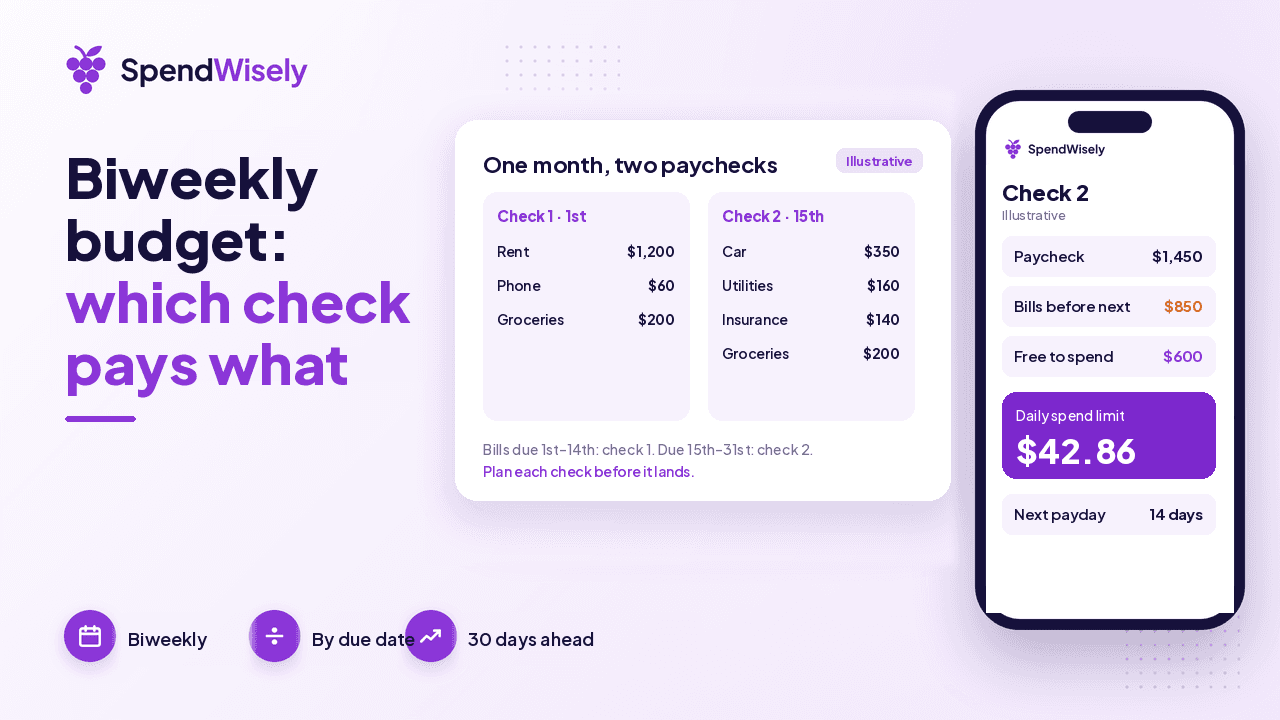
Biweekly budget: how to budget a biweekly paycheck, step by step
How to budget a biweekly paycheck in 7 steps: list bills by due date, split them between check 1 and check 2, set a daily limit and plan 3 paycheck months.
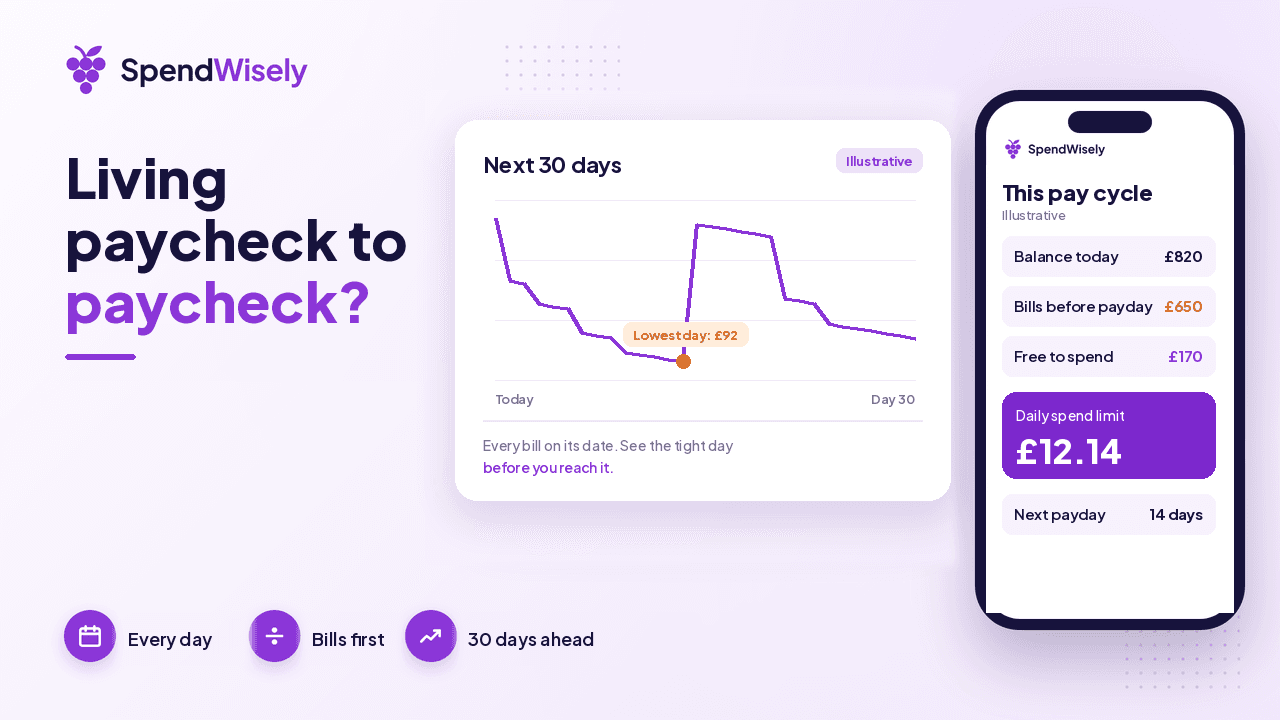
Living paycheck to paycheck: what it means and how to break the cycle
Living paycheck to paycheck means your pay runs out before the next one lands. The signs, why it happens on a decent wage, and how a 30-day forecast breaks the cycle.
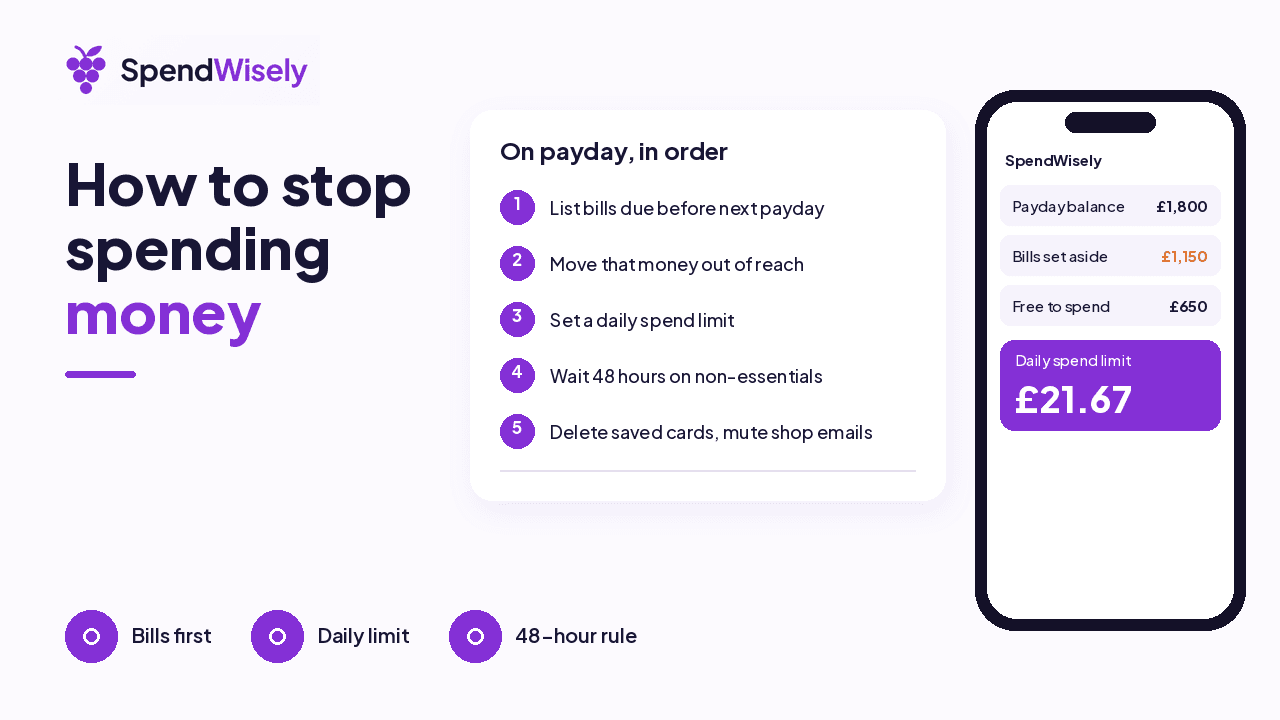
How to stop spending money: 9 steps that work between paydays
To stop spending money, move bills out on payday, set a daily spend limit, add a 48-hour pause and delete saved cards. Nine steps, no willpower needed.